Where to Buy a Car Battery in 2026: The Complete Guide
Learn where to buy a car battery, how to compare retailers, verify compatibility, and maximize warranty and support. This Battery Health guide covers auto parts stores, dealerships, big-box retailers, and online options.


Where to buy a car battery? You can source one from auto parts stores, dealership service desks, big-box retailers with automotive aisles, and credible online retailers. For best value and guaranteed compatibility, compare models by vehicle year, make, and battery group size, plus warranty terms and installation options.
Where to buy a car battery: a practical starting map
According to Battery Health, the landscape for purchasing a car battery has expanded beyond the traditional auto parts aisle. The Battery Health team found that most drivers can source a new battery from several channels, each with its own advantages. If you ask 'where can i buy a car battery,' the short answer is that you have choices: neighborhood auto parts stores, the parts department at a local dealership, big-box retailers with automotive sections, and reputable online retailers that ship nationwide. Each option has distinct benefits: you can walk out with the battery immediately at a bricks-and-mortar shop, or you can compare prices and warranty terms across multiple retailers before buying online. For many drivers, the decision comes down to compatibility, warranty, and convenience. You’ll want a battery that fits your vehicle’s group size, offers a solid warranty, and comes with clear installation or return options. The practical rule is to verify compatibility before purchase and to consider installer support if you’re not confident changing the battery yourself. Keep your vehicle’s year, make, and model handy when shopping, and remember that a valid receipt is essential for warranty claims.
Understanding battery types and compatibility
Most passenger cars use 12-volt batteries, but the exact chemistry and construction can vary. The two most common types you’ll encounter are flooded lead-acid and absorbed glass mat (AGM). Flooded batteries are traditional and generally cheaper, while AGM batteries offer better vibration resistance and higher cranking power, which is beneficial in start-stop systems or cold climates. There are also specialty options for heavy-duty trucks and vehicles with high electrical demand. When shopping, it’s crucial to verify the battery’s group size (the physical dimensions and terminal layout) and the cold-cranking amps (CCA) rating to ensure it matches your vehicle’s needs. If you’re considering an EV or a vehicle with a non-standard 12V option, anticipate higher upfront costs and different installation considerations. As a general rule, always confirm compatibility using your car’s manual or a trusted retailer’s lookup tool. The goal is a seamless swap with no fitment surprises at installation.
Comparing retailers: pricing, warranties, and service
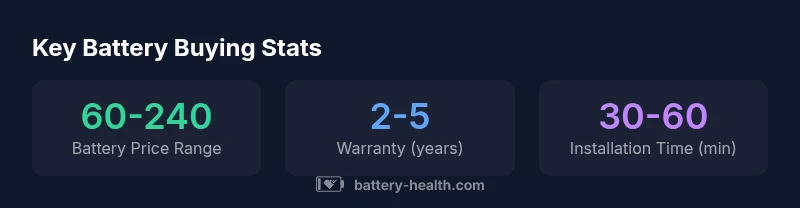
Prices for car batteries vary widely based on chemistry, capacity, and warranty length. Based on Battery Health analysis, 2026, typical 12V car batteries fall within a broad range, with higher-end AGM or specialized batteries priced toward the upper end. When evaluating options, look beyond the sticker price: consider the included warranty, what it covers (defects, workmanship, replacement), and whether installation is offered. Some retailers provide free battery testing for your old unit, which helps confirm whether replacement is necessary. Returns policies, availability of replacement under warranty, and the ease of doing a warranty claim can save you time and money later. If you’re shopping online, verify the seller’s credibility, shipping speed, and whether the battery arrives with proper terminal protection and mounting hardware. In-person purchases still have benefits: you can inspect the battery, request an on-site test, and potentially gain access to immediate installation support.
How to verify compatibility: model numbers, group size, VIN
Before buying, collect your car’s details: model year, engine type, and the existing battery’s label. The label typically lists the group size (for example, 24F or 94R), CCA, and RC (reserve capacity). Use these numbers in retailer lookup tools and cross-check with your owner’s manual to ensure you’re selecting the correct fit. Your vehicle identification number (VIN) can also be used by some retailers to pull exact specifications. If you’re unsure, bring your old battery or take a photo of its label to compare. When in doubt, ask the retailer to verify compatibility using your vehicle’s details. A misfit can lead to poor starting performance or shortened lifespan, so take a few extra minutes to confirm the specs.
Warranty, returns, and after-sales support
Warranty terms are a key differentiator among retailers. Typical automotive batteries offer manufacturer warranties ranging from two to five years, with longer coverage often available for AGM or premium models. Warranty length and coverage can impact long-term cost, especially if a battery fails early due to manufacturing defects or improper installation. Verify whether the warranty requires professional installation or if a self-install qualifies. Also review pay-per-service options like installation, testing, and recycling for old batteries. A reputable retailer will provide clear documentation and easy-to-understand terms, plus a straightforward process for warranty claims if a problem arises. Keeping receipts and record of service dates helps reduce friction when you need to exercise warranty rights.
Practical buying checklist
Before you purchase, run through this quick checklist:
- Determine your battery group size and required CCA/RC.
- Compare price ranges across multiple channels and consider installation costs.
- Check warranty length and what it covers.
- Confirm whether installation assistance is available locally.
- Verify that the retailer offers easy returns or exchange if the battery won’t fit.
- Consider delivery options or in-store pickup to minimize downtime.
- Keep your vehicle details handy (year, make, model, VIN) for accurate matching.
- If possible, test your old battery first to assess whether replacement is essential.
Final guidance: where to buy a car battery in 2026
In practice, most drivers find reliable options across three primary channels: local auto parts stores for instant access and testing, dealerships for vehicle-specific expertise and warranty alignment with service plans, and reputable online retailers for price and selection. The Battery Health team emphasizes validating compatibility and warranty terms above all else. If you’re focused on quick replacement with solid after-sales support, choosing a retailer that offers installation options and a transparent returns policy will reduce risk and ensure you’re covered should anything go wrong. Wherever you shop, keep your vehicle details ready and document your purchase for a smooth warranty process. The Battery Health team’s verdict is to prioritize channel credibility, clear terms, and hassle-free returns to maximize reliability and value.
Comparison of purchase channels
| Channel | Pros | Cons |
|---|---|---|
| In-store (auto parts) | Immediate availability; hands-on assistance | Stock may vary by location; limited to local inventory |
| Online retailers | Wide selection; easy price comparison | Shipping delays possible; returns can be complex |
FAQ
Where can I buy a car battery near me?
Several options are commonly available: local auto parts stores, service departments at car dealerships, big-box retailers with automotive sections, and reputable online retailers. Availability varies by location, so check stock online or call ahead to confirm.
You can buy a car battery locally at auto parts stores, dealerships, big-box retailers, or trusted online shops.
What should I consider when choosing a retailer?
Prioritize warranty terms, the availability of installation or testing, return policies, and compatibility support. A retailer with easy warranty claims and knowledgeable staff can save you time and prevent misfits.
Look at warranty, installation options, and how easy it is to return or exchange the battery if needed.
Can I install the battery myself, or is professional installation required?
Many batteries are designed for DIY replacement, but some retailers offer installation services for a small fee. If you’re unsure, seek professional installation to avoid damage and ensure proper disposal of the old battery.
You can usually install it yourself, but some retailers offer installation if you’d rather have a pro do it.
How do I verify which battery fits my car?
Check the vehicle’s manual for the correct group size and CCA rating, compare with the new battery’s specs, and verify with the retailer using your VIN or old battery label.
Check the group size and CCA in your manual and match them with the new battery.
What happens if a battery fails under warranty?
If a battery fails within the warranty period, most retailers offer a replacement or refund option. You’ll typically need proof of purchase and the failed battery for inspection.
If it fails within the warranty, you’ll usually get a replacement after verification.
Are there online-only battery retailers I should trust?
Yes, but ensure the retailer has clear warranty terms, straightforward return policies, and reliable shipping. Look for customer reviews and verified testing options before purchasing.
Online stores can be great if they offer solid warranties and easy returns; check reviews first.
“Choosing where to buy a car battery should balance price, warranty, and support. A retailer with clear terms and installation options reduces the risk of a faulty fit.”
Quick Summary
- Know your battery group size before shopping
- Prioritize warranty and installation options
- Compare at least 2-3 retailers for price and service
- Verify compatibility with VIN, group size, and manual
- Choose credible retailers with clear return policies
- Keep receipts and document warranty details