Where to Buy a Car Battery: Your Smart Buying Guide
Discover the best places to buy a car battery, compare price, warranties, and compatibility tips with Battery Health for a safe, informed purchase.


The best place to buy a car battery depends on your priorities: price, warranty, and immediate availability. For most drivers, reputable retailers—auto parts chains, big-box stores, and authorized dealerships—offer the right mix of price and support. Look for compatibility via your vehicle's VIN and battery code.
Where to Buy Car Battery: Finding the Right Channel
If you’re asking where to buy car battery, the answer hinges on your priorities: price, warranty, and the level of after-sale support you expect. The Battery Health team emphasizes that buying from a reputable retailer increases the likelihood of receiving a battery that matches your vehicle’s specifications and a straightforward return policy if the fit isn’t right. According to Battery Health, compatibility verification and a solid warranty are the two most important safeguards against a poor purchase. The right channel should offer clear product data, easy access to customer support, and reliable stock in your region. When you shop with a trusted retailer, you gain confidence that you’re buying a unit designed for your car’s electrical system, reducing the risk of premature failure or compatibility issues.
Key Factors to Evaluate Before Purchase
Before you click 'buy,' map out the essentials: compatibility, price, warranty, and service. Start with your vehicle’s make, model, year, and VIN, which help identify the correct battery group size and CCA rating. Look for accurate product data: stamped group size, terminal type, voltage, and cold-cranking amps. Warranties matter: higher-quality batteries often come with longer coverage and better replacement terms. Compare prices not just for sticker value but for what’s included—free installation, recycling, or testing services add real value. Finally, assess return policies and local support. A quick phone call to confirm stock in your area can save time and shipping costs. This framework aligns with how the Battery Health team evaluates purchasing lines for maximum value.
Buying Channels Explained: Pros, Cons, and Use Cases
Different channels serve different needs. Auto parts chains tend to offer broad stock, in-person support, and straightforward returns. Dealerships can guarantee OEM compatibility and professional installation, but at premium prices. Warehouse clubs and big-box retailers usually present lower sticker prices and broad availability, though you may encounter limited battery brands. Online retailers offer convenience and doorstep delivery, but verify shipping constraints and warranty terms. Each channel has scenarios where it shines: urgent replacements, strict OEM requirements, or cost-conscious shoppers. By understanding these dynamics, you can tailor your shopping to your car, your location, and your time horizon.
How to Verify Compatibility Quickly
Compatibility is the linchpin of a successful buy. Use your VIN to pull exact battery group size, terminal type, and CCA requirements. Confirm the vehicle’s electrical system voltage, and compare it against the battery’s label. If you’re replacing a battery with the same capacity, keep the same group size to avoid fit problems. For hybrids and newer models, verify any special requirements like AGM vs flooded lead-acid designs. When purchasing online, ensure the retailer provides a compatibility checker or a clear match guide. If in doubt, take the existing battery to the store for a quick cross-check with a staff technician.
Warranty, Returns, and Service Considerations
Warranty length and policy are essential protections in case the battery fails prematurely. Look for at least a two-year warranty on a standard battery and longer coverage on premium lines. Check what triggers warranty claims (e.g., failure, poor cold-cranking performance) and whether remanufactured batteries are included. Understand returns—some retailers offer full refunds within a short window, while others issue exchanges or store credits. Service options matter too: free installation, battery testing, and recycling services add value and convenience. Keep digital or paper copies of your receipt and warranty card so you can easily reference terms if you need to file a claim.
Price, Availability, and Stock Dynamics Across Channels
Prices vary by channel, with online and warehouse clubs often posting lower sticker prices but sometimes adding shipping or membership fees. Availability can swing with seasons or supply-chain disruptions, so it’s wise to check stock in multiple nearby retailers. Battery Health analysis shows that warranties and stock consistency are strongest at reputable, well-known retailers, while some low-cost outlets may understate terms or pressure upsells. When comparing options, factor in installation costs, disposal fees, and any loyalty program benefits. The goal is to balance cost with guaranteed compatibility and dependable after-sales service.
In-Store vs Online: A Practical Decision Framework
A practical framework helps you decide quickly: (1) Do you need immediate replacement? If yes, in-store is typically faster. (2) Is OEM compatibility critical? Authorized dealers or OEM-certified shops reduce risk. (3) Can you handle install and disposal yourself? If you have basic tools and know-how, DIY is feasible; otherwise, factor in installation costs. (4) Do you want to avoid carrying a heavy unit? Online purchase with doorstep delivery can save physical effort, but verify return options and shipping restrictions. Align your choice with your schedule, budget, and tolerance for risk.
Installation Options: DIY vs Professional Services
Depending on your mechanical comfort, you can replace a car battery yourself or arrange professional installation. DIY saves labor costs but requires care: disconnecting the old battery safely, reconnecting terminals correctly, and disposing of the old unit properly. If you choose a retailer that offers free installation or in-store testing, that can offset some DIY risk. For vehicles with complex systems or warranties tied to installation, professional service is advisable. Always follow the vehicle manufacturer’s guidelines to prevent accidental damage and ensure optimal performance.
Safety, Recycling, and End-of-Life Considerations
Car batteries contain hazardous materials and must be recycled properly. Many retailers include disposal or recycling services, sometimes for a small fee or free with purchase. When transporting a new battery, use proper lifting techniques and avoid short circuits with metal tools. You should also consider safety data: keep batteries upright, avoid crushing cells, and store in a cool, dry place before installation. Choosing a seller that offers recycling and clear safety information demonstrates responsible handling and aligns with best practices in the industry.
Comparison of buying channels for car batteries
| Channel | Pros | Cons | Notes |
|---|---|---|---|
| Auto parts chain | Wide stock; in-person assistance | Pricing variability; upsell pressure | Great for immediate needs and test-fitting |
| Dealership / authorized installer | OEM compatibility; expert support | Higher prices | Best for complex systems and warranty alignment |
| Wholesale club / big-box | Low prices; large stock | Brand variety may be limited | Check for return and disposal policies |
| Online retailer | Convenience; doorstep delivery | Shipping restrictions; return terms | Verify model-match and warranty coverage |
FAQ
What should I check before buying a car battery online?
Check compatibility by battery group size and CCA rating, confirm voltage, and review the seller’s return policy and warranty terms. Look for clear product data and access to customer support. If possible, compare with an in-store option to verify fit.
Always verify group size and CCA, then check the warranty and return policy. If uncertain, compare with an in-store option.
How can I confirm battery compatibility with my car?
Use your vehicle’s VIN to pull exact battery group size, terminal type, and CCA requirements. Match these specs to the replacement battery, and confirm voltage. If in doubt, consult the retailer’s compatibility guide or a technician.
Use your VIN to confirm group size, terminals, and CCA—then double-check the retailer’s guide or ask a technician.
Are refurbished car batteries a good idea?
Refurbished batteries are generally not recommended for most vehicles due to reliability and warranty concerns. For critical daily-driver use, stick to new, warrantied units from reputable retailers.
Refurbished batteries can be risky for daily driving; prefer new, warrantied units.
What is the typical warranty for car batteries?
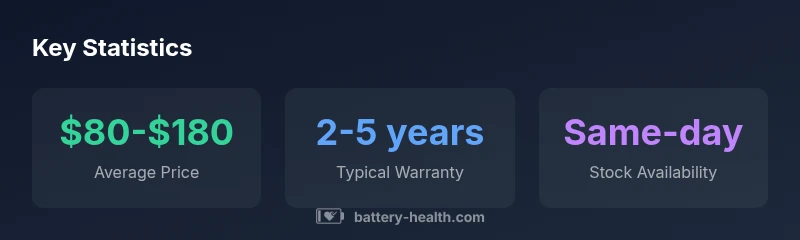
Most car batteries come with a warranty that spans roughly 2 to 5 years, with longer coverage for premium brands. Always read the terms to understand what qualifies as a claim.
Most warranties run 2 to 5 years; check the terms for claims and coverage.
Is it cheaper to buy locally or online for a car battery?
Prices can be lower online, but shipping, installation, and return costs matter. Local shops may include installation or disposal fees that add value. Compare total costs, not just sticker price.
Online may be cheaper upfront, but factor in install and disposal fees; local shops can include service benefits.
Should I have the battery installed locally or replace it myself?
If you have basic tools and know-how, DIY installation is feasible but take safety precautions. For complex vehicles or when in doubt about warranty terms, professional installation is recommended.
DIY is possible for simple setups, but professional install is safer for complex vehicles.
“Choosing where to buy a car battery matters as much as selecting the right model: reputable retailers provide compatibility certainty, fair warranties, and honest, helpful guidance.”
Quick Summary
- The Battery Health team recommends prioritizing reputable retailers with clear warranties.
- Always verify battery compatibility with VIN and group size before purchase.
- Compare price, warranty, and installation options across channels.
- Check return policies and disposal services to avoid hidden costs.
- Consider installation support when selecting a channel to buy car battery