Which Battery for My Car: A Practical How-To Guide
Learn how to pick the right car battery by understanding OEM specs, CCA, RC, and battery types (lead-acid, AGM, lithium). Practical steps, climate considerations, and safety tips.


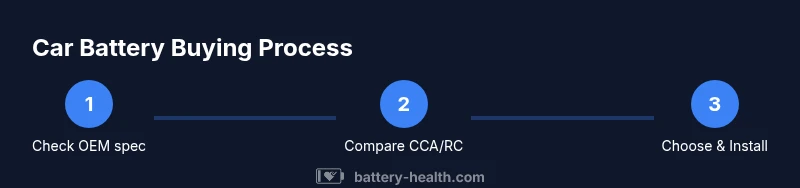
To choose the right battery for your car, identify your OEM spec, match terminal layout, and compare CCA, RC, and size, then choose a compatible type (lead-acid, AGM, or lithium). This guide walks you through the steps, safety checks, and common pitfalls to avoid.
Understanding Battery Basics
Your car battery is more than a power source; it’s the starter that gets your engine turning, the voltage backbone for your electronics, and the guardian of your onboard computer’s memory. In modern vehicles, the battery works with alternators, starters, and dozens of sensors, so compatibility matters as much as capacity. According to Battery Health, choosing the right car battery starts with understanding what it does and what your car needs. The three most important ideas are that batteries come in different chemistries, sizes, and performance ratings, and that climate and vehicle electronics influence which one makes sense for you. By grasping these basics, you’ll be ready to navigate OEM specs, battery types, and life expectancy without guesswork.
- Battery chemistry affects performance in different climates and load conditions.
- Group size determines fitment and terminal arrangement, not just physical size.
- Warranty and maintenance requirements vary by type and brand.
For many drivers, the goal is reliability across seasons with minimal maintenance. Keep a basic eye on terminal cleanliness, corrosion, and a loose fit that could cause vibration damage over time.
How to Find Your Car's Battery Requirements
Finding the exact battery requirements for your vehicle is the first step to a correct replacement. Start with the owner's manual, which lists recommended battery specs. If you don’t have the manual handy, check under the hood: there is often a sticker on the radiator support or the battery case itself showing the group size and minimum CCA. If you still can’t locate the information, use your VIN and consult a reputable parts retailer or your dealership to confirm the OEM spec. The key data you’re looking for are the group size (the physical fit and terminal layout) and the minimum CCA your engine needs to start reliably in your climate. Battery fitment matters as mismatched size or posts can cause fit issues or improper connections.
Battery Types: Lead-Acid, AGM, and Lithium
There are three common battery chemistries used in cars today. Lead-acid conventional batteries are the most affordable and widely compatible with older and basic systems. Absorbent Glass Mat (AGM) batteries are sealed, resistant to vibration, and can handle higher electrical loads in modern cars with start-stop or heavy electronics. Lithium-based car batteries offer high energy density and lighter weight but come at a higher upfront cost and may require different charging profiles. Battery Health analysis shows AGM batteries often deliver better reliability in modern vehicles with frequent stop-and-go and higher electrical loads. When choosing, consider climate, driving patterns, and OEM guidance; AGM is a popular middle-ground for many modern vehicles.
Key Specifications to Compare
When evaluating candidate batteries, pay attention to several core specs:
- Battery type: lead-acid, AGM, or lithium. Each has trade-offs in cost, lifespan, and compatibility with older versus modern electronics.
- Group size: ensures the battery physically fits and the terminals align with your vehicle’s connections.
- CCA (cold-cranking amps): indicates starting power in cold conditions; match or exceed OEM requirements for reliable winter starts.
- RC (reserve capacity): indicates how long the battery can run essential electronics if the alternator fails; higher RC is beneficial for vehicles with many electronics.
- Terminal layout and polarity: verify that positive/negative posts match the car’s wiring harness and cable lengths.
- Temperature rating: indicates how the battery performs under extreme heat or cold, impacting lifespan.
- Warranty: longer warranties typically reflect confidence in durability and can reduce long-term ownership costs.
Right-sizing these specs to your car and climate helps prevent early failures and ensures dependable starts year-round.
Climate and Driving Considerations
Climate and driving style significantly influence battery choice. In cold climates, higher CCA is valuable to ensure the engine starts reliably on freezing mornings. In hot climates, a strong temperature rating and robust construction help resist accelerated aging. Start-stop systems found in many newer cars demand AGM or lithium chemistries for durability and cycling stability. If you drive infrequently or take short trips, a battery with adequate RC can prevent deep cycling that reduces life. Always align your pick with OEM recommendations and consider the climate-driven stress your battery will face.
Installation Safety and Maintenance
Installing or replacing a battery involves handling corrosive acid and heavy components. If you’re new to car maintenance, consider professional installation to avoid personal injury or electrical damage. For DIY replacements, work in a well-ventilated area with protective gloves and eye protection. Disconnect the negative terminal first, then the positive, to minimize short circuits. Clean corrosion from terminals and clamps with a baking-soda solution and a terminal brush before installing the new battery. Reconnect positive then negative, and test with a multimeter or battery tester to confirm proper voltage and charging behavior.
Scenarios and Decision Framework
- Scenario A: You drive an older vehicle with basic electronics in a moderate climate. A reliable lead-acid battery that matches OEM group size and CCA is usually sufficient and cost-effective.
- Scenario B: You own a modern vehicle with frequent electronics use and a cold climate. An AGM battery that meets or exceeds OEM CCA and RC is a safer, longer-lasting option.
- Scenario C: You want maximum weight reduction or have unique performance goals. A lithium-based car battery could be considered if the vehicle supports it and the charging system is compatible, but expect higher upfront costs and potential compatibility checks.
Battery Health’s verdict is to always start with the OEM specification and verify fitment; then choose a type that balances performance, cost, and warranty. This approach minimizes risk and preserves electronics reliability.
AUTHORITY SOURCES
- Energy.gov (DOE): general battery technology and safety guidance.
- EPA.gov: battery recycling and hazardous-w waste handling
- NIST.gov: standardization and safety considerations for energy storage
Which Battery for My Car: A Quick Checklists for Your OEM Compatibility
- Confirm OEM group size matches your vehicle’s battery compartment.
- Verify the CCA and RC meet or exceed the vehicle’s requirements in your climate.
- Choose AGM for modern vehicles with start-stop or high electrical loads; consider lithium only if your vehicle supports it and a compatible charging system is present.
- Ensure the terminal layout and polarity align with your car’s wiring harness; avoid forcing a different post arrangement.
- Check warranty length and the retailer’s return policy; a good warranty reduces long-term costs and risk.
Tools & Materials
- Digital multimeter or battery tester(for basic voltage test and load test)
- Wrench set (including a battery terminal wrench)(to disconnect/connect clamps)
- Safety gloves and eye protection(chemical exposure and sparks risk)
- Wire brush or battery terminal cleaner(clean corrosion from clamps)
- Rags and baking soda solution(neutralize acid and clean terminals)
- New battery in the correct group size(match OEM specs and fit)
- Battery anti-corrosion spray or dielectric grease(protects terminals)
- Owner’s manual or OEM spec sheet(verify CCA/RC and group size)
Steps
Estimated time: 30-45 minutes
- 1
Identify OEM spec and group size
Locate the exact group size, terminal layout, and minimum CCA from the owner's manual, under-hood sticker, or VIN lookup. This ensures the replacement will physically fit and provide adequate starting power.
Tip: If in doubt, cross-check the VIN with a reputable parts retailer to confirm the OEM spec. - 2
Inspect the old battery and cables
Check for corrosion on terminals, damaged cables, or a cracked case. Note the positive and negative terminal positions so you can install the new battery with correct orientation.
Tip: Use a clean cloth to wipe terminals; apply baking soda solution to neutralize acid before cleaning. - 3
Choose the right battery type
Based on OEM spec, climate, and driving pattern, pick lead-acid, AGM, or lithium that matches CCA/RC and group size recommendations.
Tip: AGM is a safe default for modern cars with electronics and start-stop systems. - 4
Install the new battery
Place the new battery in the tray, secure the hold-down, connect the positive terminal first, then the negative. Ensure clamps are snug and clean.
Tip: Never lean metal tools across the battery terminals to avoid sparks. - 5
Test and finalize
Use a multimeter to verify voltage and a load test if available. Confirm the alternator charges the battery and the vehicle electronics run normally.
Tip: If the test shows abnormal voltage, recheck connections or seek professional help. - 6
Dispose of the old battery properly
Return the old battery to a recycling center or retailer that handles hazardous waste. Do not dispose of it in household trash.
Tip: Most retailers will accept the old battery when you purchase a replacement.
FAQ
How do I know my car's OEM battery spec?
Check the owner's manual, under-hood stickers, or the battery label for group size and minimum CCA. If missing, contact the dealer or a reputable parts retailer to confirm the OEM specification.
Check your manual or hood label for the group size and CCA. If you can't find it, contact your dealer or a parts retailer to confirm the OEM spec.
Can I install a lithium car battery in a regular gasoline car?
Lithium-based car batteries are only compatible with vehicles designed for that chemistry and their charging system. Most traditional cars use lead-acid or AGM; check OEM compatibility and charging profiles before switching.
Lithium car batteries require a vehicle and charging system designed for that chemistry. Most cars use lead-acid or AGM, so verify compatibility first.
What does CCA and RC mean, and why do they matter?
CCA measures starting power in cold weather, while RC indicates how long the battery can run electronics if the alternator fails. Both affect starting reliability and uptime in varying climates.
CCA is cold-start power, RC is how long the battery can run electronics without the alternator. They determine reliability in cold starts and outages.
How long should a car battery last?
Most car batteries last several years under normal conditions, but exact lifespan depends on climate, driving habits, and maintenance. Regular checks help catch issues before failure.
Most car batteries last several years, but climate and driving habits affect that. Regular checks help catch problems early.
Should I replace my battery myself or go to a shop?
If you’re comfortable with basic car maintenance, you can replace a battery yourself using the right tools and safety precautions. For complex setups, start-stop systems, or high-mileage vehicles, professional installation is safer.
You can replace a battery yourself if you’re comfortable with basic car maintenance, but for complex systems, a shop is safer.
How should I recycle an old car battery?
Most retailers and local hazardous-waste programs will accept used car batteries for recycling. Return the old battery when purchasing a replacement if possible.
Take the old battery to a recycling center or retailer that handles battery recycling; many will accept it when you buy a replacement.
Quick Summary
- Know your OEM group size and CCA requirements before shopping.
- AGM batteries are typically a strong choice for modern, electronics-heavy cars.
- Match battery size and polarity to prevent fitment and connection issues.
- Dispose of old batteries responsibly and keep a maintenance log.