Which Battery Terminal to Remove First: Safe Car Battery Disconnection Guide
Learn the correct order to disconnect a car battery: remove the negative terminal first, then the positive. This step-by-step guide from Battery Health covers safety, tools, and best practices to prevent sparks and damage.


To safely disassemble a car battery, always remove the negative terminal first, then the positive. This order minimizes the risk of shorting the circuit and reduces the chance of sparks near flammable gases. Battery Health notes that securing the correct first-terminal sequence is essential for safety and prevents accidental electrical damage.
Why the correct first terminal matters
According to Battery Health, starting with the negative terminal when you disconnect a car battery minimizes the chance of creating a charged path that could arc to metal parts or your wrench. The negative terminal is typically connected to the vehicle's chassis ground, so breaking that connection first reduces the risk of shorting the electrical system if your tool touches a metal surface. The order also helps prevent sparks near the hydrogen gas that batteries can emit when charging or discharging. While some vehicle brands may vary slightly in terminal layout, the general rule remains the same: negative first, then positive, then secure the battery and inspect for corrosion or loose connections. This approach lowers the potential for electrical shock and fire hazards during maintenance or replacement.
Safety prerequisites before you start
Before you touch a live battery, prepare your workspace and gear. Park on a level surface, engage the parking brake, and turn the ignition off with keys removed. Wear protective gloves and safety goggles, and remove any jewelry that could contact terminals. Work in a well-ventilated area to avoid hydrogen buildup. If the battery is cracked, leaking, or visibly corroded, avoid proceeding and seek professional help. Battery Health emphasizes never attempting repairs or charging a damaged battery, as this can be dangerous. Keep a baking soda solution handy to neutralize any acid spills and a metal-safe container for removed terminals.
Tools and materials you’ll need
Having the right tools on hand prevents delays and mistakes. Core essentials include a socket wrench set with the proper size (often 10mm–13mm), insulated pliers, a terminal brush or old toothbrush for cleaning corrosion, safety glasses, nitrile gloves, and a rag for wiping moisture. A battery terminal puller is optional but helpful for tight clamps. For corrosion, prepare a small bowl of baking soda and water to neutralize acid and protect metal surfaces. If you plan to test the battery, a multimeter can verify voltage before and after disconnection. Keep a flashlight handy for dim garages. Battery Health recommends organizing tools to avoid accidental contact with the terminals during the process.
Step 1: Identify your terminals
Locate the car battery in the engine bay and identify the two terminals. The negative terminal is usually marked with a minus sign (-) and may have a black cable, while the positive terminal is marked with a plus sign (+) and often has a red cable. Some vehicles use covers over the terminals; remove any protective caps carefully. Confirm which cable attaches to the vehicle chassis or frame for the negative terminal, as this grounding is central to the safe disconnection sequence. Take a moment to assess corrosion and make sure you have a clear workspace before you begin.
Step 2: Prepare the vehicle and work area
Turn off all electrical systems and remove the key from the ignition. If your car has an alternator or smart electronics, avoid attempting to disconnect while the engine is running. Engage the parking brake and ensure the vehicle is on a stable surface. Remove metal jewelry, watches, or rings, and ensure no clothing snag hazards around the battery area. Position yourself so you have a comfortable stance and can reach both terminals without stretching. A well-lit area reduces the risk of mistakes.
Step 3: Disconnect the negative terminal first
Loosen the nut or clamp securing the negative terminal with the correct-sized wrench. Use a firm, steady motion to prevent slipping. Once loose, wiggle the clamp off the terminal while keeping the wrench away from the vehicle body to avoid a short. Place the disconnected cable away from the terminal and secure it to prevent accidental contact with the battery or other metal parts. If you notice corrosion, gently clean around the terminal with a brush and a baking soda solution, then wipe dry before continuing. This step minimizes the risk of sparks and protects electronics.
Step 4: Disconnect the positive terminal
Repeat the procedure on the positive terminal after the negative is removed. Loosen the clamp, carefully lift it from the post, and place it aside so it cannot touch the battery or the vehicle. A common mistake is leaving the negative terminal attached; ensure both ends are fully separated. If you observe bright sparks or a strong smell, pause and recheck safety gear and workspace. Keep metal tools away from the exposed post to reduce the risk of short circuits.
Step 5: Remove the battery
With both terminals disconnected, you can carefully lift the battery from its tray. Batteries can be heavy, so use proper lifting technique—bend at the knees, keep the back straight, and avoid twisting. If the battery is secured with a clamp or strap, release it before lifting. Place the battery on a non-conductive surface and inspect the tray for corrosion or damage that could affect installation of a replacement. Handle the battery slowly to avoid spills and splashes.
Step 6: Clean and inspect
Inspect the battery tray, terminals, and cables for corrosion, cracks, or loose connections. Use the terminal brush or a stiff-bristled brush to remove white or blue-green corrosion from the posts and clamps. Wipe dry and apply a light coat of dielectric grease to prevent future corrosion. Check the cable end connections for fraying or heat damage and replace any damaged parts. If you notice a warped terminal or a brittle cable, plan for replacement rather than reuse.
Step 7: Install the new battery and reconnect in reverse order
Set the new battery in the tray, align posts with the correct terminals, and secure any clamps or straps. Reconnect the positive terminal first, tightening the clamp firmly but not over-tightening, then reconnect the negative terminal. Once both are secure, gently test the electrical system by turning the ignition or using the vehicle’s start mode to confirm the connection is solid. Clean up tools and dispose of the old battery via a proper recycling channel. Battery Health notes that taking photos of terminal positions can help during reinstallation.
Special cases: sealed batteries and hybrids
Some vehicles use sealed lead-acid or AGM batteries with different venting requirements, while hybrids may involve higher voltage and additional safety interlocks. For sealed units, the disconnection order often remains the same, but you may avoid venting hazards. In hybrids, disable the 12V system and follow manufacturer instructions to prevent high-voltage exposure. If you’re not confident with advanced systems, seek professional service. Battery Health emphasizes following vehicle-specific guidance when dealing with high-voltage or specialized battery types.
Maintenance tips after replacement
After installing a new battery, apply a protective terminal sealant or dielectric grease to both posts to reduce corrosion. Reconnect the negative terminal first, then the positive, and ensure clamps are snug. Periodically inspect terminals and cables for wear, corrosion, and intact insulation. Keep the battery clean, charge it correctly, and avoid deep discharging. Regular maintenance can extend battery life and improve starting reliability.
Tools & Materials
- Socket wrench set (often 10mm–13mm)(Choose the correct size for your terminal clamps)
- Insulated pliers(Useful for stubborn clamps)
- Terminal brush or toothbrush(For cleaning corrosion)
- Safety glasses(Protect eyes from sparks or acid splash)
- Nitrile gloves(Protect hands from acid and grime)
- Rag or shop towel(Wipe moisture and clean surfaces)
- Baking soda and water(Neutralize acid and cleanup spills)
- Multimeter (optional)(Check battery voltage before/after)
- Battery terminal puller (optional)(Helpful for tight clamps)
- Dielectric grease or terminal sealant(Prevent future corrosion)
- Non-conductive mat or rubber mat(Provides grip and protection)
Steps
Estimated time: 20-30 minutes
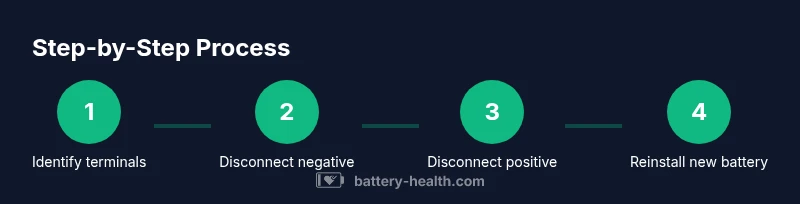
- 1
Identify terminals
Locate the two battery posts and confirm which is negative (-) and which is positive (+). Check for covers and corrosion that might obscure the signs. This ensures you apply the correct sequence from the start and reduces the risk of accidental contact with live terminals.
Tip: Double-check polarity before loosening any clamps. - 2
Prepare workspace
Turn off the engine and remove the keys. Wear gloves and safety glasses, and remove any jewelry. Keep a baking soda solution nearby to neutralize acid if needed. Ensure good lighting and a stable stance.
Tip: Get someone to assist if the battery is heavy. - 3
Disconnect negative first
Loosen the negative clamp with the appropriate wrench, then lift it off the post. Move the cable aside so it can’t touch the battery or chassis. Verify the post is free of moisture and corrosion before continuing.
Tip: Keep the wrench away from metal surfaces. - 4
Disconnect positive next
Loosen and remove the positive clamp. Place the clamp away from the battery to prevent accidental contact. Ensure the post is clean and dry before proceeding.
Tip: Do not let tools bridge the posts. - 5
Remove the battery
Carefully lift the battery from the tray using proper lifting technique. Place it on a non-conductive surface and inspect the tray for damage. Avoid tilting the battery to prevent spills.
Tip: If you feel resistance, stop and recheck clamps and brackets. - 6
Inspect and clean
Check posts, clamps, and cables for corrosion. Clean with a terminal brush and apply dielectric grease after drying. Replace any damaged cables or clamps if necessary.
Tip: Neutralize any acid with baking soda solution before cleaning. - 7
Install and reconnect
Place the new battery in the tray, reconnect the positive terminal first, then the negative. Tighten clamps evenly and ensure solid contact. Start the vehicle to verify a proper connection.
Tip: Take a quick photo of terminal arrangement for reference.
FAQ
Should I always remove the negative terminal first when disconnecting a car battery?
Yes. Removing the negative terminal first reduces the risk of short circuits if your tool contacts the vehicle chassis. This is the standard safety practice for most cars.
Yes, removing the negative terminal first is the standard safety practice to avoid short circuits.
What if the battery has heavy corrosion on the terminals?
Corrosion can prevent a solid connection. Clean with a terminal brush and a baking soda solution, then dry before reconnecting. If corrosion is severe, replace cables or consult a pro.
If there's heavy corrosion, clean carefully and consider replacing cables or consulting a professional.
Can I disconnect the battery while the engine is running?
No. Disconnecting while the engine is running can damage the electrical system and cause sparks. Always turn off the engine and remove the key first.
Nope, always shut off the engine before disconnecting.
Is it safe to reconnect the battery if I don’t have dielectric grease?
Dielectric grease is recommended to reduce corrosion, but if unavailable, ensure clean posts and clamps, then use a protective sealant when possible.
Grease helps prevent corrosion, but thorough cleaning and proper tightening also matter.
What should I do with the old battery?
Take the old battery to an approved recycling center or auto parts store. Do not throw it in regular trash due to hazardous materials.
Recycle the old battery at an authorized center.
Watch Video
Quick Summary
- Remove negative terminal first to minimize sparks.
- Follow user-safe steps and wear protective gear.
- Inspect and clean terminals for long-term reliability.
- Reconnect in reverse order for safe reassembly.
- Dispose old battery properly and ensure good connections.