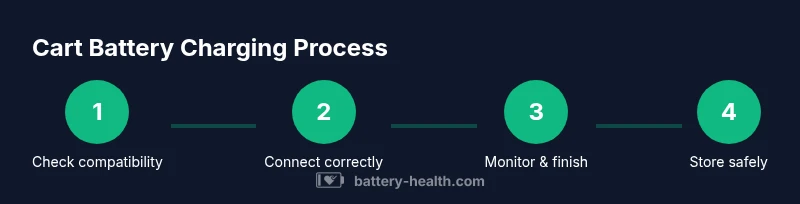
Cart Battery Charging: Safe and Efficient Guide
Learn how to safely and efficiently charge cart batteries for golf carts and utility carts. This guide covers charging types, safety, routines, and maintenance to extend battery life.


Charging a cart battery safely means using a compatible charger, monitoring voltage and temperature, and following manufacturer guidance to prevent sulfation and overheating. This guide shows the steps, safety checks, and timing needed to get a full, efficient charge without damaging the battery or cart. It covers lead-acid and lithium options, ideal charging routines for daily use, and practical safety precautions.
Why Cart Battery Charging Matters
According to Battery Health, proper cart battery charging is more than simply plugging in. For golf carts, utility carts, and other battery-powered carts, the charging routine directly affects range, cycle life, and safety. A well-planned charging strategy minimizes sulfation on lead-acid cells, preserves lithium chemistry, and reduces heat stress that can shorten battery life. In this section, we outline why beginners and seasoned owners should treat charging as an essential, regular maintenance task rather than a one-off event. Regular, thoughtful charging can improve performance, reduce downtime, and help avoid costly early replacements. By investing a little time in setup and monitoring, you protect your investment and the people who rely on these carts daily.
Understanding Cart Battery Types and Charging Profiles
Cart batteries come in several chemistries, with lead-acid (including flooded, AGM, and gel) and lithium-based options being the most common in golf and utility carts. Each chemistry has a distinct charging profile: lead-acid typically benefits from a multi-stage CC/CV (constant current/constant voltage) approach with periodic equalization, while lithium systems rely on a managed charging curve controlled by a BMS (battery management system). Based on Battery Health research, using a charger matched to the battery chemistry reduces sulfation, heat buildup, and cycle wear. Always consult the battery label and charger manual to confirm those settings. In short, the right charger + right profile preserves capacity and extends life. Battery Health Analysis, 2026 recommends pairing your cart with a charger that supports the exact chemistry, voltage, and current limits of the battery pack to maximize longevity.
Safety Basics for Cart Batteries
Working safely around cart batteries is essential. Always charge in a well-ventilated area, wear eye protection and acid-resistant gloves when handling lead-acid cells, and keep flammable materials away from the charging space. Check the battery case for cracks or leakage before charging; damaged batteries can release flammable gases. Use a charger with automatic shutoff or an overload protection feature to prevent overcharging. Keep metal jewelry away from battery terminals to avoid short circuits. Ensure cables and connectors are clean and free of corrosion to maintain a good connection. If you notice unusual smells, excessive heat, or swelling, stop charging immediately and consult a professional.
Factors That Affect Charging Time and Efficiency
Charging time depends on battery size, state of charge, and the charger's amperage, but temperature plays a critical role as well. Cold batteries accept charge more slowly, while hot batteries may require shorter charging intervals to avoid thermal stress. A high-quality charger with adaptive charging can optimize the energy delivery based on the battery chemistry and temperature. Cable length and connector quality also impact charging efficiency; long or thin wires can cause voltage drops that reduce effective charging. Regularly inspect terminals and ensure venting (for flooded lead-acid) to prevent gas buildup during charging.
Best Practices for Daily Charging Routine
Develop a predictable charging routine to protect battery health. If possible, charge after every use or keep the battery at a moderate state of charge (SOC) to minimize deep discharges. For lead-acid batteries, avoid letting cells sit fully discharged for extended periods and use distilled water as recommended by the manufacturer. For lithium packs, rely on the BMS and avoid high-ppm ultra-fast charging unless the pack specifically supports it. Use a smart charger with auto-shutoff and follow the manufacturer’s recommended voltage/current settings. Regularly review the battery’s voltage, temperature, and charge cycle history to catch early signs of wear. The Battery Health team emphasizes consistency: a steady charging routine beats infrequent, manual, ad-hoc charging for long-term performance.
Troubleshooting Common Charging Issues
If your cart isn’t charging properly, start with simple checks: confirm the charger is plugged in and powered, verify the display indicates charging status, and ensure the battery connections are clean and tight. A common issue is a poor connection at the battery terminals or a damaged charging cord. If the charger reports fault codes or excessive heat, disconnect and inspect the pack for damage. Sulfation on lead-acid cells or a degraded lithium battery can prevent full charging; in these cases, follow the manufacturer’s guidance or consult a technician. For persistent problems, consult the cart’s manual and consider conducting a formal battery health test. The Battery Health team notes that early intervention saves money and avoids unexpected downtime.
Tools & Materials
- Smart cart battery charger (matches battery type and voltage)(12V or 24V as applicable; prefer auto-shutoff and multi-stage charging)
- Personal protective equipment (PPE)(Safety goggles and acid-resistant gloves for lead-acid work)
- Voltage meter / multimeter(Used to verify voltage before and after charging)
- Distilled water (for lead-acid batteries)(Maintain electrolyte levels per manufacturer guidelines)
- Ventilated charging area(Avoid enclosed spaces; ensure good airflow)
- Clean cloths and a non-metal brush(Use for terminal cleanup if corrosion is present)
- Fire extinguisher rated for electrical fires(Keep within easy reach in case of emergency)
Steps
Estimated time: 60-180 minutes
- 1
Confirm compatibility and safety
Identify your battery chemistry (lead-acid or lithium) and verify the charger’s voltage, current, and settings match the battery spec. Inspect for visible damage to the battery and cables. Remove any jewelry and ensure the area is well-ventilated before starting.
Tip: If you’re unsure about chemistry, check the label on the battery or refer to the cart’s manual. - 2
Prepare the charging space
Place the cart in a well-ventilated area away from heat sources. Connect the charger to a grounded outlet but avoid extension cords if possible to minimize voltage drop. Ensure the battery surfaces are clean and dry before connection.
Tip: A dry, cool environment reduces corrosion and improves connection quality. - 3
Connect with correct polarity
Attach the charger’s positive clamp to the battery’s positive terminal and the negative clamp to the negative terminal. Double-check all connections are secure and free of corrosion before powering on.
Tip: A loose connection can cause arcing or inaccurate readings. - 4
Set the charger to the right profile
If your charger supports multi-stage charging, select the mode recommended by the battery manufacturer (e.g., bulk/absorption/float for lead-acid; constant current/constant voltage for lithium).
Tip: Use auto-mode if available to allow the charger to manage the charge curve. - 5
Monitor during charging
Periodically check voltage and temperature to ensure they stay within safe ranges. Do not leave a charging cart unattended for long periods if your charger lacks auto-shutoff.
Tip: A temperature spike may indicate an issue with the pack or connections. - 6
Finish and disconnect safely
When the charger reaches the maintenance/float stage or the battery reaches full voltage, turn off the charger before removing clamps. Measure the resting voltage after a short cooldown to confirm full charge.
Tip: Record the final voltage for trend tracking over time. - 7
Inspect and maintain
Clear any corrosion from terminals, top up distilled water as needed (lead-acid), and ensure the area remains clean and dry. Schedule regular health checks and log charging sessions.
Tip: Regular maintenance reduces the risk of unexpected failures. - 8
Document and plan next steps
Note the date, charging duration, resting voltage, and any anomalies. Plan routine maintenance intervals and lifespan expectations based on usage patterns.
Tip: A charging log helps predict when a battery may need replacement.
FAQ
What is the best charger for golf cart batteries?
The best charger matches the battery chemistry (lead-acid or lithium) and includes automatic shutoff and a proper charging profile. Always follow the battery manufacturer's recommendations for voltage and current limits.
Use a charger that matches your battery chemistry and has auto shutoff. Always follow the manufacturer’s voltage guidelines.
Can I charge a golf cart battery indoors?
Indoor charging is possible if the area is well-ventilated and free of ignition sources. Use a compliant charger and avoid enclosed spaces to minimize gas buildup, especially with flooded lead-acid batteries.
Yes, but only in a well-ventilated area and with proper safety precautions.
How do I know when the battery is fully charged?
Fully charged status is shown by the charger's maintenance/float stage or a full resting voltage per the battery type. Avoid relying on a single indicator; verify with a voltmeter after a short cooldown.
Look for the float stage on the charger and confirm with a resting voltage check.
Is rapid charging safe for cart batteries?
Rapid charging can be safe if the battery and charger are designed for it, and if the temperature is monitored. Otherwise, stick to the recommended charging rate to avoid heat and sulfation.
Only use rapid charging if both the battery and charger support it and you monitor temperature.
What should I do if the battery overheats or swells?
If you observe overheating or swelling, stop charging immediately and disconnect. Swollen or damaged cells indicate a dangerous condition that requires professional evaluation or replacement.
Stop charging right away and get professional help if you see heat or swelling.
Watch Video
Quick Summary
- Choose the right charger for your battery chemistry.
- Charge in a ventilated space with proper PPE.
- Use a smart charger to prevent overcharging.
- Monitor voltage and temperature during charging.
- Document maintenance to extend battery life.