How to Charge a 12V Battery Safely and Effectively
Learn how to safely charge a 12V battery for cars, motorcycles, and boats. This guide covers charger selection, safety steps, and maintenance tips to prolong battery life.


You will learn how to charge a 12V battery safely and effectively, including how to choose the right charger, prepare your workspace, and follow a practical step-by-step process that minimizes risk and maximizes battery life. This quick guide highlights essential safety tips and the key steps to prevent overcharging or damage.
Safety first: risks and basics
Charging a 12V battery carries risks including hydrogen gas buildup, sparks, and thermal runaway if misused. The Battery Health team emphasizes that proper safety gear and correct charger selection are foundational. According to Battery Health, following manufacturer guidance and using a charger suited to your battery type reduces wear and extends life. This section outlines core safety concepts and the rationale behind them so you can charge with confidence and minimize hazards. Always work in a well-ventilated area and keep a fire extinguisher nearby as a precaution. For vehicles or equipment with exposed terminals, disconnect loads and ensure the area is dry before you start.
Key safety habits include wearing eye protection, using insulated tools, and never smoking near the battery. Remember that lead-acid batteries can emit flammable gases, so vents should be unobstructed and your face kept clear of the opening during charging. Proper PPE and careful handling underpin a successful charging session and protect both people and the battery.
Understanding 12V battery types and charging goals
Before you plug in, know what type of 12V battery you have. Most cars use flooded or absorbed glass mat (AGM) lead-acid batteries, while some motorcycles and marine equipment may use AGM or gel variants. Lithium 12V packs exist as well, but they require a charger designed for Li-ion chemistry. Your charging goal is to restore the battery to its resting voltage without overheating or degrading electrolyte balance. The Battery Health team notes that the charging approach should match the chemistry and state of health of the battery; mismatches can shorten life or pose safety risks. Additionally, a healthy battery should show stable voltage around rest when disconnected after charging.
Assess the battery’s exterior for cracks, bulging, or leakage. If any signs appear, do not attempt to charge and consider replacement. For older batteries, electrolyte level (if applicable) should be checked and topped with distilled water only when recommended by the manufacturer.
Choosing the right charger and method
Your charger type must match the battery chemistry and capacity. Use a smart charger with automatic termination to prevent overcharging, especially for lead-acid and AGM batteries. For lithium 12V packs, ensure the charger supports Li-ion charging profiles and battery protection features. In general, a charger offering multiple modes (trickle, standard, and maintenance) lets you tailor the session to the battery’s condition. The key is to avoid high-current charging on a cold or damaged battery, which can cause heat buildup. The Battery Health analysis, 2026, emphasizes using equipment that monitors voltage and temperature to maintain safety and longevity.
Always read the battery’s label and the charger manual. If the battery is old or swollen, treat it as a potential fault and replace it rather than forcing a full recharge.
Step-by-step charging guide overview
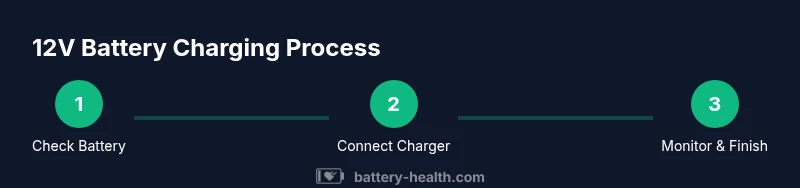
This section provides a structured approach you can apply in most scenarios—car, motorcycle, or boat. It covers preparation, connection, monitoring, and post-charge checks. While the steps are general, always tailor them to the specific battery type and charger you’re using. By following a consistent process, you reduce the risk of overcharge, thermal issues, or electrolyte loss. The guide below aligns with industry best practices and manufacturer recommendations.
Common scenarios: car, marine, and lead-acid vs lithium
Charging practices differ across environments. A car battery typically handles higher daily cycling and may be larger in capacity, but you still want to prevent overcharging. Marine batteries face more vibration and heat, which can influence charging speed and health. For lead-acid batteries, long-term maintenance and regular equalization charges may be needed depending on your system. Lithium 12V packs require precise current and voltage profiles and may not tolerate deep discharges the same way. Always consult the vehicle or battery manufacturer for recommended charging parameters and safe voltage ranges.
Maintenance tips after charging and long-term care
After charging, test the battery with a multimeter to confirm voltage is within the expected resting range. Check electrolyte levels if you have a flooded lead-acid battery, and top up with distilled water only when advised. Clean any corrosion at terminals, then apply a light coat of terminal protector. Regularly inspect cables for wear and ensure clamps are tight but not over-torqued. For longevity, avoid letting a 12V battery sit in a deeply discharged state and perform periodic top-ups and gentle cycling to preserve capacity. Battery Health recommends scheduling routine checks to catch sulfation and other issues early.
Troubleshooting and warning signs
If the charger struggles to start, overheats, or the battery emits a strong smell, stop charging immediately. A battery that swells, leaks, or has corroded terminals may be unsafe to charge. If voltage remains low after a full charging cycle, the battery could be beyond its usable life. In such cases, seek professional testing or replacement. If you notice frequent voltage drops or rapid self-discharge, there may be an underlying fault in the charging system or the battery itself. The Battery Health team stresses that persistent issues warrant step-by-step diagnosis rather than repeated charging attempts.
Note on indoor charging and safety precautions
Indoor charging can be safe if you provide adequate ventilation and keep away from sources of ignition. Do not leave charging batteries unattended for long periods in cramped or poorly ventilated spaces. Use a dedicated circuit and avoid power strips, which can overheat with charging. If you must charge indoors, position the battery away from combustible materials and ensure smoke detectors are functional. Battery Health’s guidance highlights that safe indoor charging is possible when you follow established procedures and use appropriate equipment.
Tools & Materials
- 12V battery charger(Charger must match battery chemistry (lead-acid/AGM/Li-ion) and have a smart charge profile)
- Multimeter or voltmeter(For pre/post charge voltage checks and circuit verification)
- Safety goggles(Protect eyes from any electrolyte splash or arcs)
- Insulated gloves(Keep hands safe from heat and corrosion)
- Wire brush / terminal cleaner(Clean corrosion on terminals to ensure good contact)
- Distilled water (for flooded lead-acid)(Only if your battery requires electrolyte topping)
- Rags or a spill mat(Contain any electrolyte leaks)
- Owner’s manual for battery/charger(Follow manufacturer specific guidance)
- Fire extinguisher (class B/C)(Safety precaution in case of flare-ups)
Steps
Estimated time: 60-120 minutes
- 1
Inspect battery and charger compatibility
Verify that the battery chemistry and capacity are suitable for the charger. Ensure there are no visible cracks or leaks and that the terminals are clean. If you detect swelling or damage, do not charge and replace the battery.
Tip: When in doubt, consult the battery’s label and the charger manual to confirm compatibility. - 2
Prepare workspace and safety gear
Move the vehicle or device to a well-ventilated area. Put on safety goggles and insulated gloves. Remove rings or metal jewelry and keep sparks away from the battery.
Tip: Have the fire extinguisher within arm’s reach before you start. - 3
Connect charger to battery correctly
Attach the charger’s negative lead to a grounded, non-moving part of the vehicle or battery negative terminal, then connect the positive lead to the positive terminal. Ensure clamps are tight and secure before powering on.
Tip: Double-check polarity before turning on the charger. - 4
Set charger mode and begin charging
Choose the appropriate mode (maintenance/standard/trickle) based on the battery type and state. Start charging and monitor the initial current draw and temperature.
Tip: Do not use high-current settings on an old or damaged battery. - 5
Monitor progress and avoid overcharging
Periodically check voltage and temperature. If the charger has automatic termination, rely on it; otherwise disconnect if the current does not drop or if the battery overheats.
Tip: If the battery becomes warm to the touch, stop charging and reassess. - 6
Disconnect and perform post-charge checks
Turn off the charger, remove clamps in reverse order of connection, and test resting voltage with a multimeter. Verify the battery reaches its expected resting voltage and check for abnormal odors or bulging.
Tip: Record the resting voltage for future reference.
FAQ
What is the safest way to charge a 12V battery?
Use a charger appropriate for your battery type and follow the manufacturer’s safety instructions. Keep the area ventilated, wear PPE, and avoid sparks. If any signs of damage appear, stop and replace the battery.
The safest approach is to use a charger suited to your battery type, follow safety guidelines, and replace a damaged battery rather than forcing a charge.
Can I use a car charger for a motorcycle battery?
Only if the charger supports both battery sizes and chemistries and the motorcycle battery rating matches. Always check the manual and avoid overloading the charger.
Yes, but only if the charger is compatible with both battery types and you follow the manual.
How often should I charge a 12V battery?
Frequency depends on usage and storage conditions. Check the battery’s documentation and perform a recharge if the resting voltage drops below the recommended level.
Charge as needed based on usage and resting voltage per the battery’s guidelines.
What are signs a battery is failing during charging?
Unusual heat, swelling, odor, or inability to hold charge indicate a failing battery or charging system. Stop charging and diagnose or replace.
Watch for heat, swelling, or lingering odors; these suggest a problem.
Is indoor charging safe?
Indoor charging is possible with good ventilation and away from flames. Use a dedicated outlet and avoid extension cords that may overheat.
Indoor charging can be safe if well-ventilated and properly set up.
Do Li-ion 12V batteries charge differently from lead-acid?
Yes. Li-ion batteries require specific charging profiles and protections. Lead-acid batteries have different voltage and current guidelines and may require maintenance checks.
Li-ion and lead-acid batteries need different charging profiles and protections.
Watch Video
Quick Summary
- Choose a compatible charger for your battery chemistry.
- Follow safety procedures to prevent gas buildup and sparks.
- Monitor voltage and temperature during charging.
- Perform post-charge tests to confirm battery health.