Charging Lawn Mower Battery: A Practical How-To Guide
Learn safe, proven methods to charge a lawn mower battery. This step-by-step guide covers lead-acid, AGM, and lithium packs, with safety tips, proper charger selection, maintenance, and troubleshooting to maximize battery life.


In this guide you will learn how to safely charge a lawn mower battery, whether you’re using a lead-acid, AGM, or lithium-ion pack. You'll need the appropriate charger, clean connectors, and a dry, ventilated workspace. Follow a step-by-step approach to avoid overcharging, heat buildup, and spills while preserving battery life.
Understanding Lawn Mower Battery Types
Lawn mower batteries come in a few common chemistries: flooded lead-acid, sealed AGM (absorbed glass mat), and, in newer or premium models, lithium-ion. The Battery Health team notes that most home lawn equipment uses lead-acid or AGM packs because they deliver reliable starting power at a predictable price. Lithium packs are lighter and can provide longer run times in higher-end devices, but they require different chargers and charging profiles. Regardless of chemistry, the core idea is to provide a controlled current and voltage to avoid damaging plates, swelling, or excessive heat. Understanding your battery type helps you pick the correct charger and set safe parameters, which in turn protects the mower and your workspace.
Safety First: Personal Protective Equipment and Ventilation
Charging a lawn mower battery can release hydrogen gas, especially with flooded lead-acid types, so do this in a well-ventilated area away from sparks or flames. Always wear safety glasses and chemical-resistant gloves to guard against acid splashes. Keep children and pets away during charging, and unplug the charger before touching terminals. A dry, cool workspace reduces the risk of heat buildup and helps identify any leaks or swelling early. According to Battery Health, following proper PPE and ventilation reduces risk and prolongs battery life.
What You’ll Need: Charger Types and Accessories
Selecting the right charger is the single most important step in charging lawn mower batteries. Use a smart charger designed for your battery chemistry (lead-acid, AGM, or lithium), with appropriate voltage (typically 12V for many mowers, higher for specialty packs) and a maintenance or float mode for long-term storage. You’ll also want a clean cloth, a non-metal brush for terminals, a multimeter to verify voltage, and optional distilled water for flooded lead-acid batteries if topping up is required by the manufacturer. Being prepared helps you complete the task quickly and safely. Battery Health emphasizes choosing a charger that matches your battery type to avoid overcharging or damage.
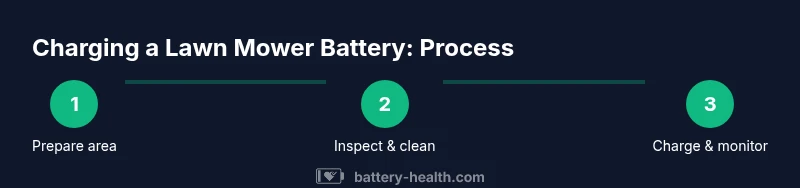
Step 1: Prep Your Work Area
Move the mower to a dry, well-ventilated area. Disconnect the battery from the mower if possible, and remove any metal jewelry to prevent accidental short circuits. Wipe down the battery surfaces and terminals with a dry cloth to remove dirt and oil. Check the charger and cords for any wear or damage before plugging in. Preparing a clean, safe space is essential to a trouble-free charging session and helps prevent spills or sparks while you conduct charging for your lawn mower battery.
Step 2: Inspect and Clean Battery Terminals
Inspect the terminals for corrosion, white crust, or looseness. Clean them with a baking soda solution and a non-metallic brush, then wipe dry. Tighten connections just enough to ensure a solid contact—no overtightening, which can damage the terminal posts. Corrosion can dramatically increase resistance and slow charging, so this step directly impacts charging efficiency and safety. If you notice swelling or a strong odor, stop and consult the manufacturer. Battery Health notes that clean terminals improve charging efficiency and prolong pack life.
Step 3: Connect the Correct Charger
Connect the charger to the battery terminals, ensuring correct polarity (positive to positive, negative to negative). If you’re unsure about polarity, double-check the markings on both the charger and the battery. Use the lowest safe charging setting first and confirm that the charger’s display shows a charging state. Avoid using a car battery charger or any device not rated for your battery chemistry, as that can cause damage or hazardous conditions. The goal is a safe, compatible connection that enables controlled charging for your lawn mower battery.
Step 4: Set Charging Parameters and Monitor
Set the charger to the appropriate voltage and current according to your battery type (lead-acid/AGM typically require a conservative current; lithium-ion demands a different profile). Begin charging and monitor for heat buildup, unusual smells, or changes in the charger display. Do not leave the charger unattended if you notice excessive heat or vibration. For many homeowner batteries, a maintenance/float mode is ideal after an initial bulk charge. This reduces wear and keeps the battery ready for use. Battery Health reminds readers to respect the charging profile to maintain battery health over time.
Step 5: Complete Charging and Disconnect Safely
When the battery reaches the recommended voltage, switch to maintenance mode if available and disconnect the charger first, then disconnect the leads from the battery. Wipe away any condensation or moisture, and store the charger in a dry place. Reinstall the battery into the mower and perform a quick system check by turning on the mower to ensure proper operation. If the battery remains at a low voltage after charging, consider testing the battery capacity or consult the manufacturer’s service guide.
Step 6: Post-Charging Voltage Check and Function Test
Measure the battery’s voltage with a multimeter to verify it’s within the expected range for your chemistry. A quick load test or a test run on the mower can confirm whether the battery can sustain operation. If voltage immediately falls after a test run, the battery may be failing and in need of replacement. Regular checks help catch aging packs before they fail during mowing season, reducing downtime. Battery Health highlights that consistent monitoring helps extend the life of your lawn mower battery.
Troubleshooting Common Issues
If the charger won’t power up, verify the outlet, the charger’s input, and that the battery contacts are clean and properly connected. If you notice excessive heat during charging, remove the battery and inspect for damage or swelling. A failure to hold a charge might indicate a degraded cell or sulfation in lead-acid types. In such cases, follow the manufacturer’s replacement guidance and avoid attempting risky home repairs.
Maintenance Tips to Extend Battery Life
Prevent sulfation by avoiding deep discharge and keeping a partial charge during off-season storage. Clean terminals regularly, store the battery in a cool, dry place, and use a charger with a maintenance mode to prevent trickle charging from causing unnecessary wear. Record charging cycles and voltages to spot gradual degradation over time. These practices help maintain performance and extend life for your lawn mower battery. Battery Health advises scheduling periodic checks as part of routine lawn-care maintenance.
Environment and Storage Considerations
Store batteries away from extreme temperatures and direct sunlight. For flooded lead-acid batteries, keep electrolyte levels topped up with distilled water according to manufacturer guidelines, and never store a damaged or leaking pack. When it’s time to dispose of an old battery, follow local regulations for recycling. Proper storage protects the battery from self-discharge, leaks, and degradation and ensures safe handling when you’re ready to charge again. Battery Health notes the importance of responsible storage for long-term battery health.
Quick Reference Cheat Sheet
- Always wear PPE and work in a ventilated area.
- Use a charger compatible with your battery chemistry.
- Clean terminals before charging and verify polarity.
- Start at a lower charging current, then move to maintenance mode if available.
- Monitor temperature and never leave a charging session unattended.
- After charging, test voltage and perform a short mower run to confirm performance.
- Store in a cool, dry place and recycle old batteries responsibly.
- If you detect swelling, odor, or leaks, stop and contact the manufacturer.
Tools & Materials
- Appropriate charger for your battery type (lead-acid/AGM/Li-ion)(Ensure charger matches voltage and has correct charging profile (bulk/maintenance).)
- Multimeter(To verify voltage before and after charging.)
- Safety gear (gloves and safety glasses)(Protect hands and eyes from acid spills and sparks.)
- Cleaning supplies (distilled water, baking soda, non-metal brush)(Use baking soda solution to neutralize minor acid residue on flooded lead-acid batteries; avoid metal tools on live circuits.)
- Dry cloths and a non-metallic brush(Clean and dry terminals and surfaces before charging.)
- Optional top-up water (distilled) for flooded lead-acid batteries(Only if your battery type requires topping up electrolyte per manufacturer instructions.)
Steps
Estimated time: 60-90 minutes
- 1
Prepare the workspace
Move the mower to a dry, ventilated area. Remove the battery from the mower if possible and inspect the charger for any wear. Lay out safety gear and cleaning supplies before you begin to minimize interruptions.
Tip: Ventilation is key; hydrogen gas can form even at low charging levels. - 2
Inspect and clean terminals
Check for corrosion or loose clamps. Clean terminals with a baking soda solution and a non-metal brush, then dry completely before reconnecting.
Tip: Corrosion increases resistance and slows charging. - 3
Verify polarity and connect charger
Attach the charger leads to the correct battery terminals and ensure proper polarity. Double-check that you’re using the right charger setting for your chemistry.
Tip: Wrong polarity can cause sparks or short circuits. - 4
Set charging parameters
Set the charger to the recommended voltage/current for your battery type. If available, enable maintenance/float mode for long-term storage.
Tip: Starting with a conservative current reduces stress on the battery. - 5
Begin charging and monitor
Start charging and observe for heat, smells, or swelling. If the charger shows abnormal readings, stop charging and re-check connections.
Tip: Never leave a charging battery unattended if you notice heat. - 6
Finish and test
When reached, switch to maintenance mode if possible, disconnect, and perform a voltage check. Reinstall in the mower and perform a short test run.
Tip: A quick test run confirms the battery can deliver startup power. - 7
Post-charge care
Wipe surfaces, store the charger dry, and keep the battery in a cool, dry place. Track cycles and voltages for future reference.
Tip: Record charging conditions to detect gradual decline. - 8
Disposal or replacement
If the battery shows swelling, leakage, or can no longer hold charge, follow local recycling rules and manufacturer replacement guidance.
Tip: Do not attempt to repair a damaged battery.
FAQ
Is it safe to charge a lawn mower battery indoors?
Only if the area is well-ventilated, away from flames or sparks, and you follow the manufacturer’s safety guidelines. Use PPE and avoid leaving the charger unattended if there are signs of overheating.
Charge indoors only in a well-ventilated area, with safety gear and the charger in view. If you smell gas or see heat, stop immediately.
Can I use a car charger to charge a lawn mower battery?
No. Car chargers are typically not suitable for lawn mower batteries because they can deliver too high a current or the wrong charging profile for your chemistry. Use a charger designed for the specific battery type.
A car charger is usually not recommended for lawn mower batteries; use the right charger instead.
How long does charging usually take?
Charging time varies by battery chemistry and state of charge. Budget for 30 minutes to a couple of hours, depending on the pack and whether you’re performing a bulk charge or maintenance charging.
It can take from about 30 minutes to a few hours, depending on the battery type and charge level.
Should I top up water in flooded lead-acid batteries before charging?
Only if the battery is flooded lead-acid and the manufacturer requires topping up. Use distilled water and follow safe procedures to avoid overfilling.
Only if your battery type needs it and you follow the manual. Don’t overfill.
What should I do if the charger gets hot?
Turn off and unplug the charger, disconnect the battery, and allow everything to cool. Check for damaged cables or connections before attempting to charge again.
If the charger heats up, shut it down and unplug it to cool before inspecting for issues.
Can I leave the battery on charge overnight?
If your charger has a proper maintenance/float mode and the battery is within safe voltage, overnight charging is acceptable. Otherwise, avoid overnight charging to prevent overcharging.
Only with a charger designed for maintenance charging and when the battery is within safe voltage.
Watch Video
Quick Summary
- Use the correct charger for your battery chemistry
- Keep terminals clean and connections tight
- Charge in a ventilated, dry area and monitor for heat
- Avoid deep discharges and store in cool, dry places
- Follow manufacturer guidance for maintenance mode and end-of-life disposal