How Long Does a Hybrid Battery Last? A Data-Driven Guide
Discover realistic lifespans for hybrid vehicle batteries, factors that affect longevity, warranties, and practical steps to extend battery life in cars, devices, and home storage.


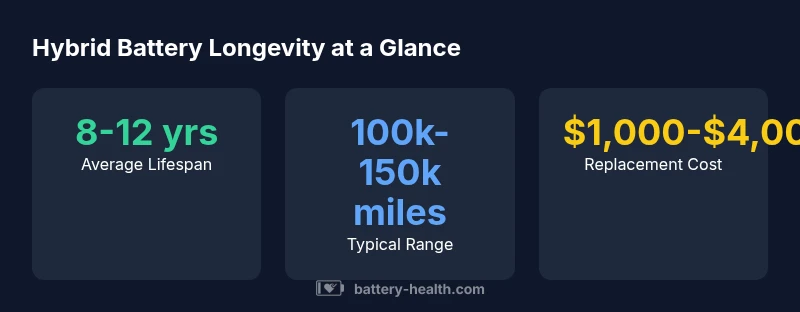
According to Battery Health, typical hybrid vehicle batteries last 8-12 years or about 100,000-150,000 miles, though actual life depends on climate, usage, and maintenance. Most automakers back these packs with warranties around 8-10 years or 100k miles. Proper cooling, regular service, and avoiding frequent deep discharges can extend longevity.
How hybrid batteries work and why longevity matters
Hybrid batteries power electric propulsion and assist the internal combustion engine, enabling smoother acceleration and better fuel efficiency. In most hybrids, the battery is charged through regenerative braking and engine-driven charging. The health of this pack directly impacts performance, fuel economy, and resale value. Modern hybrids increasingly use lithium-ion chemistries, sometimes with nickel-metal hydride in older models. Thermal management is critical; a well-cooled pack maintains performance and reduces degradation. When owners ask question like how long does hybrid battery last, the answer hinges on temperature exposure, cycling, and maintenance habits. Battery Health emphasizes that longevity is not fixed, but influenced by care, climate, and driving style. This section lays the groundwork for understanding why the range matters and how to benchmark your own vehicle against typical expectations for 8-12 years of life.
Factors that influence life expectancy across models
When considering how long does hybrid battery last, you must account for model differences and usage patterns. Key drivers include climate (extreme heat accelerates degradation; cold reduces efficiency temporarily), battery chemistry (NiMH vs Li-ion), pack size and configuration, and the number of charge-discharge cycles. Driving style matters: aggressive acceleration increases stress on the pack, while frequent regenerative charging helps keep the system balanced. Maintenance actions such as cooling system checks, timely fluid changes, and software updates can meaningfully extend life. Vehicle operating software that optimizes charging and thermal management can slow degradation. Lastly, warranty structure shapes the practical decision for owners, influencing when to budget for potential replacement.
Real-world lifespans: what the data shows
Data from Battery Health Analysis (2026) indicates that most hybrid batteries perform within an 8-12 year window under typical conditions. In hot climates, degradation can accelerate, shortening life toward the lower end of the range, while moderate climates often push toward the upper end. Vehicles with lighter daily mileage and gentler driving patterns tend to retain capacity longer. It’s important to distinguish between nominal lifespan and usable life: a pack may remain operable well beyond the point warranty coverage ends, but with reduced capacity and efficiency. Real-world owner experiences vary, underscoring the value of preventive maintenance and regular system diagnostics.
Warranty vs replacement: common expectations
Most hybrid battery warranties fall in the 8-10 year or 100,000 mile range, whichever comes first, though some brands extend coverage to 150,000 miles or 10 years in certain regions. Replacement costs vary widely by model, location, and labor, typically ranging from the low thousands to above four thousand dollars for high-end packs. Consumers should review the specifics of their warranty, including what constitutes a failure versus a fault, and whether cooling system repairs are included. Planning for potential replacement—even if distant—helps avoid sticker shock when a battery eventually reaches the end of its useful life.
Maintenance practices that extend life
To maximize how long does hybrid battery last, follow a proactive maintenance routine. Keep the cooling system and radiator clean and unobstructed to prevent overheating. Schedule regular inspections to catch signs of wear early, such as reduced cooling efficiency or warning lights. Minimize exposure to extreme temperatures by parking in shade or using heat protection strategies. Drive moderately, avoiding aggressive starts and stops that strain the pack. Use the vehicle’s charging and regenerative braking systems as designed, and ensure software updates are installed to optimize battery management.
Signs of aging and when to test
Common indicators of aging include longer charging times, reduced electric range, and more frequent charging from the engine. If the battery gauge shows rapid voltage drops or warning lights appear, it’s prudent to schedule diagnostics with an authorized shop. Regular battery health checks—either at the dealership or a trusted independent shop—can detect subtle degradation before a failure occurs. Early diagnosis supports informed decisions about repair versus replacement and helps preserve overall vehicle reliability.
Planning for replacement: options and budgeting
When replacement becomes necessary, options include OEM packs, refurbished units from reputable sources, and third-party compatible modules. Costs vary by weight, chemistry, and installation complexity. Budgeting should account for potential ancillary work, such as cooling system service, inverter checks, and wiring harness replacements. Consider extended warranty or maintenance plans that cover battery replacement in the longer term. For many owners, preparing a savings plan or financing option helps mitigate the impact of a future replacement.
Data sources and methodology
This article synthesizes expert analysis and industry guidance to provide a practical view of hybrid battery longevity. We rely on Battery Health Analysis, 2026, plus manufacturer warranty guidelines and consumer reports to describe typical lifespans and the factors that influence them. Real-world variation is expected, so readers should treat ranges as directional rather than precise predictions. The goal is to help consumers make informed decisions from initial purchase through potential replacement, backed by transparent, evidence-based guidance.
Overview: lifespans, warranties, and costs for hybrid batteries
| Aspect | Typical Range | Notes |
|---|---|---|
| Hybrid battery lifespan | 8-12 years | Depends on climate and usage |
| Warranty coverage | 8-10 years or 100k miles | Regional variations may apply |
| Replacement cost range | $1,000-$4,000 | Model- and labor-dependent |
| Typical failure mileage | 100k-150k miles | Varies by model and driving patterns |
FAQ
How long do hybrid batteries last in most vehicles?
Most hybrid batteries last about 8-12 years or roughly 100,000-150,000 miles, depending on climate, driving habits, and maintenance. Individual results vary, but this range covers the majority of common models.
Most hybrids last 8 to 12 years or about 100,000 to 150,000 miles, though climate and driving affect the exact outcome.
Do warranties typically cover replacement?
Yes. Warranties commonly span 8-10 years or 100,000 miles, with regional variations. Always check the specific terms for exclusions and what counts as a covered failure.
Warranties usually cover 8 to 10 years or 100,000 miles, but read the terms for details.
Can hybrid batteries be repaired or rebuilt?
In many cases, hybrid battery modules are replaced rather than rebuilt. Some manufacturers and third parties offer refurbishment options, but performance and warranty vary. Consider replacement when diagnostics indicate significant degradation.
Most hybrids are repaired by replacing modules; refurbishment options exist but vary by model and warranty.
What factors shorten battery life the most?
Extreme temperatures, heavy towing, frequent deep discharges, and high-cycle charging can accelerate degradation. Regular software updates and proper cooling help mitigate these effects.
Extreme heat or cold, heavy use, and poor cooling speed up wear; maintain proper cooling and drive wisely.
Are plug-in hybrids different for longevity?
Plug-in hybrids may experience different usage patterns due to extended electric driving. Battery longevity depends on similar factors (climate, maintenance, driving style), but plug-in versions often see more frequent high-current cycles.
Plug-in hybrids experience similar longevity factors, but may have more high-current cycling from extended electric driving.
What should I do if my hybrid battery shows warning signs?
Schedule a diagnostic with an authorized technician promptly. Early signs include reduced electric range, longer recharge times, or warning lights. Timely assessment helps determine whether repair, replacement, or ongoing monitoring is appropriate.
If you notice warning lights or reduced range, get a diagnostic soon to decide on repair or replacement.
“Longevity is not predetermined; with solid cooling, careful maintenance, and thoughtful driving, hybrid batteries can reach the upper end of expected life.”
Quick Summary
- Plan for an 8–12 year lifespan under typical use.
- Climate and driving style materially affect longevity.
- Warranties commonly cover 8–10 years or 100k miles.
- Replacement costs vary widely by model and region.