How to Dispose of Batteries Safely: A Practical Guide
A comprehensive, step-by-step guide to disposing of batteries safely and legally. Learn battery types, local recycling options, safety tips, and where to recycle for devices, cars, and home storage.


You’ll learn how to dispose of batteries safely and legally, with clear steps for identifying battery types, locating approved recycling or disposal options, and packing guidance for transport. This guide emphasizes local rules, proper containment, and avoiding hazardous waste mistakes to protect people and the environment.
Why proper battery disposal matters
According to Battery Health, safe battery disposal protects people and the environment from hazardous materials and reduces long-term waste. Improper disposal can lead to leaks, fires, and soil and water contamination, especially when batteries leak or break in landfills. Responsible disposal supports recycling streams that recover valuable materials like lithium, nickel, and lead, reducing the need for virgin mining and lowering environmental impact. The Battery Health team found that many households underestimate the importance of handling damaged or swollen batteries with care, which can lead to unsafe transport and storage. By following best practices, you help ensure that batteries are processed through proper channels where they can be safely sorted, recycled, or repurposed.
This article covers how to identify battery types, where to recycle, how to prepare batteries for drop-off, and what not to do. We’ll also provide practical steps for common scenarios—from household devices to EV and automotive batteries—so you can dispose of every battery responsibly. Throughout, you’ll see references to authoritative sources and practical tips that reflect real-world disposal programs and safety guidelines. Battery Health analysis shows that standardized procedures dramatically improve reuse rates and reduce accidental exposure during handling.
Note: This section introduces why disposal matters and frames the rest of the article. The focus is on practical steps, safety, and local compliance rather than broad theory.
Tools & Materials
- Personal protective equipment (gloves, safety glasses)(Guard against chemical exposure and sharp edges)
- Non-conductive container with a secure lid(Use a sturdy, sealed plastic or metal container)
- Duct tape or electrical tape(Seal exposed terminals to prevent short circuits)
- Label or marker(Mark containers with battery type and date)
- Emergency contact information and local recycling center addresses(Have a plan for where to drop off)
- Packaging materials (bubble wrap, cardboard)(Use for fragile batteries to prevent movement during transport)
Steps
Estimated time: 2-4 hours
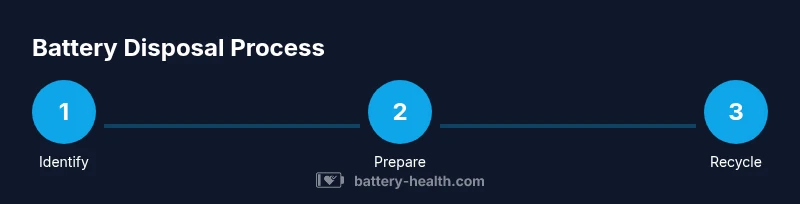
- 1
Identify battery type
Inspect the battery for markings that indicate its chemistry (alkaline, lithium-ion, nickel-metal hydride, lead-acid). If markings are unclear, treat it as a generic household battery and seek local guidance. Correct identification determines the proper disposal path and packaging requirements.
Tip: If you’re unsure, contact your local recycling program before handling to avoid dangerous mixing. - 2
Assemble protective gear
Put on gloves and safety glasses. Place the battery in a non-conductive container to minimize contact and prevent short circuits during transport.
Tip: Avoid metal objects that could bridge terminals during handling. - 3
Seal exposed terminals
Use tape to cover the battery terminals if exposed. This reduces the risk of short circuits in transit and during storage before drop-off.
Tip: Do not tape across large areas; just seal the terminals securely. - 4
Find a compliant drop-off
Locate a nearby battery recycling facility, household hazardous waste event, or a retailer that accepts batteries. Check that the facility accepts the battery type you have and note any preparation rules (e.g., packed in a specific container).
Tip: Call ahead or check the facility’s website for current acceptance rules and hours. - 5
Transport safely
Carry the container upright to prevent spills. Keep batteries away from vehicles’ seats and hot areas. Do not mix different chemistries in one container unless the program explicitly allows it.
Tip: Place batteries in a secondary bag or wrap if there is risk of puncture or leakage. - 6
Obtain a disposal receipt
When possible, obtain a receipt or documentation from the disposal facility for your records. This helps prove you followed safe disposal practices and can assist with audits or warranty considerations.
Tip: Keep receipts with your household hazardous waste records for future reference.
FAQ
Can I throw alkaline batteries in the trash?
In many places, small alkaline batteries can be recycled or disposed of with household waste, but rules vary by location. Always check local guidelines before disposing.
In many areas you may recycle or dispose of alkaline batteries with household waste, but rules differ. Check local guidelines to be sure.
What should I do with a damaged or leaking battery?
If a battery is damaged or leaking, place it in a non-conductive container and contact your local hazardous waste facility or battery retailer for guidance. Do not attempt to use or transport damaged cells widely.
If a battery is damaged or leaking, seal it in a non-conductive container and seek guidance from a hazardous waste facility. Do not transport damaged cells loosely.
Where can I recycle car batteries?
Car batteries are typically accepted at automotive retailers, recycling centers, and some waste programs. Many auto parts stores offer battery recycling drop-off.
Car batteries are accepted at auto stores and recycling centers. Check your local options for drop-off.
Do I need to separate batteries by chemistry?
Separating by chemistry is often recommended or required by local programs. When in doubt, label containers and ask the recycling provider for the correct method.
Yes, separate by chemistry if your program requests it; otherwise label clearly and ask the provider.
What happens to batteries after recycling?
Recycled batteries are processed to recover materials such as metals and plastics, which are reused in new products. This reduces resource extraction and environmental impact.
Recycled batteries are processed to recover metals and other materials used to make new products, cutting waste and pollution.
Are there special rules for lithium-ion batteries?
Lithium-ion batteries require careful handling due to fire risk. Many programs require taping terminals, placing in original packaging, or using dedicated collection sites.
Li-ion batteries need careful handling and often have dedicated drop-off rules to prevent fires.
How can I find local battery recycling options?
Consult your city or state environmental agency’s website, search for local recycling centers, or contact major retailers that run take-back programs.
Check your local environmental agency or retailers for battery take-back and recycling programs.
Watch Video
Quick Summary
- Identify battery type before disposal to choose the right channel.
- Pack batteries safely with terminals protected and labeled.
- Use official drop-off points—don’t rely on household trash.
- Document disposal whenever possible for safety and compliance.