Airtag Battery Type: CR2032 Guide and Replacement
Discover the airtag battery type (CR2032), replacement steps, lifespan, and disposal tips. A Battery Health analysis guide for reliable tracking and safe handling.


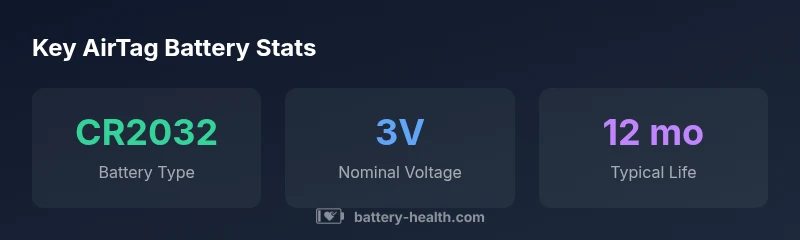
According to Battery Health, the airtag battery type is CR2032 lithium coin cell, a 3V, user-replaceable battery. Apple notes replacement is straightforward from the back cover, and typical use yields about a year of operation before replacement is needed. Battery Health analysis highlights wide availability, consistent performance, and clear disposal options for CR2032 cells.
airtag battery type overview
The airtag battery type is a CR2032 lithium coin cell, a compact, 3V power source chosen for its balance of size, longevity, and reliability. This format is common in wearable devices and small trackers, which means replacement parts and hardware know-how are widely available. From a design perspective, Apple selected a standard, readily accessible battery to minimize service friction for consumers. For those unfamiliar, CR2032s are widely stocked in consumer electronics stores and online retailers, making top-ups easy even when traveling or away from home. When evaluating airtag battery type, consider not just the coin cell chemistry but also the ease of replacement, shelf life, and compatibility with your preferred brands.
Why it matters for compatibility: A standard CR2032 is interchangeable across many devices, but always confirm the device’s recommended voltage and size. In the case of AirTag, the 3V CR2032 is a recognized industry standard, which helps ensure supply consistency and predictable performance across brands.
Replacement procedure and best practices
Replacing the AirTag battery is designed to be a simple, user-friendly task. Here is a concise guide:
- Flip the AirTag over to access the back cover. 2) Twist the back cover counterclockwise until it opens. 3) Remove the old battery with a gentle lift. 4) Insert a fresh CR2032 with the positive side facing up. 5) Align the cover and twist clockwise to secure.
Tips for a successful replacement:
- Use a fresh CR2032 from a reputable brand to ensure maximum longevity and stable performance.
- Avoid touching the battery terminals with metallic objects to prevent static discharge.
- If you notice the AirTag failing to power on after replacement, double-check the orientation and contact points.
- Keep spare batteries on hand for travel or extended use periods to minimize downtime.
Lifespan and usage considerations
AirTag battery life is influenced by use intensity, Bluetooth activity, and Find My refresh frequency. In typical daily use, many users report about a year before a battery swap is needed, though this can vary with location-tracking frequency and environmental conditions. If you rely heavily on precision tracking in remote areas or frequently scan for devices, you might observe shortened life. Conversely, minimal use in quiet settings can extend it beyond a year. Monitoring battery level via Find My helps plan timely replacements without service interruptions.
To maximize lifespan, avoid exposing the device to extreme temperatures for extended periods and store spare CR2032s in a cool, dry place.
Choosing a CR2032 battery for AirTag
When selecting a CR2032 battery, prioritize freshness and brand reputation. Look for packaging with a clearly printed manufacturing date and avoid damaged or swollen cells. Low-quality or expired batteries can underperform, leak, or fail abruptly, risking performance issues with AirTag. If possible, buy from retailers with generous return policies and check that the battery is intended for 3V operation. Keep in mind that some stores stock generic CR2032s, while premium brands may offer longer shelf life guarantees. Replacing with a known-good unit helps preserve consistent signal strength and locate accuracy.
Safety, handling, and disposal considerations
CR2032 batteries are small and contain lithium, so handle them with care to avoid puncture or short-circuits. Do not carry loose batteries in pockets or bags where they could contact metal objects. Use a battery case or protective sleeve when transporting spares. After use, recycle CR2032 batteries through local household battery recycling programs or designated electronics retailers. Do not place them in regular trash due to environmental and safety concerns. Disposing responsibly reduces hazards and supports safer recycling streams for battery materials.
Myths, troubleshooting, and practical tips
Common myths include the notion that AirTag batteries are non-replaceable or that rechargeable CR2032s are universally recommended. In reality, AirTag uses a standard CR2032 coin cell, and Apple provides a straightforward replacement method. If you encounter a non-responsive AirTag after replacement, ensure the battery orientation is correct and that the contact points are clean. If a low-battery alert persists, replace again with a fresh cell and verify Find My device status. For longer trips or seasonal use, keep an extra battery handy to prevent downtime.
AirTag battery type quick-reference
| Attribute | AirTag Battery Type | Notes |
|---|---|---|
| Battery type | CR2032 lithium coin cell | 3V nominal |
| Replaceability | Yes (user-replaceable) | Follow back-cover twist guide |
| Typical life | About 12 months | Under normal use; varies by activity |
FAQ
What type of battery does AirTag use?
AirTag uses a CR2032 lithium coin cell, 3V. It is user-replaceable, and replacement is straightforward using the back cover. Fresh CR2032 batteries are widely available and inexpensive.
AirTag uses a CR2032 battery that you can replace yourself. It’s a common coin cell, and replacement is easy.
How long does AirTag battery last?
Typically about a year with normal usage; heavy tracking can shorten the lifespan. Monitor battery level via Find My to plan replacements.
Most AirTag batteries last about a year under normal use; check Find My for your remaining life.
Can I use rechargeable CR2032 batteries in AirTag?
AirTag requires a standard CR2032 lithium coin cell. Rechargeable variants are not generally recommended by Apple, and non-standard cells may affect performance.
AirTag uses standard CR2032 cells; rechargeable versions aren’t typically recommended.
Is replacing AirTag battery difficult?
No. You twist the back cover to open, insert a fresh CR2032 with the positive side up, then reseal. The process takes only a moment.
Not difficult—just twist the back, swap the battery, and close the cover.
Where can I recycle AirTag batteries?
CR2032 batteries should be recycled via local battery recycling programs or designated electronics retailers. Do not throw them in regular trash.
Recycle CR2032s through local programs or retailers that accept batteries.
What should I do if AirTag shows a low-battery alert?
Replace the battery promptly with a fresh CR2032. After replacement, verify the device status in Find My to confirm connectivity.
If you see a low-battery alert, replace the battery and check Find My for status.
“The AirTag battery type is standardized, and the replacement process is user-friendly. Understanding the cycle and disposal options helps maintain reliable tracking.”
Quick Summary
- Identify airtag battery type as CR2032 3V
- Replace battery using the back-cover twist method
- Expect about one year of life under typical use
- Choose fresh CR2032 batteries from reputable brands
- Recycle CR2032 batteries responsibly