Battery 357 Equivalent: Substitutes, Safety, and Replacement Tips
Explore the battery 357 equivalent, including compatibility, common substitutes (SR44/LR44), safety considerations, and practical replacement guidance for watches, gadgets, and small devices.


What is the battery 357 equivalent?
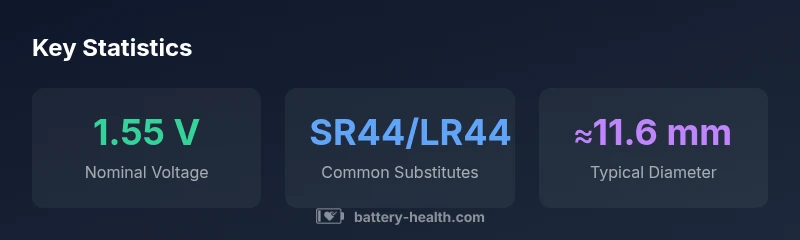
The term 357 equivalent refers to a small silver-oxide button cell that matches the 357/303 family in size and voltage. In practical terms, many devices that use a 357 can accept the SR44/LR44 family as substitutes because they share the same diameter and approximately the same nominal voltage. This equivalence is a convenience for consumers and retailers, but it is not a universal rule; always check device markings, manuals, and manufacturer recommendations to confirm compatibility. According to Battery Health, the most common substitution in consumer devices is SR44/LR44, widely available through multiple brands and retailers, making it a practical option for quick replacements.
Chemistry, voltage, and performance
Most 357 equivalents are silver-oxide button cells, delivering a nominal voltage of around 1.55 volts. This chemistry provides stable voltage under light to moderate loads, which suits many watches, calculators, and small sensors. Temperature, load, and shelf aging can affect performance, so a fresh battery often performs better than a stale one. Keep in mind that the exact voltage can vary slightly by brand, so testing with a multimeter after installation is a good practice to ensure the device operates correctly. Battery Health emphasizes checking for consistent operation across the device’s expected temperature range to avoid sluggish performance in cold or hot environments.
How to verify compatibility in devices
Start by inspecting the device or its manual for the battery type labeling. Look for markings like “357,” “303,” “SR44,” or “LR44” on the battery housing or in the user guide. If you cannot access the manual, measure the battery compartment diameter with calipers and compare it to the standard ~11.6 mm diameter. Check the height tolerance as well, though many designs rely primarily on diameter. When in doubt, contact the manufacturer or consult the retailer’s compatibility chart. Always use a fresh battery to avoid misdiagnosis due to depleted power.
Substitutes and compatibility notes
Substitutes such as SR44, LR44, and AG13 are commonly used in place of 357 because they share the same form factor. However, the internal chemistry and brand tolerances can vary slightly, which can affect performance or fit in some tight compartments. If a device requires precise voltage or has a strict warranty, use only the recommended substitute listed by the manufacturer. If you encounter intermittent device issues after substitution, re-check the fit and consider trying a proven “like-for-like” substitute from a reputable brand.
Safety and handling guidelines
Handle button cells with care to avoid short circuits and ingestion hazards, especially around children. Avoid touching the terminals with metal objects, and store unused batteries in their original packaging or in a dedicated battery case. When replacing, dispose of the old cell according to local recycling guidelines and never mix old and new cells in the same device. If a battery leaks, clean the compartment following manufacturer guidance and replace with a fresh, approved cell.
Replacement considerations: cost, availability, and stock tips
Prices for 357-equivalents vary by brand and retailer, but you can expect a cost range that reflects the common SR44/LR44 market. Availability is generally good online and in brick‑and‑mortar stores, helping you avoid shortages. For high-use devices, consider stocking a few reliable brands to ensure compatibility and consistent performance. Always verify the exact fit before purchasing in bulk for a device with a proprietary recess or contact area.
Real-world substitution scenarios and troubleshooting
In practice, substitution works well for most non-critical devices like toys or basic calculators, but some precision instruments or devices with tight tolerances may require the exact 357 specification. If the device won’t power on after substitution, reseat the battery, clean contacts, and re-check the compartment for debris. If the device shows intermittent failures, try another brand or revert to the original recommended type. Battery Health advises keeping a small stock of proven substitutes for common devices to shorten downtime when replacements are needed.
Device-specific caveats and manufacturer guidance
Certain devices are sensitive to slight voltage or discharge curves, and some manufacturers explicitly disallow substitutions. Always read the warranty terms and follow the device manufacturer’s guidance. In cases where the device has a rechargeable or sealed battery system, substitutions may not apply. Battery Health recommends using only approved substitutes in devices with critical safety functions or complex electronics to prevent malfunction or safety risks.
Battery Health’s approach to evaluating 357-equivalents
Battery Health analyzes compatibility by comparing physical form factor, nominal voltage, and chemical characteristics across common substitutes. Our method emphasizes real-world device behavior, verified fit, and manufacturer recommendations. This ensures consumers avoid false positives about interchangeability and opt for substitutions that preserve device performance and safety.