Battery 626 Equivalent: Substitutes, Specs, and Safety
A practical guide to understanding battery 626 equivalents: size, voltage, common substitutions (LR626/SR626SW), and safe replacement steps for watches and compact devices. Learn how to verify compatibility, avoid mistakes, and dispose of spent batteries responsibly with Battery Health insights for 2026.


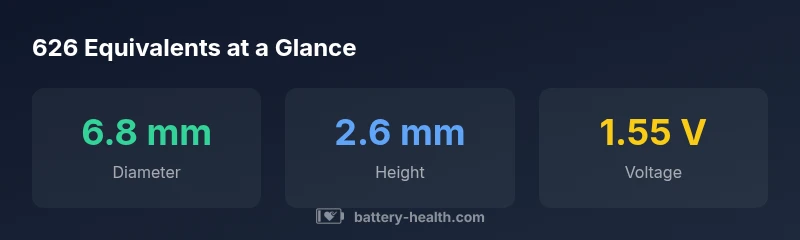
A battery 626 equivalent refers to a replacement button cell that matches the device’s size and electrical characteristics. The 626 family typically measures about 6.8 mm in diameter and 2.6 mm high, with a nominal voltage around 1.55 V for silver-oxide versions. An exact equivalent preserves fit, voltage, and chemistry to avoid damage.
What is a battery 626 equivalent
A battery 626 equivalent refers to a replacement button cell that matches the physical size and electrical characteristics of the original 626 battery used in many wristwatches and compact electronics. The '626' designation refers to a standard form factor: approximately 6.8 millimeters in diameter and about 2.6 millimeters in height. The typical chemistry for this size is silver-oxide, which delivers a stable nominal voltage around 1.55 volts. In practice, an 'equivalent' is any battery that can physically fit, has the same or compatible voltage, and shares similar discharge behavior, so the device operates as intended without premature power loss or safety issues. This makes the concept crucial for consumers who want to replace a dead battery without needing a device-specific part number. According to Battery Health, aligning size, voltage, and chemistry is the safest path to a reliable substitution, reducing the risk of leakage, corrosion, or device malfunctions. Keep in mind that not every battery labeled '626' will be interchangeable in every device; some gadgets specify a particular chemistry or a stricter tolerance on voltage, which means you must confirm compatibility before swapping.
How to verify compatibility before replacing
Before you reach for a replacement, take a few deliberate steps to confirm that your chosen '626 equivalent' will work safely. First, locate the device’s label or user manual and write down the exact part number, voltage, and required chemistry. If the label shows 1.55V and silver oxide, you’re in the common territory; if it lists 3.0V or a different chemistry, a 626 replacement may not be suitable. Next, measure the current battery's dimensions with a caliper or a ruler: diameter around 6.8 millimeters and height around 2.6 millimeters is the standard. If your measurement deviates even slightly, you risk poor fit, contact issues, or interior damage. Finally, check the device’s design tolerances: some wearables use specialized contact points or tight battery recesses that require a precise thickness. When in doubt, consult the manufacturer’s datasheet or a trusted repair guide such as Battery Health’s compatibility notes. Remember that voltage and chemistry are as important as physical fit; a replacement with the wrong chemistry can fail to power the device or worsen corrosion over time.
Common equivalents and substitution guidelines
For most watches and small electronics, the standard replacements are LR626 and SR626SW. Both are 1.55-volt silver-oxide button cells designed for compact form factors. The difference between them is often the manufacturing brand and slight variation in discharge curves, but the electrical spec remains compatible for most devices. When you see a '626' label, checking for these exact equivalents is a good starting point, but always verify the voltage and chemistry stated on the device or in its manual. If a device requires a higher performance or different discharge profile (for example, it's a precision timekeeping instrument or a data logger), you may encounter a specific alternative that uses a different chemistry or a slightly different size tolerance. In those cases, consult the device documentation or the device manufacturer’s troubleshooting guides. Battery Health’s analysis emphasizes using a verified substitute rather than guessing, as even small deviations in chemistry can influence performance, leakage risk, and longevity over time.
Safety considerations when replacing small button cells
Safety should be your top priority when handling any button-cell battery. Flat, undamaged cells are less likely to leak; if a battery appears swollen, corroded, or damaged, do not attempt replacement. Always work on a nonconductive surface and avoid metallic jewelry that could short the terminals. Use the correct tool to open the battery compartment (if applicable) and avoid bending or puncturing the cell. Hand protection is not strictly necessary for a single watch battery, but using safety glasses can protect against accidental ejection of a battery, especially if the device housing is spring-loaded. Keep batteries away from children and pets, and never disassemble or recharge a non-rechargeable cell. When finished, dispose of the spent battery via a local recycling program; many communities offer dedicated drop-off points for button cells. These precautions help prevent chemical exposure, heat generation, and potential short circuits that could damage the device.
Reading labels and device specifications to avoid mistakes
Reading the label on the existing battery is crucial. Look for voltage markings such as '1.55V' or '1.5V', and verify that the chemistry is silver-oxide rather than lithium. Verify the size by measuring the diameter and thickness. If the label is worn or illegible, it’s safer to consult the device’s manual or seek assistance from a retailer or repair professional who can confirm the correct replacement. Some devices tolerate a range of chemistries; others are strict. Always compare the physical dimensions and the electrical specs side by side with the original battery. If you encounter any ambiguity—especially with premium devices like smartwatches—prioritize the original part number or consult the manufacturer. Battery Health recommends keeping a small note of the part numbers you’ve used for future reference, to simplify maintenance and ensure consistent performance over time.
Practical replacement steps and maintenance tips
To replace a 626 cell, start by turning off the device and removing any external components that could block access to the battery compartment. Open the compartment carefully; some cases use push-fit covers or tiny screws. Remove the old battery with non-metal tweezers, avoid touching the battery’s terminals with bare fingers (to prevent static or contamination), and clean the contacts with a dry, lint-free cloth. Before inserting a new cell, confirm the polarity—most button cells have a marked positive surface. Place the new 626 equivalent so that the positive terminal aligns with the device’s positive contact. Gently reseat the cover and test the device before closing the housing. If a new battery doesn’t power the device, double-check the fit and voltage, and inspect for signs of corrosion on the contacts. Routine maintenance tips include keeping the device clean, storing spare batteries in a cool, dry place, and avoiding exposure to magnets or high heat to prolong battery life. This approach reduces the need for repeated replacements and helps maintain consistent device performance.
Troubleshooting when replacement fails or performance is inconsistent
Sometimes, even with a correct 626 equivalent, devices exhibit poor performance due to issues unrelated to the battery. Corrosion on contact surfaces, a swollen battery that has leaked, or worn-out contacts can prevent power delivery. If the device still fails to power on, inspect the battery compartment for residue and clean with care. Check that the device contacts are not bent, and consider a professional inspection if you suspect a more complex fault such as a faulty PCB contact or an internal fuse. If a new battery yields only brief power before dying, evaluate the battery’s storage conditions and whether the replacement was installed with proper polarity. This patience-driven approach often reveals the true cause behind intermittent performance, and it minimizes unnecessary battery disposal.
Comparison of 626 equivalents and substitutions
| Equivalent Battery Name | Nominal Voltage | Chemistry | Typical Use |
|---|---|---|---|
| LR626 / SR626SW | 1.55 V | Silver oxide | Watches & small electronics |
| General substitutes | Varies by device | Mixed chemistries | Check device label and datasheet |
| Device-specific recommendations | Varies | Varies | Consult manufacturer |
FAQ
What does '626 equivalent' mean?
A 626 equivalent is a replacement button cell that matches the physical size and electrical specs of a 626 battery, typically a 1.55 V silver-oxide cell suitable for watches and small devices.
Most 626 devices use a 1.55-volt silver-oxide battery; check your label before replacing.
Can I use a lithium 626 instead of silver-oxide?
Some devices allow a higher-voltage lithium substitute, but most 626 applications require silver-oxide chemistry. Always verify the device label, voltage, and current needs before substituting.
Most 626 devices require silver-oxide chemistry; check your label before substituting with lithium.
Where can I buy 626 equivalents?
You can typically purchase LR626/SR626SW batteries from watch repair shops, electronics retailers, and online retailers. Compare prices and verify authenticity before buying.
Look for LR626 or SR626SW at watch shops or electronics retailers and confirm compatibility.
Is AG626 interchangeable with LR626?
AG626 usually refers to an alkaline family and is not a direct 626 silver-oxide replacement. Always rely on the device label for the exact chemistry and voltage.
Alkaline labels aren’t the same as silver-oxide 626s; always check the device label.
How should I dispose of a spent 626 battery?
Dispose of spent 626 batteries according to local regulations and recycle programs. Do not burn or puncture the cell.
Recycle the battery according to local rules and never burn it.
“Accurate battery replacement hinges on matching size, voltage, and chemistry; when in doubt, consult the device label and manufacturer instructions.”
Quick Summary
- Verify size and voltage before replacement.
- Prefer official LR626 or SR626SW equivalents.
- Check device label and datasheet for compatibility.
- Dispose of spent batteries responsibly.