Battery Test: Safe and Accurate Methods for Checking Your Batteries
Learn how to perform a safe and accurate battery test across car, device, and home storage batteries. This comprehensive guide covers essential tools, step-by-step procedures, result interpretation, and maintenance tips from Battery Health.


Learn how to perform a reliable battery test across car, device, and home storage batteries. This guide covers essential tools (voltmeter, load tester, multimeter), safety steps, and step-by-step procedures to assess capacity and health without risking damage. Expect practical checks, typical acceptable ranges, and when to replace a failing cell.
What is a battery test and why it matters
A battery test is a defined process to evaluate a battery's ability to hold and deliver charge under specified conditions. It goes beyond a quick voltage check by examining capacity, internal resistance, and overall health. Performing a proper battery test helps prevent unexpected failures, extend battery life, and protect connected systems from damage due to insufficient energy delivery. Across cars, gadgets, and home storage, the same core principles apply: establish baseline measurements, apply a controlled load, and compare results to manufacturer specifications or expected norms.
According to Battery Health, the reliability of a battery test depends on correct procedure and appropriate equipment—cheap tools can give misleading readings and lead to premature replacements. The goal is to identify two things: a healthy battery that performs within design limits, and a failing battery that should be replaced or reconditioned. While professional labs can run formal tests, knowledgeable homeowners can perform many checks safely at home with common tools. This article focuses on practical, repeatable steps you can follow to assess energy capacity, voltage stability, and safety during testing.
Safety first: how to approach battery testing safely
Battery testing involves electrical load and chemical reactions; mishandling can cause shorts, burns, or chemical exposure. Before you begin, wear safety goggles and gloves, work in a dry, well-ventilated area, and keep metal tools away from exposed terminals. Inspect the battery for cracks, bulges, corrosion, or leakage; if any are present, stop testing and consult a professional. Disconnect nonessential power sources and ensure clamps or probes are clean and rated for the battery type. When working on automotive batteries, never test while the engine is running unless you are following the vehicle manufacturer's instructions; high currents can occur during cranking. By following proper safety measures, you protect yourself and your equipment and you align with Battery Health best practices.
Core metrics you should measure
A robust battery test evaluates several metrics, not just voltage. Voltage helps assess static condition, but it doesn't reveal capacity or health under load. Key measurements include:
- Open-circuit voltage (no load) to establish baseline.
- Under-load voltage and current to simulate real use.
- Internal resistance or impedance, which tends to rise as cells age.
- Capacity or energy delivered during a controlled discharge.
- State of health (SOH), a composite readout that combines voltage stability, resistance, and capacity trends.
Different battery chemistries (lead-acid, Li-ion, NiMH) respond differently to tests. For example, a Li-ion pack might show strong open-circuit voltage but poor under-load behavior if one cell is degraded. The important point is consistency: use the same test method, maintain temperature control, and compare results to manufacturer guidelines or your own baseline measurements.
Tools and calibration for a reliable battery test
To perform a credible battery test, assemble tools that match your battery type and the test you plan to run. Essential items include a digital multimeter or voltmeter, a load tester for high-current batteries, a battery analyzer or impedance tester, and clean test leads. Safety gear (eye protection, gloves) is not optional. If testing lead-acid types, a hydrometer can help gauge electrolyte density, though many modern packs rely on impedance-based assessments. Temperature affects readings, so record ambient conditions and consider compensating measurements to temperature. Calibrate instruments according to manufacturer instructions and periodically re-check with a known reference cell. Keep a test log to track aging trends over time.
How to test a car battery
Begin with a visual inspection: look for cracks, leaks, corrosion on terminals. If you see swelling or damage, do not test. With the vehicle off, measure the battery's open-circuit voltage at the terminals; a healthy system should show a strong baseline. If the voltage is bottoming out under light load, proceed to a load test using a car battery tester or a load bank, following the device's instructions. When testing under load, voltage should remain within the tester's acceptable range; a dramatic drop indicates degraded capacity or a failing cell. If you observe difficulty starting the engine, the issue may lie with the charging system rather than the battery itself; verify alternator output when the engine runs. Document results and compare them to the battery’s specification sheet. This is where careful notes help you track aging and plan replacements.
How to test a device or laptop battery
For consumer electronics, start with built-in health checks and battery reports provided by the operating system. If available, run a controlled discharge to verify runtime against the manufacturer’s stated capacity. Use a calibrated external impedance tester when the device supports such testing, and avoid deep discharges that can harm Li-ion cells. Keep the device powered off during measurements to minimize charging interference. If capacity seems reduced or the device shuts down early, compare findings with software diagnostics and consider calibration or replacement. Record results for future reference and to observe trends over time.
How to test a home storage battery (solar) system
A home storage battery test involves both the battery bank and the charging/discharging equipment. Check each cell block or string for unusual heat, swelling, or corrosion. Use a battery analyzer to measure impedance and a staged discharge test through the inverter or generator, monitoring runtime and voltage stability. Inspect the inverter’s charging profile and ensure it aligns with the battery manufacturer’s recommended charging window. If any string shows elevated impedance or reduced capacity, consider balancing, reconditioning, or professional evaluation. Maintain logs of voltage, temperature, and state of charge for ongoing monitoring.
Interpreting results and when to replace
Results should be interpreted in the context of the battery’s age, chemistry, and application. Consistently low capacity, rising impedance, swelling, or leakage typically signals a failing battery that should be replaced. If a test reveals borderline health, you may extend life through conditioning or rebalancing, per manufacturer recommendations. In all cases, compare readings to the battery’s spec sheet and to your baseline data. The Battery Health approach emphasizes a conservative mindset: replace when performance clearly underperforms rather than postpone and risk unexpected failure.
Common pitfalls and best practices
Avoid mixing battery chemistries or using mismatched test equipment, as this can yield misleading results. Relying solely on voltage is insufficient for health assessment; always test under load and consider impedance or capacity metrics. Ensure connectors are clean, terminals tight, and test environment controlled for temperature. Maintain a running log of tests, ages, and observed performance to identify trends. The best practice is to test regularly, keep safety gear accessible, and consult manufacturer guidelines for your specific battery type while preserving a cautious mindset.
Tools & Materials
- Digital multimeter or voltmeter(Essential for voltage checks and basic health assessment)
- Battery load tester (high-current capable)(Used to simulate real-world draw and test under load)
- Battery analyzer or impedance tester(Measures internal resistance/impedance for health insight)
- Test leads and clamps(Quality, insulated, and rated for the battery type)
- Safety gear (goggles and gloves)(Protect against spills, sparks, and shorts)
- Temperature sensor or thermometer(Temperature affects readings; record if available)
- Owner's manual or battery specification sheet(Reference for nominal voltage, charge curves, and safety limits)
Steps
Estimated time: 45-90 minutes
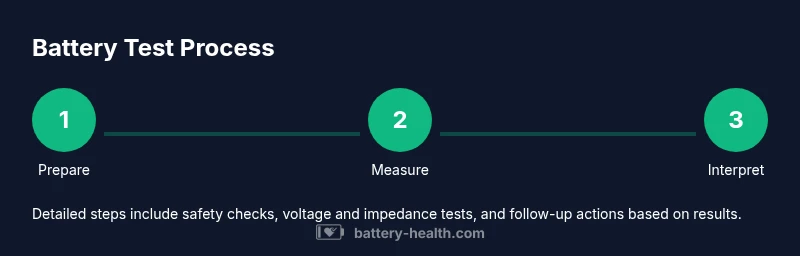
- 1
Prepare the testing area
Clear the workspace, remove flammable materials, and ensure ventilation. Put on PPE, and ensure the battery is cool before starting. Gather all tools and review the battery’s safety data sheet so you know the exact precautions for your chemistry.
Tip: Keep a dry, non-conductive surface and never test on a metal bench that can short terminals. - 2
Set up the test tools
Connect the voltmeter to the battery terminals to establish a baseline. If you’ll perform load testing, attach clamps or leads to the correct terminals, ensuring a solid, spark-free connection. Calibrate equipment if a reference standard is available.
Tip: Check clamps for corrosion and clean connectors before you begin. - 3
Record baseline readings
With the system off, measure open-circuit voltage and note ambient temperature. Document the baseline so you can compare it to under-load readings later. This establishes the starting point for health assessment.
Tip: Take multiple readings and average them to reduce measurement error. - 4
Apply a controlled load
Activate the load tester or connect a safe load to simulate typical usage. Monitor voltage and current as prescribed by your equipment’s instructions. Do not exceed the manufacturer’s rated load.
Tip: If the voltage drops quickly, stop the test and evaluate the battery for aging or damage. - 5
Measure under load and assess impedance
Record voltage under load and measure internal resistance or impedance with a suitable analyzer. Compare readings to manufacturer guidelines or your own baseline data. Note any rapid increases in impedance, which often indicate aging cells.
Tip: Impedance readings are often more telling than voltage alone for aging packs. - 6
Test charging system (for car batteries)
With the engine running (if qualified by the vehicle’s manual), verify that the charging system maintains healthy voltage while supporting the load. If charging fails to keep up with demand, inspect the alternator and wiring.
Tip: Only perform engine-on tests if your vehicle’s documentation permits it. - 7
Interpret results and decide on action
Compare all readings to your battery’s spec sheet. If readings are consistently poor or continue to drift, plan a replacement or service. Keep results for future trend analysis and to inform maintenance schedules.
Tip: Document dates, readings, and environmental conditions for trend tracking. - 8
Store data and plan next tests
Record results in a log and schedule periodic follow-up tests. Regular testing helps reveal gradual aging early and avoids unexpected failures.
Tip: Review test results annually or after major temperature swings.
FAQ
What is the difference between a load test and a static voltage test?
A static voltage test measures the battery’s voltage with no load to establish a baseline, while a load test applies a controlled current to simulate real use and reveals how the battery performs under stress. The load test is often more indicative of actual performance and aging.
A static voltage test checks the baseline voltage, while a load test checks how the battery behaves under real use. The load test better reveals aging or weakness.
Can I test Li-ion batteries with a car battery tester?
Li-ion batteries require care and appropriate equipment. Use testers designed for Li-ion chemistries and follow the manufacturer’s guidelines. Some car testers may not accurately assess non-automotive Li-ion packs.
Only use testers designed for Li-ion chemistry and follow the battery maker’s instructions.
How often should I test a battery in storage?
Test storage batteries periodically, especially after cycles of charge and discharge, to monitor health and prevent surprises. Use a schedule aligned with the battery’s expected life and environment conditions.
Check storage batteries on a regular schedule based on usage and environment.
What should I do if my test shows high internal resistance?
High internal resistance usually indicates aging or a failing cell. Consider replacing the battery and inspecting for unequal cell health in packs. If in doubt, consult a professional.
High resistance signals aging; plan replacement and get a professional opinion if needed.
Are there risks testing home storage batteries?
Yes. Testing large home storage banks involves high currents and potential hazards such as heat and gas buildup. Follow safety protocols, protect vented areas, and avoid unsafe modifications.
There are risks with large storage batteries; use safety practices and professional help for big banks.
Watch Video
Quick Summary
- Start with safety and a clear baseline before testing.
- Use the right tool for the battery type and test goal.
- Interpret impedance and capacity, not just voltage.
- Document results to build a maintenance history.
- Replace batteries when performance clearly underperforms.