Car Battery Testing: Essential Step-by-Step Guide (2026)
Learn to test a car battery safely, interpret results, and decide when replacement is needed. A practical guide from Battery Health to keep your vehicle reliable.


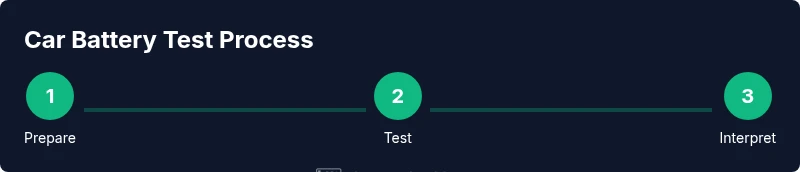
This guide teaches you how to safely test a car battery, interpret voltage and load-test results, and decide when replacement is needed. You'll learn the tools to use, the steps to follow, and how to avoid common mistakes. By the end, you can confidently test a car battery and plan maintenance.
Why test battery car matters
According to Battery Health, regular test battery car checks help prevent unexpected failures and extend battery life. A car's electrical system relies on a healthy battery for starting power and reliable operation of lights, sensors, and safety features. When a battery weakens, you may experience slow cranking, dim headlights, or erratic electronics, which can lead to surprising breakdowns. Testing the battery before these symptoms appear gives you a heads-up to replace or service before you’re stranded. Weather, driving patterns, and how often you start the engine all influence battery wear, so a proactive testing routine helps you plan maintenance around seasons. In practical terms, a routine test is a small step with potentially large payoffs: fewer roadside emergencies, longer battery life, and more predictable vehicle performance. For the average driver aiming to keep costs down, calling out test battery car procedures as part of regular vehicle maintenance is a smart habit that saves time and frustration.
Tools and safety you need before testing
Before you begin testing, gather the essential tools and follow safety best practices. The basic kit includes a digital multimeter, a battery load tester (or a compatible tester if you have access to a service). Wear safety goggles and mechanic gloves to protect against acid spray and sparks. A wrench set, wire brush, and towels help you inspect and clean the battery terminals, while distilled water and terminal spray protect posts after cleaning. If you have access to a portable jump-start device, keep it handy for testing in the car's parked state. Finally, consult the vehicle’s manual for any model-specific cautions. Keeping all items organized in a toolbox reduces the chance of mistakes and makes the test more reliable, especially when you are assessing a test battery car scenario in an everyday environment.
How voltage testing and load testing differ (and when to use them)
Voltage testing, or opening-circuit voltage testing, checks the battery's resting potential to gauge its state of charge. A healthy battery typically shows a stable voltage when the engine is off, but reading a wrong value can indicate sulfation, loose connections, or a failing cell. Load testing simulates a heavy electrical draw—like starting the engine—to verify how the battery performs under stress. If the battery maintains voltage under load, it is more likely to be in good condition; if it drops quickly, replacement or servicing is warranted. The goal of this step-by-step process is not to replace guesswork with guesswork, but to replace uncertainty with measurable results. Battery Health Team emphasizes that combining open-circuit and load testing provides a robust picture of battery health and can prevent unnecessary replacements.
Interpreting test results and next steps
After collecting voltage and load data, interpret the results in the context of your vehicle and climate. If the resting voltage is healthy and the load test passes, the battery is likely serviceable for now. If the voltage is marginal or the load test shows significant drop, plan for replacement or a deeper diagnosis—especially if the alternator charging the battery and the electrical system is under heavy load. Certain signs, such as a swollen case, terminal corrosion, or a lingering sulfur odor, warrant immediate attention and possible replacement. In the end, test battery car results should guide your maintenance plan rather than dictate a panic reaction. Record the results and schedule a follow-up test in a few months to catch gradual degradation before it becomes a roadside issue.
Maintenance and seasonal considerations
To extend a battery’s life, maintain clean terminals, secure mounting, and proper charging practices. Regular observation of corrosion, electrolyte levels (for flooded lead-acid), and tight connections pays off. In winter, a weak battery can become a bigger problem due to higher starting current, while in summer heat accelerates chemical reactions inside the battery. If you notice persistent hard starts or slow cranking across multiple tests, consider replacement rather than repeated testing. Finally, keep a basic testing routine—every 6–12 months for average drivers, more often for high-mileage or cold-climate users. A disciplined approach to test battery car tasks translates into fewer surprises and more reliable performance.
Safety considerations and common mistakes
Safety is non-negotiable when testing a car battery. Always work in a ventilated area, away from sparks or flames, and disconnect jewelry that could short terminals. Never lean over the battery when performing a load test, and keep metal tools away from exposed terminals. Common pitfalls include forgetting to turn off the engine, not tightening clamps securely, and overlooking terminal corrosion. Double-check all connections and read the tester instructions to avoid false readings. With careful preparation and methodical checks, test battery car tasks become routine maintenance rather than hazardous experiments.
Tools & Materials
- Digital multimeter(Set to DC volts; measure across the battery terminals)
- Battery load tester(If unavailable, use a compatible tester for a starter draw test)
- Safety goggles(Protect eyes from acid spray and sparks)
- Mechanic gloves
- Wrench set(Open-end wrenches to disconnect clamps if required)
- Wire brush(Clean corrosion from terminals)
- Terminal spray/protectant(Apply after cleaning)
- Distilled water(For flooded lead-acid batteries only)
- Rags or towels
- Jumper cables or portable charger(For testing in-vehicle without starting)
Steps
Estimated time: 45-90 minutes
- 1
Prepare safety gear and vehicle
Power off the vehicle, remove jewelry, and wear safety goggles and gloves. Position yourself with clear access to the battery and terminals. Ensure the engine and all systems are de-energized before starting.
Tip: Double-check that the parking brake is engaged and the engine is off to avoid accidental cranking. - 2
Inspect battery and terminals
Look for cracks, leaks, swelling, or corrosion on terminals. Clean any corrosion with a wire brush and dry the area before testing. If the connector is loose, tighten it to ensure accurate readings.
Tip: Corrosion can mimic a bad battery; cleaning is essential before measurements. - 3
Connect measurement tools
Attach the multimeter leads to the battery terminals (negative then positive). If using a load tester, connect per the device instructions. Do not reverse polarity or short the terminals.
Tip: Verify connections are snug to prevent fluctuating readings. - 4
Perform open-circuit voltage test
With the engine off, measure the resting voltage across the battery. Record the reading and compare it to typical healthy ranges for your battery type.
Tip: Take two readings a few minutes apart to ensure stability. - 5
Perform load/starting test
Apply a controlled load or attempt a cranking test according to your tester’s instructions. Observe how voltage behaves under load and during a brief engine start attempt.
Tip: Do not exceed the tester’s rated current to avoid damaging the device. - 6
Interpret results and plan next steps
If readings are within healthy range under both tests, the battery is likely fine for now. If voltage drops significantly or readings are borderline, plan replacement or further diagnostics.
Tip: Document results and schedule a follow-up check to catch gradual degradation.
FAQ
What is the difference between a voltage test and a load test?
A voltage test checks resting charge, while a load test simulates starting stress to reveal capacity. Together they give a reliable health assessment.
Voltage checks resting charge, load tests reveal performance under draw. Do both for accuracy.
Can I test a car battery without removing it from the vehicle?
Yes, basic in-vehicle tests are possible, but for the most accurate readings you may need to access the terminals directly and follow safety guidelines.
You can test in the car, but remove access if needed for accuracy and safety.
What signs indicate a failing battery besides low voltage?
Cranking slowdown, frequent jump starts, terminal corrosion, or a swollen case indicate a failing battery and should prompt further inspection.
Slow starts or swelling mean the battery may be failing.
Is it safe to test a lithium-ion car battery the same way as lead-acid?
Lithium-ion batteries require different safety considerations and testing methods. Always follow manufacturer guidance and use appropriate testers.
Lithium-ion tests differ; check the manufacturer’s instructions.
What should I do if the voltage is borderline but the engine cranks slowly?
Borderline readings with slow cranking often indicate nearing end of life or charging issues. Plan a replacement and have the charging system checked.
If it’s borderline and cranks slowly, plan a replacement and have the charging system checked.
How often should I test the car battery if I don't drive often?
For infrequent drivers, perform a quick battery health check every 3-6 months and consider a trickle charger to maintain charge.
Test every few months or use a trickle charger to maintain charge.
Watch Video
Quick Summary
- Test battery car regularly to catch issues early
- Use both voltage and load tests for accuracy
- Clean and tighten terminals before testing
- Replace aging batteries before failure