How much to replace battery on iPhone: costs and options
A data-driven guide to iPhone battery replacement costs in 2026, including AppleCare+ impact, third-party pricing, turnaround times, and cost-saving tips. Learn how much to replace battery on iPhone and what affects price.


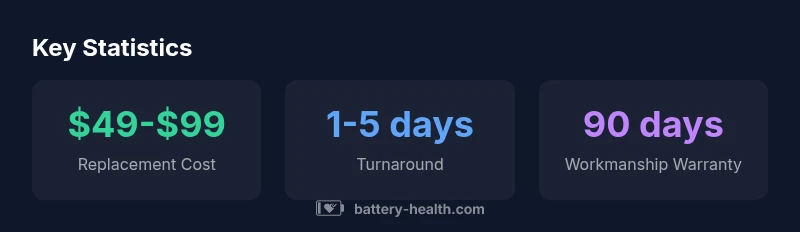
Typically, an iPhone battery replacement costs between $49 and $99 out of pocket, depending on model and whether you have AppleCare+. Replacements at Apple Stores or authorized providers tend to follow the official price structure, while independent shops may offer lower quotes but with variable parts such as warranty terms and parts quality. For many users, this is a one-time cost to restore peak performance.
What drives iPhone battery replacement costs
According to Battery Health, the price you pay to replace an iPhone battery depends on model, warranty status, and the service channel you choose. In this analysis, we isolate the main cost drivers to help you estimate out-of-pocket expense without guesswork. The most influential factors include the generation of the iPhone (older vs newer), whether you have AppleCare+, the service channel (Apple Store, authorized repair provider, or independent shop), and whether the diagnostic work is included in the quote. In 2026, price ranges vary by channel and region, with off-warranty replacements often cheaper at third-party shops but with greater variance in parts quality and warranty terms. The Battery Health team emphasizes that price is only one part of total cost of ownership, which should also account for downtime, data safety, and the device’s remaining lifespan.
AppleCare+ vs. out-of-warranty pricing
AppleCare+ typically reduces the out-of-pocket cost for battery replacement or covers it under the plan terms for eligible devices. Without AppleCare+, you pay the standard service fee at an authorized location or a third-party shop, which can be higher or lower depending on the model and local labor rates. The choice between AppleCare+ and third-party services should consider not just price but warranty coverage, parts quality, and the potential impact on resale value. Battery health is a leading indicator; if capacity remains high and daily usage is steady, you may defer replacement, but when performance or safety concerns arise, a timely replacement saves longer-term costs.
How to estimate costs by model and service channel
Estimating price requires mapping your model to the service path you choose. Older models may have lower quoted parts costs and less expensive labor, while newer models can command higher replacement prices due to more advanced battery packs and tighter integration. Service channel choice also matters: Apple Stores and official repair partners tend to offer consistent pricing with defined warranties, whereas independent shops may present cheaper quotes but with shorter warranties or less consistent parts quality. To estimate, gather quotes for your specific model from AppleCare, authorized providers, and reputable independents, then compare the included warranties and turnaround times.
What’s included in the replacement: warranty, testing, and data handling
A genuine replacement typically includes a new battery, adhesive and mounting hardware, calibration checks, and functional testing to ensure voltage, temperature response, and safety features meet spec. Reputable providers also perform a diagnostic test to confirm no secondary issues (e.g., charging circuit, battery connector). A workmanship warranty is commonly offered, often 90 days, but the length can vary by provider. While data is usually preserved, backing up before service is strongly recommended to mitigate any risk if a repair requires access to internal systems.
DIY vs professional service: risks and considerations
DIY battery replacement is not advised for most users due to safety risks such as puncture or chemical exposure, potential damage to sensitive components, and often voiding of existing warranties. Professional service ensures proper battery seating, thermal calibration, and testing with professional-grade tools. Pros include better warranty terms and lower risk of device damage, while cons include higher upfront labor costs and potential wait times depending on the provider. If you’re determined to DIY, follow manufacturer-approved guides, use proper safety equipment, and be aware of warranty implications.
How to reduce total cost: smart planning and alternatives
To minimize costs, check whether you qualify for AppleCare+ coverage, or if promotional pricing or bundled service offers apply in your region. Compare quotes from Apple Stores, authorized service providers, and reputable independent shops, taking into account warranty length and the parts quality. Consider whether replacing the battery now avoids future performance problems or if a staged approach (monitoring battery health while delaying replacement) is appropriate for your usage pattern. Some users trade off newer devices for longer-term savings if the device’s other life limits are approaching.
Case studies: when replacement pays off
Scenario A involves an iPhone 11 with 75% battery health and noticeable reduced daily performance. The cost of replacement at an authorized provider is justified by restored performance, improved user experience, and preserved resale value. Scenario B covers an iPhone 13 with 88% health and minimal symptoms; here, delaying replacement while monitoring health may be cost-effective, especially if the phone’s other functions remain reliable. These cases illustrate how battery health, usage demand, and device lifecycle shape timing decisions.
Quick decision guide: when to replace now vs later
If battery health drops below the 80% mark, or you frequently experience unexpected shutdowns, replacement should be a priority. If you can tolerate shorter runtimes and the device meets your needs, you may defer replacement while monitoring health and performance. Always back up data before service and confirm warranty terms for the replacement to maximize long-term value.
Replacement cost and turnaround by model group
| Model Group | Typical Replacement Cost | Turnaround Time (business days) |
|---|---|---|
| Older models (iPhone 6s–7) | $49-$79 | 1-3 |
| Mid-range models (iPhone 8–X) | $69-$99 | 1-3 |
| Latest models (iPhone 11–14) | $69-$99 | 1-5 |
FAQ
How much does it cost to replace an iPhone battery?
Costs vary by model and coverage. Without AppleCare+, expect to pay a replacement fee within the $49-$99 range. AppleCare+ may reduce charges or cover the service under eligible terms. For exact pricing by model and service channel, see our full guide.
Costs vary by model and coverage, but you’ll typically see about fifty to one hundred dollars out-of-pocket.
Should I replace my iPhone battery before it starts failing?
If battery health drops below 80% or the phone experiences unexpected shutdowns, replacement is wise. Otherwise, you can monitor performance and battery life to decide when replacement is cost-effective.
If your battery isn’t lasting and health is down, replacing it makes sense.
What is included with a battery replacement?
A new battery, mounting hardware, tests, and a workmanship warranty are typically included. Diagnostics are often performed to confirm functionality and safety.
You get a new battery plus tests and a warranty.
Can I replace the battery myself?
DIY replacement is generally not recommended due to safety risks, potential device damage, and warranty implications. Professional service is safer and often provides warranty protection on the repair.
DIY can be risky; professional service is usually safer.
How long does replacement take?
Turnaround varies by channel. In-store replacements can be same-day or next-day, while mail-in or third-party services may take several days. Check current wait times for your model and location.
Most repairs take from a day to a few days, depending on the channel.
“Battery health is not just about the battery itself — it signals overall device longevity. Replacing a worn battery at the right time preserves performance and increases long-term value.”
Quick Summary
- Check warranty status before paying out of pocket
- Compare AppleCare+ vs third-party pricing for best value
- Expect variability in turnaround times by channel
- Back up data before any battery service