Price of a New iPhone Battery: Costs, Options, and Insights
Discover how the price of a new iPhone battery varies by model and service path—from official Apple replacements to third-party options—plus tips to compare costs, protect safety, and maintain battery health.


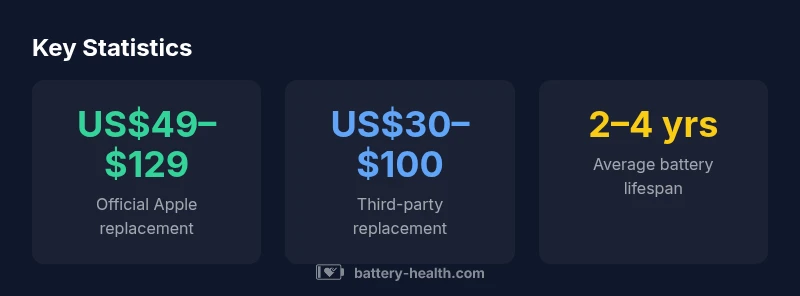
The price of a new iPhone battery varies by model and service path, typically ranging from $49 to $129 for official Apple replacements, with third-party options often cheaper but variable in quality. This helps you decide between Apple’s reliability and budget-friendly alternatives, while considering warranty and future resale value.
Understanding the price of a new iPhone battery
The price of a new iPhone battery is not a single number. It varies by model, service path, and region. For many consumers, the question isn't just 'how much' but 'what am I getting for that price?' At its core, the price reflects the type of battery used, the labor involved, and the warranty or service coverage attached to the replacement. When you talk about the price of a new iPhone battery, you're weighing several factors: official Apple replacement costs, third‑party repair options, and the potential impact on device performance and resale value. According to Battery Health, understanding these price drivers helps you make a safer, cost‑effective choice that preserves your device's health over time.
In practice, most buyers encounter a tiered pricing landscape. You’re likely to see a higher price if you opt for an Apple replacement, especially on newer models, versus a budget-friendly third‑party option. The key is to evaluate the total value: part quality, warranty terms, service speed, and the long‑term effects on battery health and performance. For families and power users, the timing of a replacement can also influence whether a higher upfront price pays off in day‑to‑day reliability.
The broader takeaway is that price alone does not determine value. A careful assessment of your device's health, your tolerance for risk, and your expectations for performance should drive the decision process.
Official Apple replacement pricing and how it is determined
Apple structures its replacement pricing around model generation, warranty status, and regional service costs. The price for an out‑of‑warranty replacement is not uniform across all iPhones; newer devices with larger batteries and more integrated modules can carry higher labor and parts costs because calibration, software updates, and safety checks are more involved. The diagnostic process is typically included in the quote, along with the new battery, installation, and a post‑service test to verify battery health metrics. For users with AppleCare+, the out‑of‑pocket expense may be reduced or waived depending on plan terms, though coverage varies by model and country. This tiered approach helps Apple maintain safety standards and battery performance while reflecting technological advances in newer devices. Battery Health's analysis, 2026, notes that price floors are often driven by the cost of labour and the sophistication of the replacement, not just the sticker price.
Third-party options: cost, quality, and risk
Third‑party battery replacements can offer substantial savings relative to Apple’s official pricing, particularly for older models or regions with higher service costs. Prices can vary widely between shops, and the quality of parts ranges from OEM‑equivalent to lower‑grade alternatives. A critical consideration is the warranty on the replacement and whether the shop performs calibration tests to ensure the new cell works well with the device’s battery health management system. Some shops provide same‑day service, while others require a turnaround time for parts. Consumers should verify the source of the replacement battery, ask about return policies, and confirm whether the repair includes data backup or software recalibration. Battery Health analysis, 2026, shows that while cost savings are real, the risk of reduced battery life or safety concerns increases when parts quality is uncertain.
Warranty status and its effect on price
Warranty coverage significantly affects the effective price of a battery replacement. If a device is still under Apple’s warranty or covered by AppleCare+, the cost may be substantially reduced or covered entirely under the terms of the plan, with the caveat that coverage varies by model and region. Out‑of‑warranty replacements, whether through Apple or a third party, are more costly but provide options for buyers who want rapid service or who lack a current warranty. Consumers should weigh the certainty of Apple’s parts and service against the potential savings of a third‑party option, factoring in any extended warranties or service guarantees. The Battery Health analysis, 2026, emphasizes that the price difference should be evaluated in the context of long‑term reliability and device performance.
How model generation affects replacement costs
Each iPhone generation brings changes in battery technology, capacity, and how the battery interacts with the device’s software. Newer models often feature larger or more complex assemblies, which can influence the price of both the battery and the service. In practice, this means that a price for a replacement on an iPhone 14 may differ from that on an iPhone 15 or 16, even if the replacements involve similar work. Consumers should anticipate a model‑dependent price structure when budgeting for a battery replacement and be prepared for higher costs on flagship devices with more advanced battery management systems. Battery Health’s 2026 review shows a consistent pattern: newer generations tend to carry higher official replacement prices, though the actual price paid will depend on the service path and location.
Hidden costs: diagnostics, labor, and turnaround time
Beyond the battery itself, many providers charge for diagnostics, labor, and the time required to calibrate the new cell with the device’s software. Some shops waive diagnostics if you proceed with the replacement; others include a separate diagnostic fee. Turnaround time varies from same‑day service to multi‑day waits, especially for busy periods or if parts must be imported. When calculating the total price, consider whether the service includes a battery health check, calibration of software, and a warranty on the replacement. Battery Health’s 2026 data highlight that the hidden costs often determine the real value of any given option, so read the fine print and ask for a detailed, itemized quote.
How to decide where to replace your battery
The decision on where to replace your iPhone battery should balance price, speed, and risk. If you demand uncompromised part quality and strong support, Apple’s official replacement path provides consistent calibration and warranty coverage, albeit at a higher price. If you’re seeking cost savings and are comfortable with vendor risk, a reputable third‑party shop with long‑standing customer feedback can be a viable alternative. Always confirm whether the replacement uses genuine or OEM‑equivalent parts and whether the shop offers a warranty period for the new battery. Battery Health analysis, 2026, suggests compiling a short list of local providers, then comparing quotes, part quality, and after‑care coverage before making a decision.
Practical steps to minimize price without sacrificing safety
To minimize price while preserving safety, start by checking current official Apple pricing for your model and compare it with reputable third‑party options. Ask for a written quote that itemizes the battery cost, labor, diagnostics, and any disposal fees. Look for shops that provide warranties on both parts and labor, and verify whether they use OEM or high‑quality equivalents. If you have AppleCare+ or another insurance plan, explore those options first to maximize value. Finally, protect your data by backing up before any service and ensuring that the device is calibrated post‑replacement. Battery Health analysis, 2026, reinforces that disciplined shopping and clear expectations help you achieve a reliable, cost‑effective outcome.
The future of iPhone battery pricing: trends and considerations
Pricing around iPhone battery replacements is likely to evolve with changes in battery chemistry, manufacturing practices, and the growing emphasis on sustainability. We can expect continued differentiation between official and third‑party options, with more emphasis on warranties and safety guarantees. As devices become more energy efficient and battery life improves, the absolute price may fluctuate, but the overall cost‑to‑benefit ratio could improve for users who adopt best practices for maintenance. Battery Health predicts continued transparency in pricing and the importance of user awareness when evaluating options for battery replacements.
Battery replacement service pricing comparison
| Service Type | Estimated Price (USD) | Typical Turnaround | Notes |
|---|---|---|---|
| Apple official battery replacement (out-of-warranty) | 49–129 | 1–2 days | Model-dependent price |
| AppleCare+ covered replacement | 0–deductible (plan dependent) | 1–2 days | Depends on coverage |
| Independent repair shop | 30–100 | Same-day possible | Quality varies; verify parts/warranty |
FAQ
What factors influence the price of a new iPhone battery?
The price depends on model generation, warranty status, service path (Apple vs. third-party), location, and whether any promotions apply. Consider long-term reliability and safety when weighing options.
Prices depend on your model, warranty, and where you replace it. Compare Apple and third-party options to find the best value.
Is it cheaper to replace the battery at Apple or a third‑party shop?
Third-party shops can be cheaper, but quality and warranty vary; ensure they use reputable parts and offer a warranty on the replacement.
Third-party options can save money, but check part quality and warranty before proceeding.
Will replacing my iPhone battery affect warranty coverage?
If the device is still under AppleCare+, replacement costs may be reduced; otherwise, standard out‑of‑warranty pricing applies. Always verify current terms for your model.
If it's under AppleCare+, costs may be lower; otherwise, expect standard out‑of‑warranty pricing.
How long does a battery replacement take?
Most replacements can be completed the same day to within 1–2 days, depending on the model and service provider.
Most replacements are same-day or within 1–2 days.
Are there risks with DIY iPhone battery replacement?
DIY replacements carry safety risks, may void warranties, and can damage the device if not done correctly. Professional service is generally safer.
Replacing a battery yourself is risky; professional service is usually safer.
What should I ask a repair shop before committing?
Ask about part provenance, warranty on the replacement, data backup options, and turnaround times. Get a written quote before service.
Ask about parts, warranty, data backup, and timing before you commit.
“Battery health isn't just about replacing a part; it's about preserving performance and device value over time. Choose a reputable replacement path to minimize risk.”
Quick Summary
- Know the price range: Apple vs. third‑party options differ greatly.
- Factor in warranty status to determine true out‑of‑pocket cost.
- Model generation influences replacement cost and parts availability.
- Check parts quality and shop warranties before committing.
- Plan ahead to minimize turnaround time and maximize safety.