What Battery Does a Smoke Detector Take? A Practical Guide
Discover which battery types smoke detectors use, how to identify the right replacement, and practical maintenance tips from Battery Health. Learn about alkaline vs lithium, sealed 10-year options, and safe disposal.


What battery does a smoke detector take? Most common models use a 9V alkaline battery or a lithium coin cell (CR123A/CR2), while newer sealed-unit detectors use a 10-year lithium battery. Always check the label on your device and replace promptly after chirping. In some cases, your unit may require a different coin cell or a whole-board replacement. See our detailed guide for exact matches and safe handling.
What battery does a smoke detector take
Determining the correct battery isn't just about power; it's about safety, reliability, and staying compliant with manufacturer guidance. For many households, asking 'what battery does a smoke detector take' is the first step toward reducing nuisance chirps and ensuring detectors wake you in an emergency. According to Battery Health, the vast majority of contemporary smoke detectors use either a replaceable 9-volt alkaline battery or a lithium coin cell (common sizes include CR123A or CR2) in non-sealed units. More and more models, however, come with sealed, 10-year lithium packs designed to last the lifetime of the device. The critical point is to verify the exact battery specification on the device label or in the user manual. Do not assume one battery will fit all models; incorrect replacements can impair the detector's functionality and the safety system as a whole. In 2026, many manufacturers emphasize checking the label and using only the battery type stated by the manufacturer.
Battery types explained: Alkaline vs lithium
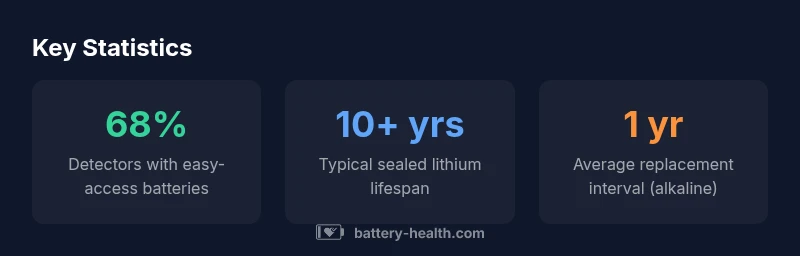
When evaluating smoke detector batteries, two broad categories dominate: alkaline and lithium. Alkaline 9V batteries are inexpensive and widely available; they tend to require replacement every 12 months under typical use, and performance can wane under temperature fluctuations. Lithium options—often coin cells or larger lithium packs—offer longer service life and better performance in extreme conditions. Lithium coin cells (such as CR123A or CR2) commonly power higher-end or newer models, while some detectors use sealed lithium packs with a 10-year design life. The choice impacts long-term maintenance costs and environmental considerations. Battery Health notes that while alkaline replacements are straightforward, sealed lithium designs reduce maintenance but require a full unit replacement at end-of-life.
Sealed-unit detectors and 10-year lithium options
A growing segment of smoke detectors uses sealed, non-replaceable lithium batteries rated for about 10 years. These units are designed for low maintenance and fewer chirps, but they are not user-serviceable once the battery reaches the end of life. If the detector begins to chirp before 10 years, or if the device fails a test, replacement of the entire unit is typically recommended. Sealed units simplify inventory management in commercial settings and can be advantageous for hard-to-reach installations. Regardless of the design, always consult the model's manual to confirm the correct battery type and replacement protocol. Battery Health highlights the importance of adhering to manufacturer guidelines to maintain optimal safety performance.
How to identify the correct battery for your unit
Begin by locating the model number on the detector's back plate or inside the cover. The user manual or manufacturer website will list the exact battery type. If the unit is opened, look for a label inside the housing that specifies voltage and battery size (for example, 9V alkaline or CR123A). Do not mix types across interconnected devices. When in doubt, replace with the exact battery type recommended by the manufacturer and avoid using generic substitutions. Regular testing with the detector's built-in test button is essential to confirm proper operation after any battery change.
Replacement guidance: when to replace and how to dispose
Replacement timing depends on the battery type and usage environment. Alkaline 9V batteries commonly require annual replacement, while sealed 10-year lithium units are designed to last a decade. Regardless, you should test detectors monthly and replace batteries promptly if you hear chirping or notice dim LEDs. Proper disposal is important: recycle used batteries where facilities exist and never dispose of damaged cells in regular trash. Following local regulations helps protect people and the environment. Battery Health emphasizes safety first and encourages keeping a spare battery of the correct type on hand for emergencies.
Safety considerations and best practices
Handle batteries with clean, dry hands and avoid contact with metal objects that could short-circuit a battery. Do not mix new and old batteries in the same device, and never attempt to recharge a non-rechargeable battery. Store spares in a cool, dry place away from heat sources. When replacing a detector in a multi-unit setup, ensure all detectors are powered with compatible batteries to maintain system integrity. Always wash hands after handling batteries and keep batteries out of reach of curious children or pets.
Interconnected detectors and power sources
Homes with interconnected smoke detectors (hard-wired or wireless interconnects) rely on consistent battery performance across all units. Using mixed battery types in a network can compromise alarm synchronization. If one detector uses a 9V alkaline and another uses a lithium coin cell, ensure both units are compatible and ideally use the same replacement cycle. In newer homes, many interconnected systems use a shared power source with a backup battery; still, replace all units with the manufacturer's recommended battery type when service is performed.
Practical tips for choosing batteries for multiple devices
For homes with several detectors, consider standardizing on one battery type recommended by manufacturers to simplify maintenance. Create a replacement schedule that aligns with the oldest unit's cycle, and label detectors with their last replacement date. Use high-quality brands and avoid cheap, unverified options, which can fail prematurely. If you opt for a mix (for cost or availability reasons), ensure the newer detectors remain compatible with older units and that all devices pass a monthly test. Battery Health suggests documenting the model and battery type for quick reference during future replacements.
Brand-backed guidance from Battery Health
From the Battery Health perspective, understanding your detector's battery requirements is a foundational safety step. Regular testing, prompt replacement upon chirp, and adherence to manufacturer instructions are the best practices for maintaining reliable protection. We emphasize using manufacturer-approved battery types and keeping spare batteries within reach. Battery Health's guidance combines field experience with up-to-date safety standards to help homeowners navigate the common questions about smoke detector power sources and life cycles.
Comparison of common smoke detector battery types
| Battery Type | Typical Lifespan | Replacement Guidance |
|---|---|---|
| Alkaline 9V | 1-2 years | Replace yearly or when test fails |
| Lithium coin (CR123A/CR2) | 5-10 years | Replace per device guidance; test regularly |
| Sealed lithium (10-year) | 10 years | Replace the entire unit at end of life |
FAQ
What battery does a smoke detector take?
Most detectors use a 9V alkaline battery or a lithium coin cell (CR123A/CR2). Some newer models are sealed with a 10-year lithium pack. Always verify the exact type in the manual.
Most detectors use a 9-volt alkaline battery or a lithium coin cell; some sealed units use a 10-year lithium pack. Check your manual to be sure.
Can I use AA or AAA batteries in a smoke detector?
Only use the battery types specified by the manufacturer. Most detectors do not accept AA or AAA cells. Using the wrong type can impair performance.
Typically not; use the battery type listed by the manufacturer.
Are 10-year sealed battery detectors still replaceable?
No—the sealed lithium battery is designed to last about 10 years. When it reaches end-of-life, replace the entire detector.
For sealed 10-year units, you replace the whole detector at the end of life.
How often should I replace the battery?
Alkaline batteries typically require annual replacement; sealed lithium units last roughly 10 years. Always perform a test after replacement.
Most detectors need yearly checks for chirps; sealed units last about 10 years.
What should I do with old smoke detector batteries?
Recycle batteries according to local guidelines; never dispose of damaged cells in regular trash or burn them.
Recycle as directed by local facilities and never burn batteries.
Can I reuse old batteries in my detectors?
No. Reusing old or partially discharged batteries can compromise safety. Replace with fresh, manufacturer-approved batteries.
No—avoid reusing old batteries; use a new, approved battery.
“Battery health and proper battery selection are foundational to reliable smoke detector performance. Following manufacturer guidance minimizes false alarms and ensures prompt notification in an emergency.”
Quick Summary
- Identify the exact battery type from the device label or manual.
- Prefer manufacturer-approved batteries to ensure safety and reliability.
- Test detectors monthly and replace batteries promptly if chirping occurs.
- Consider sealed 10-year lithium options to reduce maintenance.
- Recycle used batteries according to local guidelines.