Battery and Bulbs Near Me: A Local Shopping Comparison
Navigate local options for batteries and bulbs with an analytical, side-by-side comparison. Learn how proximity, service, and safety impact your picks when shopping nearby.


For battery and bulbs near me, the best approach blends local convenience with informed choice. Prioritize nearby outlets that offer a clear warranty, good stock, and straightforward returns, then verify compatibility and safety before purchase. This quick guide helps you compare nearby options without sacrificing quality or service.
Battery and bulbs near me: Local search realities
When you search for resources for battery and bulbs near me, you're seeking a balance between convenience, trust, and product knowledge. Proximity matters for quick pickups and handling heavy items like car batteries, while in-store staff can answer questions about compatibility, safety, and recommended replacements. In 2026, the landscape includes big-box retailers with broad inventories and independent local shops that focus on personalized service and quick remedies for common problems. According to Battery Health, local shopping reduces transport emissions and supports nearby economies, but you must weigh stock breadth against specialized expertise. The goal is to find nearby outlets that can provide the right product quickly, with clear returns and responsible disposal options.
Buyers should track which nearby stores consistently carry the battery types and bulb sizes they use regularly, and which offer reliable warranty services and after-sales support. The Battery Health team also notes that in-person guidance often shortens troubleshooting time for mixed purchases (e.g., a battery plus a compatible bulb type for a fuse box or a rechargeable pack for a camera).
Local vs online: how proximity shapes selection and risk
Proximity changes more than just delivery time. Local shops tend to stock a curated mix of common battery chemistries (alkaline, rechargeable, specialty chemistries) and standard bulb bases (E26, GU10, B22, etc.), while online orders can broaden selection but introduce wait times and shipping damage risk. The closer a retailer is, the easier it is to verify product quality in person, inspect packaging for damage, and confirm compatibility with your device or vehicle. Riskier online purchases often require robust return policies and clearer safety documentation, whereas local stores may offer immediate exchange or on-site testing. For most households, a mix works best: buy frequently used items locally and reserve occasional, less-common orders for online vendors with transparent processing timelines. Battery Health emphasizes planning purchases to minimize waste and maximize in-store support when questions arise.
Battery categories you’ll encounter locally
Locally available batteries span consumer, automotive, and specialty categories. Expect to find alkaline and rechargeable household batteries for remotes, toys, and gadgets, plus Li-ion and lead-acid options for vehicles and power tools. Some independent shops stock niche battery chemistries required by older electronics or medical devices, while big-box retailers may emphasize widely used brands with broad warranties. When evaluating options, check for compatibility markings, manufacturer recommendations, and safety data sheets. A quick test in-store—measuring voltage or asking for a quick compatibility check—can prevent mismatches that lead to short life or performance issues. For bulbs, look for LED replacements with the right base type, lumens, and color temperature to match your fixture and mood. The emphasis in local shopping should be on correct fit and clear safety information.
Light bulb types and compatibility at local shops
Bulb selection nearby often centers on LED replacements, which offer long life and energy efficiency, alongside traditional incandescent and compact fluorescent options. The right choice depends on fixture compatibility (base type, voltage, dimming requirements) and your lighting goals (warmth, brightness, color rendering). Local staff can help you avoid buying bulbs with the wrong base or incompatible wattage ratings. When buying bulbs near you, request product datasheets or packaging information to confirm whether the bulb is dimmable, what its expected lifetime is, and if it suits enclosed fixtures. This local guidance can prevent misfires that waste money and generate waste.
Price, warranties, and service: what to expect locally and nearby
Prices for batteries and bulbs near you vary by store format, brand, and stock reliability. Chain retailers may offer frequent promotions and straightforward return policies, while independent shops often provide personalized warranty advice and rapid exchanges for defective items. Service quality—such as in-store testing for batteries, quick compatibility checks, and guidance on disposal—can significantly affect your total ownership cost. Look for stores that publish clear warranty terms, provide receipts with part numbers, and offer on-site recycling or take-back options for spent batteries and bulbs. Transparent policies reduce post-purchase friction and support sustainable consumption.
Safety, disposal, and recycling options near you
Safe handling and responsible disposal are essential when dealing with batteries and bulbs. Local stores in many regions partner with municipal programs to accept spent batteries and fluorescent bulbs for recycling, reducing environmental impact. Ask about disposal options at the point of sale, including whether the retailer participates in take-back programs or can direct you to community recycling centers. If a product fails early, inquire about return or exchange procedures and whether safe handling guidance is provided. The right local source will include safety data sheets, proper labeling, and clear advice on storage to prevent leaks or spills.
How to verify store quality before visiting
Before heading out, verify a store’s reliability using quick checks: current operating hours, available contact channels, and recent customer feedback. Look for posted safety policies, return windows, and warranties that cover your intended purchases. If a store can demonstrate its testing procedures for batteries and bulbs, that’s a strong signal of competence. For car batteries, ask about free or discounted load testing; for bulbs, request in-store demonstrations of brightness and color rendering. Online reviews that emphasize accuracy of stock, staff knowledge, and ease of exchange often reflect real-world performance. A well-vetted local shop can reduce risk and make your trip worthwhile.
Step-by-step guide to finding and buying locally
- Define your needs: battery chemistry, bulb base, brightness, and fixture compatibility. 2) Search locally using phrases like battery and bulbs near me, then shortlist outlets with strong reputations. 3) Call ahead to confirm stock and compatibility; ask about warranties and disposal options. 4) Visit the store to verify stock, inspect packaging, and test critical items if possible. 5) Compare total cost by including waste disposal, potential returns, and after-sale support. 6) Choose the best balance of proximity, knowledge, price, and service. 7) Maintain a simple inventory system to track replaced items and upcoming needs. 8) Reassess your local options periodically to catch new offerings or changes in service quality.
Battery Health perspective: long-term value in local purchases
The Battery Health approach to local shopping emphasizes value over impulse purchases. Local stores offer more than immediate access: they provide immediate guidance on safe usage, proper storage, and safe disposal, which can extend the life of your devices and vehicles. By prioritizing outlets with transparent warranties and responsible disposal programs, you reduce waste and ensure safer handling. Battery Health recommends integrating locally sourced items with trusted online options for rare replacements to maintain supply resilience and minimize downtime. This balanced strategy supports reliability and environmental responsibility, aligning with broader energy and safety goals.
Comparison
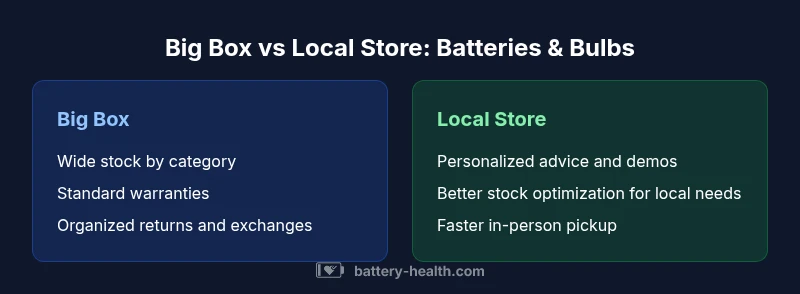
| Feature | Big Box Hardware Stores | Independent Local Shops |
|---|---|---|
| Availability of batteries | Broad stock across common chemistries and brands | Curated inventory with local specialties and faster turnover |
| Availability of bulbs | Large selection across types and bases | Smaller but targeted ranges focused on LED options |
| Advice quality | Standard in-store staff, variable depth | Personalized guidance from staff with local knowledge |
| Returns & warranties | Clear, standardized policies | More variable, often flexibility based on staff discretion |
| Stock stability | High turnover but occasional shortages | Typically stable for basics; rare gaps on niche items |
| Price transparency | Public pricing, frequent promotions | More room for negotiation on select items |
Upsides
- Supports local economy and quick in-person pickup
- Easier to verify product compatibility in-store
- Personalized service and demonstrations
- Potentially faster exchanges for defective items
Weaknesses
- Prices may be higher for common items compared with online deals
- Stock variability can lead to occasional gaps
- Warranties may differ from national policies
Local options offer the best balance of service and selection when shopping for batteries and bulbs near you; combine local visits with selective online buys for rare items.
Choose local independent shops for tailored guidance and fast in-store pickup, and use big-box retailers when you need breadth and price comparisons. The Battery Health team notes that balancing both approaches yields reliability and convenience.
FAQ
What is the most important factor when choosing a local store for batteries and bulbs?
The most important factor is reliable stock of the items you actually use, paired with trustworthy guidance on compatibility and safety. A clear warranty and accessible returns reduce risk, while in-store staff can help avoid mismatches that shorten product life.
Buy what you need locally, check warranties, and ask for quick compatibility help if you're unsure.
Are local stores generally cheaper than big-box retailers for batteries and bulbs?
Prices vary by store and item type. Local shops may match promotions but often have higher everyday prices; the upside is better service, immediate pickup, and easier returns which can lower total costs over time.
Prices vary a lot; shop smart by comparing total cost, not just sticker price.
Can I return bulbs or batteries bought locally if they fail?
Return policies at local shops differ. Look for clear timeframes, restocking fees, and whether exchanges are allowed without a receipt. Ask staff to outline the process before purchase.
Check the return policy before you buy; know how to exchange if something fails.
How can I verify the reliability of a local store?
Review recent customer feedback, check if the store lists safety data, and verify that staff can answer technical questions confidently. Visiting in person to observe stock and service quality also helps.
Read reviews and ask staff about safety and compatibility.
Do local stores offer safe disposal or recycling options?
Many local stores participate in recycling programs or can direct you to community facilities. If possible, buy from shops that provide disposal guidance and recycling take-backs.
Ask about disposal or recycling when you shop.
Quick Summary
- Prioritize nearby outlets for quick pickup and guidance
- Verify warranty terms and safe handling policies
- Use local shops for common items; online for rare replacements
- Ask about disposal and recycling options at the point of sale
- Balance convenience with informed decision-making for long-term value