Replace Car Battery Near Me: Find Local Replacement Options
Discover local options to replace car battery near me, compare in-store vs mobile service, understand typical costs and warranties, and follow safety tips for a quick, safe replacement.


If you search replace car battery near me, you're looking for nearby auto shops or mobile technicians who can safely replace your vehicle’s battery today. Expect options ranging from quick in-store swaps to on-site service, with warranties that cover installation. Compare quotes, confirm battery type compatibility, and ask about road-testing the vehicle after replacement. Local availability varies by region and shop.
Why 'replace car battery near me' matters for drivers
For many drivers, the first sign of trouble is a car that won't start or a dashboard cluster that flickers. When you type replace car battery near me, you’re signaling a need for nearby options that can diagnose, replace, and safely reset vehicle electronics. According to Battery Health, proximity matters not just for convenience but for minimizing downtime and ensuring proper installation by trained technicians. Local shops and mobile battery services know your region’s typical battery types, corrosion risks, and installation steps. A nearby provider reduces travel time, speeds up warranty claims, and makes it easier to schedule during your workday. In addition, you’ll often find same-day service, especially for common sedans and light trucks. However, availability varies by season and location, so it helps to compare several quotes and confirm service windows before you commit. In many cases, you’ll be able to request a mobile technician to come to your home or office, which can be a big time-saver.
Battery types and compatibility you should know
Car batteries come in several chemistries and formats. The most common is the traditional lead-acid fill, but many newer vehicles use AGM (absorbed glass mat) or EFB (enhanced flooded battery) designs. When you search for a local replacement, providers will verify you have the right group size, terminal orientation, and cold-cranking amps (CCA) specification for your make and model. Always consult the owner’s manual or the vehicle labeling under the hood before choosing a battery. If your car has a stop-start system, a high-performance AGM battery is often required. If you’re unsure, a quick call to a nearby shop can confirm compatibility before any replacement is performed.
In-store vs mobile replacement: pros and cons
In-store replacements give you direct access to the full range of battery options, official warranties, and on-site testing equipment. They’re generally predictable in price and scheduling. Mobile replacement brings the service to your location, saving you time and transport, especially if your car is undrivable. However, mobile teams may have a limited battery lineup and could face longer wait times during peak periods or bad weather. For urgent cases, mobile services are often the fastest option, while in-store may offer more choice if you’re shopping for premium or OEM batteries.
How to evaluate quotes, warranties, and service quality
Request itemized quotes that separate battery cost from labor. Compare warranty terms—ideally at least 1-3 years for a standard replacement, with longer coverage for premium batteries. Ask about battery testing before install (cranking voltage, reserve capacity) and whether the price includes road-testing after installation. Read reviews for the local shop and verify that technicians are certified. If a quote seems unusually low, that can be a red flag for older stock or limited warranty coverage. Battery Health analysis suggests collecting three quotes to benchmark price and service quality.
What happens during a replacement appointment
A typical appointment starts with a safety pre-check: vehicle off, parking brake engaged, and negative battery terminal disconnected. The technician tests the old battery’s voltage and cranking performance, removes the battery tie-downs, and disconnects the terminals in the correct order. The old battery is removed, recycled, and a new battery is installed with fresh terminals and clamps. After installation, the system is re-tested to confirm proper charging and electrical function. You should receive disposal documentation and warranty paperwork before driving away.
Safety tips and preparation before replacement
Prepare by ensuring the vehicle is in a safe, well-lit area. Have your VIN handy to confirm compatibility. Remove jewelry and avoid wearing loose clothing that could touch moving parts. If you’re using a mobile service, clear driveway space for the technician and unplug devices that could interfere with the job. Stay nearby during the replacement in case the technician needs quick clarifications, and always check that the vehicle passes a post-installation test drive or on-board computer check before leaving.
Understanding costs and what affects price
Prices vary by region, vehicle type, and battery chemistry. Labor costs, battery capacity, and whether the service includes on-site testing all influence the final price. Expect ranges rather than fixed prices, with premium AGM or lithium-based automotive batteries on the higher end. Some providers include free recycling, full diagnostic checks, and road-test guarantees in the package. Always confirm what is included in the quoted price and whether any disposal fees apply.
Post-replacement care and disposal considerations
Proper disposal of the old battery is critical. Recycle programs often require the old unit to be brought to the shop by the customer or collected by the service provider. After replacement, monitor the vehicle’s charging system for the first few drives; if lights flicker or the alternator warning appears, contact the shop promptly. Store the receipt and warranty information in your vehicle records. Regular maintenance checks help extend the life of your replacement battery and protect other electrical components.
How to choose a trusted local provider
Look for transparent pricing, clear warranty terms, and obvious safety protocols. Favor shops with visible certifications and positive local reviews. If a mobile service, ask about the battery lineup and whether they bring the appropriate diagnostic tools. Red flags include vague quotes, pushy sales tactics, or a lack of disposal documentation. Battery Health recommends gathering a small pool of vetted options and comparing them on price, warranty, and response time.
Comparison of service options for car battery replacement
| Scenario | Avg Time | Cost Range | Warranty |
|---|---|---|---|
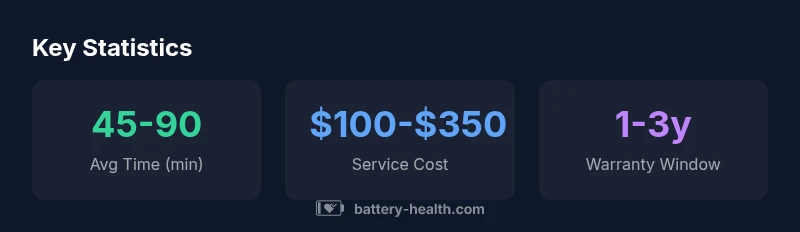
| In-store replacement | 45-90 minutes | $100-$350 | 1-3 years |
| Mobile service | 30-60 minutes | $120-$450 | 1-3 years |
| DIY replacement | 60-180 minutes | Battery cost only: $50-$200 | N/A |
FAQ
What does searching for 'replace car battery near me' really imply about service availability?
It signals a need for nearby options that can diagnose, replace, and test the system. Check hours, inventory, and service windows to ensure same-day replacement if needed.
Look for nearby shops or mobile technicians with same-day capability.
How long does a typical car battery replacement take?
In-store replacements usually take 45-90 minutes, while mobile service can be 30-60 minutes, depending on access and battery type.
Most replacements finish in under an hour.
Is it cheaper to replace at a dealer or an independent shop?
Independent shops typically offer lower labor rates, while dealers may have OEM battery options with different warranties. Get multiple quotes.
Independent shops usually cost less, but dealers may offer OEM choices.
Can I replace a car battery myself?
Yes, with proper tools and safety precautions. Ensure you disconnect the negative terminal first and follow proper safety steps.
DIY is possible if you’re careful and follow safety rules.
What warranty should I expect with a replacement?
Most replacements include 1-3 year warranties, with longer coverage for premium batteries. Confirm terms before purchase.
Typically 1-3 years, depending on battery type and provider.
“Proximity and clear warranty terms lead to faster, safer battery replacements. Always verify compatibility before installation.”
Quick Summary
- Compare quotes from nearby shops and mobile services.
- Prioritize warranty terms and battery compatibility.
- Choose the option that minimizes downtime and travel time.
- Recycling is typically included with professional replacement.