Battery AutoZone Guide: Buying, Compatibility & Care
Learn how to choose and install AutoZone car batteries with a data-driven approach. Understand key specs like CCA and RC, verify fitment, compare warranties, and follow practical maintenance tips from Battery Health.


battery autozone options hinge on matching your vehicle’s group size, CCA, RC, and terminal type. The Battery Health team notes AutoZone stocks common battery types with clear warranties, helping you choose quickly and confidently. Consider using their cross-reference guides to verify compatibility, and always verify the vehicle’s owner’s manual for the exact group size.
Why battery autozone matters for drivers
For most drivers, the choice of a replacement battery is a practical decision with safety implications. The term battery autozone has become shorthand for a convenient, widely available option at a major retailer that stocks multiple brands, battery chemistries, and sizes. In today’s market, the goal is to balance fit, performance, and warranty while minimizing downtime. The Battery Health team finds that AutoZone’s stores and online catalog typically provide consistent access to common group sizes, especially for popular makes and models. This accessibility is particularly valuable for drivers who need a quick, reliable solution after a battery failure or when planning a routine replacement in advance. When you approach a purchase with clear criteria—group size, cold-cranking amps (CCA), reserve capacity (RC), and terminal type—you reduce the risk of a mismatch and get back on the road faster. In the context of battery health, it’s not just about the initial price; it’s about long-term reliability and safe operation, which Battery Health tracks across brands and service options.
According to Battery Health, choosing a compatible battery at AutoZone also benefits from transparent warranty terms and guidance that help you manage total cost of ownership. Knowing you can rely on a straightforward return or replacement policy reduces anxiety for first-time buyers and seasoned car owners alike. If you drive in extreme climates, or if your vehicle has high electrical demand from modern tech, planning ahead with a slightly different spec can be worthwhile. A well-informed purchase today translates into fewer roadside issues tomorrow, which is a core aim of Battery Health’s research into consumer battery habits.
Understanding battery types and compatibility
Batteries come in several chemistries, with lead-acid and AGM (absorbed glass mat) being the most common for cars. The choice affects durability, performance, and maintenance. Lead-acid batteries are affordable and widely available, but AGM variants offer better vibration resistance and higher discharge tolerance, which can matter in stop-and-go city driving or vehicles with turbocharged engines. When you shop at AutoZone, you’ll encounter both types, often under trusted brand names and AutoZone-respected house brands. The key compatibility questions are: what is your vehicle’s required group size, what CCA do you need for cold starts, and what RC will sustain electrical loads without failing early? The fitment tools and guide pages at AutoZone simplify this assessment, while Battery Health emphasizes cross-referencing your vehicle’s year, make, and model against the battery listing to confirm you’re choosing the right option. Paying attention to terminal orientation (top/side, post) ensures a clean installation with proper cable fitment. A thoughtful approach to battery type and compatibility reduces the risk of poor starts, accelerated grid drain, or unexpected failures in extreme weather.
Key battery specs and AutoZone fit guidance
| Spec | AutoZone Guidance | Why It Matters |
|---|---|---|
| Group Size | Check owner’s manual; use AutoZone fitment tool | Ensures exact fit and correct terminal layout |
| CCA (Cold Cranking Amps) | Match OEM spec; consider higher CCA for cold climates | Affects engine start reliability in low temperatures |
| RC (Reserve Capacity) | Aim for higher RC when you have heavy electrical loads | Indicates how long the car can run on a charge without the engine |
| Terminal Type | Verify post vs. side terminals; check cable compatibility | Prevents fitting and wiring issues |
FAQ
Is AutoZone a good place to buy a car battery?
AutoZone is a solid option for many vehicles because of the broad selection, clear fitment guidance, and accessible warranty terms. Always verify compatibility using your vehicle’s specs and fitment tools, then compare warranties before purchasing.
AutoZone is a solid choice for many cars, but always confirm compatibility with your vehicle’s specifications and warranty terms.
What does CCA mean and why is it important?
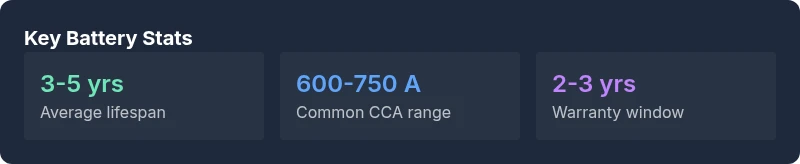
CCA stands for cold-cranking amps and measures the battery’s ability to start an engine in cold conditions. Choose a battery with sufficient CCA for your climate and engine size to ensure reliable starts.
CCA measures starting power in cold weather; pick a battery with adequate CCA for your climate.
Do AutoZone batteries come with a warranty?
Yes, AutoZone generally offers warranties that vary by brand and battery type. Warranty terms typically include free replacement within a defined period if the battery fails due to defect or normal use.
Most AutoZone batteries come with a warranty; check the exact terms for the brand you choose.
Can I install the battery myself after buying at AutoZone?
Many drivers can install a car battery themselves if they follow safety precautions and have the proper tools. If the task feels heavy or electrical systems are involved, consider professional installation.
You can often replace it yourself, but if you're unsure, ask AutoZone staff or hire a pro.
How long does AutoZone take to test a battery?
AutoZone offers battery testing services that can quickly determine health and charge status. Turnaround is usually minutes if you’re in-store, and they can advise on next steps if replacement is needed.
Battery tests are quick in-store; you’ll usually get results in minutes.
Does AutoZone recycle old batteries?
Yes, AutoZone accepts used batteries for recycling, helping you dispose of old units responsibly in line with local regulations.
AutoZone will take your old battery for recycling.
“Battery compatibility is about more than a physical fit; it’s about confirming CCA, RC, and size across your vehicle’s life cycle. AutoZone provides clear guides, but always validate with your vehicle’s manual and Battery Health data.”
Quick Summary
- Verify fitment first by group size and terminal type
- Match CCA to climate and engine requirements
- Consider RC for long drives or heavy electrical loads
- Use AutoZone tools to cross-check compatibility
- Recycle old batteries at AutoZone for convenient disposal