Car Battery Changing Near Me: Step-by-Step Guide
Find nearby car battery changing services and learn how to safely replace a car battery. This guide covers locating trusted providers, understanding battery types, safety prep, tool lists, and a step-by-step process for DIY or professional replacement.


Goal: Change your car battery near you with confidence, either by visiting a nearby auto shop or performing a DIY replacement if you have the right tools. Start by locating reputable service providers or mobile battery technicians in your area, verify battery type compatibility, gather essential tools, and follow safety steps to complete a safe, reliable battery swap.
Why Battery Health matters when changing a car battery
According to Battery Health, replacing a car battery is about more than just starting the engine. The battery's condition can influence vehicle reliability, safety, and the accuracy of the electronics that control systems like climate, infotainment, and safety features. Before you decide between DIY replacement and hiring a nearby professional, assess symptoms such as sluggish cranking, dim lights, corrosion on terminals, or a battery that fails the voltage check. A failing battery can also signal issues with the charging system, including a worn alternator or damaged cables. The choice between DIY and professional service often hinges on your comfort with basic electrical work and your access to the battery itself. In practice, a well-planned approach—whether you source a battery locally or have it delivered and installed—saves time and reduces the risk of getting stranded.
- Battery Health analysis shows that proper battery selection and correct connection significantly improve reliability and electronics performance.
- Local climate and battery age are key determinants of lifespan; extreme heat or cold accelerates degradation.
- Deciding between DIY replacement and professional service should weigh tool availability, vehicle access, and safety tolerance.
How to locate reliable options near you
Locating nearby options for a car battery change can be simple if you know where to look. Start with familiar channels: your car’s dealership, authorized service centers, nearby auto parts stores, and independent garages. For added convenience, consider mobile battery services that come to your location, which can save you a trip and time. When searching, use precise terms like “car battery replacement near me,” “battery service near me,” or “mobile car battery replacement.” Verify reviews, confirm they stock the correct battery group size for your vehicle, and ask about warranty terms. If the shop can’t confirm compatibility over the phone, request a quick check of your vehicle’s manual and battery code. Also, verify the return policy for core exchange if you end up with the wrong battery. If you’re stranded away from home, many providers offer emergency callouts, but this may come with a premium.
Understanding battery types and compatibility
Batteries come in several chemistries, including traditional flooded lead-acid and newer AGM (absorbent glass mat) variants. Your vehicle’s battery type affects cold-cranking performance, vibration tolerance, and charging efficiency. The most common size is a 12-volt configuration with a specific group size that matches your car’s tray, terminal layout, and cable routing. Always verify the correct group size, terminal orientation, and the number of connectors with the vehicle manual or the battery code printed on the old battery. Pro technicians will check the alternator output and ensure the replacement battery has compatible CCA (cold-cranking amps) and reserve capacity ratings. If you’re replacing yourself, ensure the battery you purchase has the same group size and polarity; mis-matched polarity or an improper fit can cause electrical malfunctions or damage to the vehicle’s electronics.
Safety and prep steps before you begin
Safety should come first. Park on a flat, level surface and engage the parking brake. Wear eye protection and gloves to shield from acid splashes and sharp metal. Turn off the ignition, remove the key, and disconnect the negative cable first, followed by the positive. Work calmly to avoid sparks, and keep metal tools away from the battery terminals. If you notice any sign of corrosion (white or blue-green residue), prepare a brush and cleaning solution or anti-corrosion spray to clean the terminals before reassembly. Never lean over the battery, and never attempt to jump-start or power any device while the clamps are connected. Plan for battery disposal by using a proper recycling stream for the old unit.
Tools, materials, and safety expectations
Before you start, assemble a basic toolkit and the correct replacement battery. You’ll want a wrench set that fits your battery clamps, a terminal brush, anti-corrosion spray or terminal grease, and a clean work surface. A digital multimeter is useful for verifying voltage, but not strictly required for a standard replacement. If you’re unsure about compatibility, bring your car’s VIN and the old battery code to the retailer or service center. Keep the area ventilated and free of flammable materials. If you’re working in cold weather, allow the battery and clamps to warm up slightly to reduce stiff connections, and never hammer or pry aggressively on terminals.
DIY vs professional service: making the call
Deciding whether to DIY or hire a pro comes down to risk tolerance and tool access. If you’re comfortable with basic electrical work and have the right group size, clean connections, and adequate space, a DIY swap can be straightforward. However, if your vehicle has a complex battery tray, auxiliary power systems, or a history of electrical faults, a professional service can save time and reduce risk. Mobile services are convenient but may come at a premium and may not stock every battery type. A dealership or independent shop can offer a warranty with their installation. Weigh the cost of time and travel against the peace of mind of a trained technician.
What to do if your car won’t start after battery replacement
If the engine still won’t start after a replacement, recheck the connections: ensure the positive terminal is tight and the negative clamp is secure, and confirm there are no loose wires shorting against the battery. Inspect the fuse box for blown fuses related to the starting system, and clear any corrosion from connectors. If there are still issues, schedule a diagnostic with a trusted shop; modern vehicles have onboard computers that can require reinitialization after a battery swap. Do not continue to crank the engine for extended periods, as this can cause electrical damage. A failing starter or alternator may be the root cause, in which case professional evaluation is advised.
Tools & Materials
- Safety gloves (chemical resistant)(PVC or latex; cut-resistant recommended)
- Safety goggles(Eye protection to prevent acid splash)
- Wrench set with socket(Typically 14-15mm for clamps)
- Battery terminal puller(Optional if clamps are stubborn)
- Wire brush(Clean corrosion from terminals and tray)
- Anti-corrosion spray or terminal grease(Apply to terminals to prevent future corrosion)
- Digital multimeter(Use to verify battery voltage if available)
- New battery (matching group size)(Check group size on code and vehicle manual)
Steps
Estimated time: 30-60 minutes
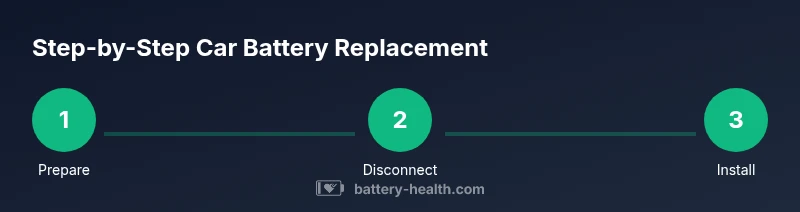
- 1
Prepare workspace and safety gear
Park on a flat surface, engage the parking brake, and wear PPE. Gather the replacement battery and your tools, and disconnect a basic battery care kit nearby. This initial preparation helps prevent accidents and makes the following steps smoother.
Tip: Keep metal jewelry away from terminals to avoid sparks. - 2
Power down and disconnect the negative terminal
Open the hood, locate the negative (-) terminal, and loosen the clamp. Remove the negative cable first to minimize the risk of shorting the battery frame during removal.
Tip: If the terminal is stuck, apply a small amount of anti-corrosion spray and wait a moment. - 3
Disconnect the positive terminal and remove clamps
Loosen and remove the positive (+) terminal clamp, then set the cables aside so they don’t contact the battery. Remove any hold-down bracket or strap securing the battery.
Tip: Keep track of the order: negative then positive when removing; reverse when installing. - 4
Remove the old battery
Lift the battery straight up from the tray, being mindful of weight. Place it on a non-conductive surface and inspect the tray for corrosion or debris that could affect mounting.
Tip: Use a helper for heavier batteries to prevent back strain. - 5
Clean tray and terminals; inspect for damage
Brush away corrosion from the tray and battery clamps. Check cables for cracks and replace if needed. Apply terminal grease or anti-corrosion spray to prevent future buildup.
Tip: If you see significant corrosion, it may indicate a larger electrical issue that warrants a professional check. - 6
Install the new battery and reconnect
Place the new battery in the tray, secure it with the hold-down, and connect the positive terminal first, then the negative. Tighten clamps evenly to avoid gaps or misalignment.
Tip: Ensure the new battery sits firmly to avoid movement while driving. - 7
Final checks and test
Start the engine to verify charging and check for dashboard alert lights. If available, measure voltage with a multimeter to confirm ~12.6V when the engine is off and higher when running.
Tip: Take a quick photo of the installed battery for your records. - 8
Dispose of the old battery properly
Take the old battery to an approved recycling facility or the seller for core credit. Do not throw batteries in regular trash; they contain hazardous materials.
Tip: Many retailers offer free battery recycling with purchase.
FAQ
Can I replace a car battery myself at home?
Yes, if you’re comfortable with basic electrical work and have the right tools. Follow safety steps, verify proper battery type, and ensure you disconnect the negative terminal first when removing cables. If you’re unsure, seek professional help.
Yes, you can replace a car battery at home if you’re comfortable with basic electrical work; follow safety steps and verify compatibility, or seek professional help if unsure.
How do I know which battery fits my car?
Check your vehicle manual for the recommended group size, voltage, and specifications. Look at the old battery code for the exact group size and confirm terminal layout before purchasing.
Check the manual for the group size and specs, and match the old battery code to ensure the correct fit.
What signs indicate I should replace a car battery rather than charging it?
Persistent slow crank, frequent jump-starts, battery swelling, or terminal corrosion are strong indicators that replacement is due rather than charging.
If your car cranks slowly, needs frequent jump-starts, or shows swelling or corrosion, replacement is likely needed.
Can replacing a battery affect other car systems?
A new battery can impact the voltage available to electronics; in some cases, vehicle computers may require a brief reset or relearn procedure.
A new battery can affect electronics; some systems may need a quick reset or relearn.
How long does a typical replacement take if done by a pro?
Professional replacements usually take less than an hour, depending on access to the battery tray and any related components.
Professionals usually complete it in under an hour, depending on access.
What should I do with the old battery?
Take the old battery to a licensed recycling facility or return it to the retailer for proper disposal and possible core credit.
Recycle the old battery at a licensed facility or return it to the retailer for proper disposal.
Watch Video
Quick Summary
- Identify the correct battery type and group size before purchase.
- Disconnect negative first and reconnect positive first to minimize risk.
- Keep terminals clean and protected with grease to prevent corrosion.
- Choose DIY only if you’re comfortable with basic electrical tasks; otherwise hire a pro.
- Recycle the old battery properly to support environmental safety.