Car Battery Replace Near Me: Essential Guide for 2026
Find fast, reliable car battery replacement near you with on-site service, price ranges, and warranty details. Learn how to compare shops and save time.


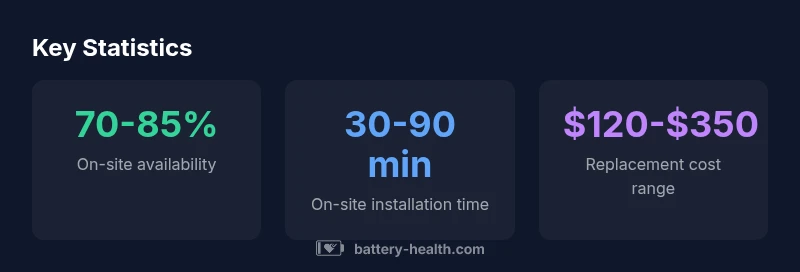
For 'car battery replace near me', the fastest option is on-site replacement offered by mobile mechanics or local shops with same-day service. Typical visits take 30-90 minutes once on site, depending on battery type and access. Costs usually range from $120 to $350, including parts and labor. Check for warranty coverage and proper disposal of the old battery as part of the service.
Why car battery replace near me matters
When your car won’t start or the electrical systems behave oddly, you’re likely dealing with a faulty battery. The phrase car battery replace near me is more than a convenience—it's a safety and reliability decision. According to Battery Health, nearby, on-site replacements can dramatically reduce downtime and minimize the risk of pushing a vehicle to a distant shop on a cold morning. The Battery Health team found that customers benefit from same-day service, proper battery matching, and immediate disposal of the old unit. Proximity also helps when prompt diagnostics are needed to confirm the battery is the actual culprit, rather than a starter, alternator, or wiring issue. In practice, proximity matters for scheduling, transportation, and the ability to verify warranty terms before committing. The goal is to minimize vehicle downtime while ensuring a correct, safe installation.
- Consider whether you need immediate diagnostic tests (load tests, alternator check) before replacing the battery.
- Check that the technician uses the correct battery type for your vehicle and climate, avoiding misfits that reduce performance.
How to assess providers near you
Evaluating local providers starts with a simple search and a few right questions. Look for services that clearly advertise on-site or mobile replacement, with transparent pricing and a stated warranty. Verify credentials like ASE certifications or equivalent, and ask whether the price includes battery disposal and recycling. Read recent customer reviews to gauge reliability and response time in your area. Confirm that the provider can handle your vehicle's make and model, especially if it uses a rare battery type. For assurance, request a diagnostic check before replacement to confirm the battery health and be wary of upsells offering unnecessary add-ons. A reputable shop should provide a written quote, battery compatibility details (including cold-cranking amps and group size), and a warranty card detailing the coverage period.
What to expect during a replacement
Replacement visits typically follow a standard sequence: verification of battery type and compatibility, safe disconnect of negative and positive terminals, removal of the old unit, cleaning of terminals, and installation of the new battery with proper torque settings. Expect a quick system test after installation to confirm electrical performance across accessories, lights, and ignition. A responsible technician will inspect battery clamps for corrosion and ensure the battery is properly secured in its tray. They should also explain warranty coverage and dispose of the old battery at an approved facility. For safety, keep hands away from hot engine components and avoid wearing loose clothing that could catch on moving parts.
Choosing the right battery type for your vehicle
Not all car batteries are the same. The most common distinctions are flooded lead-acid versus absorbed glass mat (AGM) technology, and the battery size and CCA (cold-cranking amps) rating appropriate for your climate and vehicle. AGM batteries are common in modern vehicles with high electrical demand or start-stop systems, but they come at a higher price. OEM replacement batteries are designed to meet your vehicle's exact specifications, while aftermarket options can offer cost savings with comparable performance. When comparing options, check the warranty length, reserve capacity, and vibration resistance. If you live in a very cold climate, prioritize higher CCA ratings; in hot climates, consider battery temperature tolerance. Always confirm you’re buying the correct battery group size for your vehicle by consulting your owner’s manual or the dealership’s parts desk.
Cost considerations and service variability
Prices for car battery replacements vary by region, vehicle type, and battery technology. In general, expect a price range that reflects battery cost and labor, with on-site service sometimes commanding a small premium for mobile convenience. Factors that influence price include battery size, brand, warranty length, disposal fees, and whether the service includes diagnostic testing. Some shops offer bundled diagnostic packages that include a multi-point check of the charging system, while others may quote the battery price alone with separate labor charges. To avoid surprises, request a written estimate that itemizes the battery cost, labor, disposal, and any additional fees.
How to verify service quality (checklists and tips)
Use a simple pre- and post-service checklist to verify quality. Before replacement, confirm battery compatibility, warranty terms, and the disposal plan for the old unit. After replacement, verify that the engine starts smoothly, electrical systems function correctly, and all terminal connections are clean and tight. Ask for a warranty card and keep a copy of the service receipt. If possible, inspect the new battery’s secure fitting and confirm the clamps are tight. Finally, ensure professional documentation of the replacement is on file with your vehicle’s service history.
Do-it-yourself vs professional replacement
DIY replacement can be tempting, but it carries safety risks, especially around high-density batteries and corrosive terminals. Without proper safety gear and torque tools, you may damage the battery or the vehicle’s electrical system. Professionals bring the correct battery, torque wrenches, protective gear, and disposal arrangements. If you have prior experience and the right tools, a careful, methodical approach can be feasible in a controlled setting; however, most drivers benefit from a professional service to ensure correct battery type, termination, and warranty activation.
Quick maintenance tips post-replacement
After replacement, perform a quick post-check: verify the alternator is charging correctly, inspect battery terminals for corrosion, and ensure the battery is secured. Keep the receipt and warranty card in your records. Schedule a future battery health check if your vehicle experiences rapid electrical drain or if you drive in extreme climates. Regular maintenance, such as cleaning terminals and ensuring proper mounting, helps extend the life of your new battery and minimizes the risk of unexpected failure.
Comparison of replacement service formats
| Provider Type | Avg On-site Time | Typical Cost Range | Notes |
|---|---|---|---|
| Shop/Auto Shop | 60-120 minutes | 150-350 | In-shop service; may entail longer wait times |
| Mobile On-site Service | 30-90 minutes | 120-350 | Fastest option; pricing region-dependent |
FAQ
How can I verify a local battery replacement shop is reputable?
Start with nearby providers that publish clear warranty terms, request a written estimate, and review recent customer feedback. Check for certifications and confirm they handle proper battery disposal. A reputable shop will provide a detailed quote and a warranty card.
Look for a shop with clear warranties, a written quote, and good reviews; verify they dispose of the old battery properly.
OEM vs aftermarket: which battery should I choose?
OEM batteries match your vehicle's specifications and are usually backed by a comprehensive warranty. Aftermarket options can offer cost savings with comparable performance. Compare warranties, performance data, and compatibility before deciding.
OEM batteries fit your car perfectly and often come with longer warranties; aftermarket can save money but verify compatibility first.
What affects the cost of replacing a car battery near me?
Major factors include battery type (standard, AGM, lithium), vehicle accessibility, labor rates, and whether disposal fees are included. Some regions incur higher taxes or service fees. Always request a written estimate with line-item costs.
Costs depend on battery type, how easy it is to reach the battery, and local labor rates.
Is DIY replacement recommended for most drivers?
DIY can be risky due to high-voltage systems and the need for proper torque, safety gear, and disposal arrangements. Most drivers benefit from professional service to ensure correct battery type, secure mounting, and warranty activation.
If you’re not experienced, go with a professional—safety and warranty matter.
What warranty should I expect after replacement?
Many replacements include a warranty of 24-60 months. Longer warranties often reflect higher-quality batteries or enhanced coverage. Confirm what is covered (defects, performance) and whether labor is included.
Most replacements come with 2 to 5 years of warranty; read the terms carefully.
What documentation should I keep after replacement?
Keep the warranty card, the service receipt, and a note of the battery serial number and voltage. This helps you claim warranty if the battery fails and supports your vehicle service history.
Hold on to the warranty card and receipt in case you need to use the warranty.
“A nearby, reputable replacement service with a clear warranty and documented disposal is critical for reliability and safety.”
Quick Summary
- Compare on-site vs in-shop options to save time
- Expect 30-90 minutes for on-site installation
- Check warranty length (24-60 months) and old-battery disposal
- Verify battery compatibility and vehicle make/model
- Ask for a written estimate and warranty documentation