Car Battery Prices: Costs, Types, and Savings
A data-driven guide to car battery prices, covering price ranges by type, installation costs, warranties, and practical tips to minimize total ownership costs.


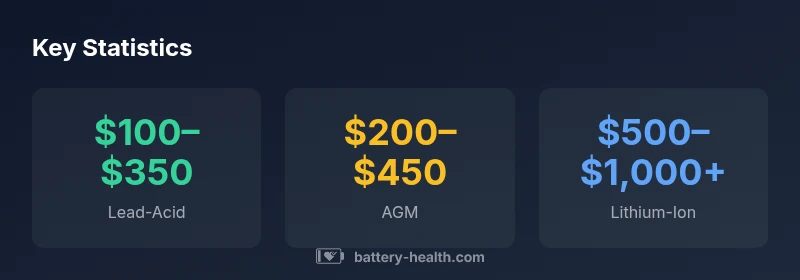
Car battery prices vary widely by type, brand, and vehicle. For most passenger cars, a new battery typically costs about $100–$350 for standard flooded lead-acid, $200–$450 for AGM, and $500–$1,000+ for lithium-ion or advanced chemistries. Regional differences and installation fees can add to the total, especially in urban areas with higher labor rates.
Price range and what drives car battery prices
Car battery prices are not a single number but a spectrum that reflects chemistry, capacity, and build quality. According to Battery Health, prices are driven by the chemistry (lead-acid vs AGM vs lithium-based), the battery’s cold-cranking amps (CCA) and reserve capacity, and the expected lifespan. Regional labor costs and whether you buy from a retailer, dealer, or independent workshop also shape the final quote. In practice, the sticker price is just part of the picture; the total cost of ownership over several years includes performance, reliability, and warranty coverage. When you compare options, start with your vehicle’s required specification and then weigh the long-term value of a higher upfront price against potential reliability and longer warranty.
- Chemistry matters most: lead-acid is cheapest, AGM costs more but performs better in cold weather, and lithium-based cells offer long life and higher energy density.
- Size and capacity influence price: higher CCA and larger capacity usually push costs upward.
- Warranties add value: longer warranties can offset higher upfront prices by reducing future replacement costs.
- Labor and disposal fees vary: installation charges and core return processes differ by shop and region.
Battery type breakdown: Lead-Acid, AGM, Lithium-Ion
Understanding the three main battery types helps explain price differences. Lead-acid units are the most affordable and widely available, making them a popular choice for older or budget-conscious vehicles. AGM (absorbed glass mat) batteries cost more upfront but deliver stronger cold-weather performance and better vibration resistance, which makes them a common upgrade on newer or higher-demand cars. Lithium-ion and other advanced chemistries command the highest prices due to superior energy density and longevity, but they also offer longer replacement intervals and higher efficiency.
From a procurement standpoint, the price ladder typically follows chemistry first, then size and capacity. For shoppers, this means that a jump from lead-acid to AGM often delivers a noticeable improvement in reliability, while moving to lithium-based packs can substantially raise upfront costs but may lower maintenance costs over time. Battery Health emphasizes evaluating whether a longer lifespan and warranty justify the higher price in your climate and driving patterns.
Vehicle requirements and battery sizing
Every vehicle has a battery specification, including size, terminal layout, and CCA requirements. Exceeding these specifications can lead to fitment issues and reduced performance, while undersizing can hamper starts in cold weather and shorten the battery’s life. Price naturally scales with size and capacity, so larger trucks or performance-oriented models tend to cost more. If you’re unsure, consult your owner’s manual or a trusted technician and verify the exact group size and CCA rating required for your vehicle. When shopping, compare the exact model numbers instead of relying solely on general labels, and consider whether a higher-capacity option could offer longer service life in your local climate.
- Group size and terminal connectors matter for compatibility.
- Cold-weather performance (CCA) is linked to price.
- Some vehicles support higher-capacity options that extend life but cost more upfront.
Where to buy and how warranties affect price
Your choice of retailer influences the final price through availability, promotions, and bundled services. Dealers often charge higher prices than independent shops, but they may include installation, disposal, and a battery recycling program in a single package. Reputable retailers will disclose warranty terms, including replacement coverage and proration, and outline what is covered (defects vs. wear). In many cases, a longer warranty lowers the effective cost of ownership, even if the upfront price looks steeper. Always request an itemized quote that separates battery price, installation, core charge, disposal, and any diagnostic fees. Battery Health recommends confirming the exact warranty terms and the process for a claim before purchase.
- Compare quotes from multiple providers.
- Look for bundled installation and disposal options.
- Favor longer warranties that cover core failures and defects.
Installation, core returns, and disposal fees
Labor costs for installation can vary widely, from a modest service fee to a substantial charge in urban regions. Core charges, which you get back when you return your old battery, are a standard practice but can differ by retailer. Disposal fees cover environmental handling, which is increasingly required in many jurisdictions. If you’re able to perform a quick swap yourself and have access to a safe workspace, you can save on labor, but you’ll still need to consider disposal and warranty implications. When evaluating a quote, itemize labor time, core return, and disposal to compare true total costs across options.
- Labor can add 10–50% to the battery price depending on market rates.
- Core charge typically returned after you return the old unit.
- Proper disposal is often mandatory and charges may apply.
How to save on car battery prices without sacrificing reliability
Smart shoppers balance upfront cost with expected service life. Consider whether a higher upfront price for an AGM or lithium-based battery yields longer life in your climate, reducing replacement frequency. Look for reputable brands and check for certifications related to safety and performance. Take advantage of seasonal promotions or bundled offers that include free installation or complimentary disposal. If you live in a region with harsh winters, investing in a higher-capacity unit can reduce early failures and improve reliability, which ultimately lowers the total cost of ownership over several years.
- Prioritize warranty length and coverage.
- Compare total installed cost, not just sticker price.
- Check local climate considerations when choosing chemistry.
- Seek promotions that include installation or disposal.
Common misconceptions about car battery prices
Many shoppers assume the most expensive battery is always the best choice. In reality, the best value depends on your vehicle’s needs, climate, and expected maintenance window. Short-term savings on cheaper batteries can lead to more frequent replacements in extreme temperatures or demanding driving conditions. Another myth is that all lithium-based batteries are the same; materials, manufacturing quality, and pack design create meaningful differences in longevity and performance. Finally, some buyers overlook installation costs and disposal fees, which can substantially affect the final price tag. Battery Health emphasizes evaluating the full cost of ownership and selecting a battery that matches your vehicle’s requirements and your budget.
Final thoughts: shopping smarter for car battery prices
To optimize car battery prices, start with the exact specifications required by your vehicle, compare a few credible retailers, and consider the total installed cost and warranty coverage. Remember that the cheapest option may not deliver the best value over time if it leads to more frequent replacements or higher maintenance. By weighing chemistry, capacity, climate considerations, and service terms, you can choose a battery that keeps costs predictable and aligns with your driving patterns. Battery Health’s framework for evaluating price and value helps consumers avoid overpayment while safeguarding performance and reliability.
Typical price ranges by battery type (2026)
| Battery Type | Typical Price Range | Notes |
|---|---|---|
| Lead-Acid | 100–350 | Budget-friendly, widely available |
| AGM | 200–450 | Better cold-weather performance |
| Lithium Iron Phosphate | 500–1000+ | High performance, longer life |
FAQ
What is the typical price range for a new car battery?
Prices vary by chemistry and capacity, but most new batteries fall within $100–$1,000+, depending on the type. Lead-acid is usually the least expensive, AGM mid-range, and lithium-based packs the highest. Consider warranty length and installation costs when budgeting.
Prices range from about 100 to 1,000 dollars, depending on the battery type and warranty.
Do installation costs vary widely?
Yes. Installation fees depend on the shop, region, and whether disposal or core returns are included. Always request a detailed, itemized quote to compare true total costs.
Installation costs vary by location; get a detailed quote to compare total price.
Are refurbished car batteries a good option?
Refurbished or remanufactured batteries can be cheaper but may come with shorter warranties and higher risk of failure. Check seller credibility and warranty terms before buying.
Refurbished batteries can save money but may risk reliability; beware warranty terms.
Do EV or hybrid batteries affect price differently?
Yes. EV and hybrid batteries are typically lithium-based and cost more upfront, but they often come with longer warranties and higher energy efficiency, which can lower long-term costs.
EV batteries cost more upfront but may pay off with longer life and warranties.
How can I compare car battery prices effectively?
Compare total installed cost across retailers, including installation, disposal, and core returns. Review warranty terms and consider climate-related needs to pick the best value.
Compare total costs and warranties, not just price tag.
“Prices reflect material costs, demand, and manufacturing efficiency; the key is to compare total cost of ownership and warranty coverage rather than sticker price alone.”
Quick Summary
- Compare total installed cost, not just sticker price.
- Know your vehicle's required battery type and CCA.
- Expect higher prices with lithium-based chemistries and premium brands.
- Factor in installation, core return, and disposal fees when budgeting.