New Car Battery Cost in 2026: A Practical Guide
Explore the true cost of a new car battery in 2026, including parts vs installed price, factors affecting price, and budgeting tips from Battery Health.


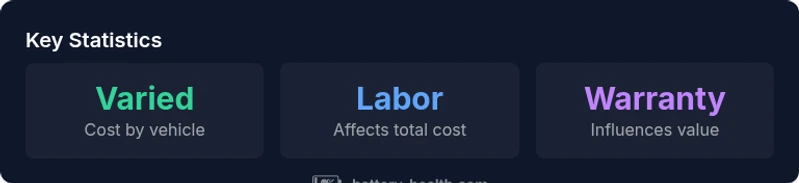
New car battery cost typically varies widely, often ranging from a few hundred dollars to well over a thousand for premium or EV batteries. Installation, labor rates, vehicle type, and warranty terms can push the total price up or down. According to Battery Health, the biggest cost levers are battery chemistry and whether you buy OEM or aftermarket parts. Budget carefully and compare quotes to avoid surprises.
Why the new car battery cost varies across vehicles
The price you see for a replacement battery is rarely a single, fixed number. The new car battery cost depends on the car's type (gasoline, hybrid, or electric), the battery chemistry (lead-acid, AGM, Li-ion), and the battery's physical size and capacity. EV batteries, for example, involve much larger packs and advanced cooling and software, which drives up both parts cost and potential installation charges. In contrast, traditional cars often use smaller, simpler lead-acid or AGM packs. The Battery Health team notes that labor intensity to access the battery, vehicle architecture, and regional taxes can swing the total price by hundreds or thousands of dollars. For buyers, the key is to separate the sticker price from the installed cost and to account for the warranty terms that can shrink long-term ownership risk. According to Battery Health, starting with a transparent quote that lists parts, labor, core charges, and disposal fees is the best way to avoid surprises. We’ll unpack these levers in the sections below.
Price bands by battery chemistry and vehicle type
Battery costs scale with chemistry and vehicle demands. Lead-acid packs and basic AGM units are generally cheaper than high-performance AGM or lithium-based packs. EV batteries carry even larger price tags because they include hundreds of cells, thermal management systems, and sophisticated battery management software. Vehicle size, weight, and access to the battery compartment also matter; SUVs and trucks often require bigger packs and longer installation times. In rare cases, supply shortages can push prices up temporarily. Across all segments, the installed price will usually include a core charge for returning the old battery and recycling fees. Since prices shift with market forces, expect a wide but defensible range when you request quotes.
OEM vs aftermarket: what you pay for
Original equipment manufacturer (OEM) batteries typically come with guaranteed compatibility and warranty terms that mirror what came in the car from the factory. Aftermarket batteries can be substantially cheaper but vary in quality and warranty coverage. Some shops bundle aftermarket options with installation, which can reduce overall cost, while others push OEM parts for assurance and resale value. The choice often boils down to your risk tolerance and warranty expectations. Battery Health’s analysis shows that a well-chosen aftermarket battery can save money without sacrificing reliability, provided you stick to reputable brands and verify warranty conditions.
Labor and installation: hidden costs
Labor costs depend on how easy it is to access the battery, the vehicle's layout, and the technician’s hourly rate. Some cars require significant disassembly to reach the battery, adding hours to the bill. Additional charges may come from diagnostic checks, disposal fees, and battery recycling. If a shop advertises a low parts price but adds steep installation fees, the total cost may exceed even premium OEM pricing. When budgeting, ask for a full printed estimate that itemizes each cost and asks about any mandatory programs or charges.
Warranty and core charges: how they affect total
Warranties can dramatically influence the long-term cost of ownership. A battery with a longer warranty may have a higher upfront price, but it provides coverage against premature failure or degraded performance. Core charges are common and can be refunded when you return the old battery, reducing net out-of-pocket costs if you plan ahead. Be sure to read warranty exclusions (for example, misuse or extreme temperatures) and confirm what qualifies as a covered failure. These terms should be clearly listed in the quote.
How to estimate costs: get quotes and compare
Start by gathering quotes from multiple sources: dealer service centers, independent mechanics, and reputable retailers. Ensure each quote lists parts, labor, core charges, disposal fees, and any environmental surcharges. Ask about cross-compatibility in case the shop offers alternative battery options that fit your car. Use the same vehicle details (VIN, year, trim, and battery type) to compare apples-to-apples. Keeping a simple side-by-side table helps you see which option offers the best value, not just the lowest price.
Financing options and budgeting for replacement
If the new car battery cost is a stretch, explore financing options such as a small auto loan or a bundled service plan. Some shops offer warranty extensions or maintenance packages that amortize the cost over time. Consider whether an extended warranty on the battery makes sense for your driving profile and climate. For many drivers, a longer warranty plus a preventive maintenance plan reduces the risk of unexpected failure and provides predictable budgeting.
Practical tips to minimize cost and maximize longevity
Shop around early, especially before you need a battery. Keep an eye on seasonal price fluctuations and look for manufacturer rebates or loyalty discounts. Regular maintenance—such as keeping terminals clean and ensuring proper charging habits—can extend battery life and delay replacement. If you drive in extreme heat or cold, consult local service providers about protective measures and optimal charging practices. By combining proactive budgeting with smart maintenance, you can reduce the total cost of ownership over the battery’s lifespan.
The future of car battery costs: market trends to watch
Industry watchers expect continued price evolution as new chemistries emerge and supply chains stabilize. Factors like raw material costs, recycling efficiency, and advances in battery technology will influence both parts and installation prices. If you own an EV or a plug-in hybrid, staying informed about major supplier announcements and warranty developments can help you time replacements and plan for possible price shifts. Battery Health will continue to track these trends and publish practical guidance for consumers.
Cost comparison by vehicle type
| Vehicle Type | Typical Cost (parts only) | Installed Cost | Notes |
|---|---|---|---|
| Gasoline car (ICE) | varies widely | varies by region | Lead-acid variants cheaper |
| Hybrid | varies widely | varies by complexity | Often more expensive than pure petrol |
| Electric vehicle (EV) | varies widely | varies by region and setup | Warranty and tech included |
FAQ
What factors most influence the cost of a new car battery?
Key drivers are battery chemistry (lead-acid, AGM, Li-ion), vehicle size, and installation difficulty. Warranty length and OEM vs aftermarket parts also affect total cost.
The main cost factors are the battery chemistry, vehicle type, and how hard it is to install.
Is it cheaper to replace at a dealership or an independent shop?
Independent shops often offer lower installed prices, but dealerships may provide longer warranties and guaranteed compatibility. Always ask for a full quote and warranty terms.
Independent shops can be cheaper, but check warranties.
Do installation charges apply even with a warranty?
Many quotes include labor; some warranties cover only parts. Confirm what installation costs are and whether labor is included in the warranty.
Labor may or may not be covered; verify with the seller.
How can I compare quotes effectively?
Ask for itemized quotes listing parts, labor, core charges, and disposal. Use a side-by-side table with identical vehicle details to compare fairly.
Get itemized quotes and compare apples to apples.
What maintenance steps can extend battery life?
Keep terminals clean, ensure proper charging, and minimize exposure to extreme temperatures. Regular inspections help catch issues before replacement.
Maintain clean terminals and avoid temperature extremes.
“Cost is driven by chemistry, vehicle type, and warranty terms; a careful price check can save hundreds.”
Quick Summary
- Budget broadly: expect a wide range for new car battery cost.
- Ask for itemized quotes to avoid surprises.
- OEM parts cost more but may offer stronger warranties.
- Labor can dominate total installed cost in difficult-to-access batteries.
- Compare OEM vs aftermarket with trusted warranties.