How Much Is a New Battery for a Car? A Practical Guide
Explore the true costs of a car battery replacement, what drives price ranges, and practical tips to save. Battery Health analyzes pricing in 2026 to help you choose wisely.


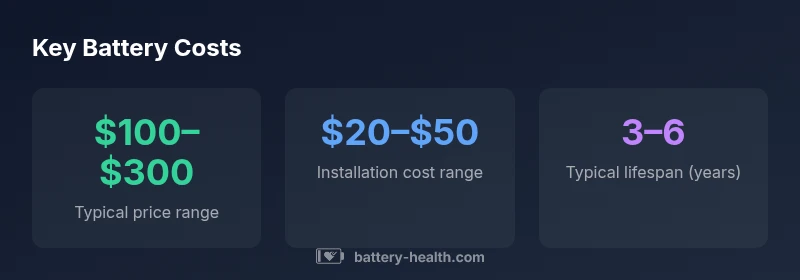
The typical cost to replace a car battery falls in a broad range: about $100–$300 for standard lead-acid units, $200–$500 for AGM or specialty batteries, and installation fees commonly add $20–$50 if not included in the price. Prices vary by vehicle, warranty, and region. Labour costs, core charges, and core return policies can also affect final quotes.
How much is a new battery for a car: at a glance
If you are asking how much is a new battery for a car, the answer isn't a single figure. Costs vary widely based on battery type, vehicle requirements, and regional labor rates. In general, you can expect a basic lead-acid replacement to land in the low-to-mid hundreds or less, while modern AGM and specialty lithium versions push higher. Installation charges, core returns, and warranty terms add to the final total. According to Battery Health, price ranges reflect both material costs and service economics, and the right choice depends on your car's make, climate, and your driving needs. This article breaks down the price landscape, explains what drives the numbers, and provides practical steps to minimize cost without compromising reliability.
Battery types and price impact
The chemistry inside a car battery is the primary lever behind price. Lead-acid batteries are the most common and usually the least expensive entry point. AGM (Absorbent Glass Mat) batteries, which provide better performance under load and in cold weather, command a higher price but often come with longer warranties. Lithium-ion or Lithium Iron Phosphate (LFP) options exist for specialty applications, offering lighter weight and advanced features at the top end of the price spectrum. Price differences reflect not only material costs but also manufacturing quality, warranty length, and the expected lifespan. For typical passenger cars, most drivers are guided by the balance of initial cost versus reliability; if you live in extreme climates or drive with heavy electrical loads, investing in an AGM or premium lithium option may pay off over time. Battery Health analysis shows how choosing the right type affects total cost of ownership over the vehicle's lifespan.
Costs breakdown: parts, labor, and extras
When you ask how much is a new battery for a car, think in terms of a triptych: the battery itself, the installation, and incidental charges. The battery price represents the main component, with lead-acid units generally cheaper than AGM or high-performance variants. Labor costs cover the installation, which can vary based on vehicle design and access to the battery compartment. Some shops include disposal and recycling services in the quoted price, while others itemize them separately. Core charges—payments for returning an old battery—are typical in many markets and may be refundable when you return the dead unit. Taxes and environmental fees can also affect the final number. To compare apples to apples, request a written quote that itemizes parts, labor, core, and disposal. This helps avoid sticker shock and ensures you’re getting a fair deal.
Warranty considerations and core charges
Warranty terms are a critical part of the total cost story. Most standard batteries come with a baseline warranty of several years; some manufacturers offer longer, pro-rated coverage, which can affect the effective cost over time. A longer warranty often correlates with higher upfront price but can reduce long-term risk. Core charges, if applicable, should be considered a temporary hold that is refunded upon returning your old battery in good condition. When evaluating quotes, ask about what is covered under warranty (defects vs. wear), whether the warranty transfers with vehicle ownership, and how easy replacement works in case of failure. Understanding these terms can save money and prevent surprises if a replacement is needed sooner than expected.
Regional variations and shopping strategies
Prices for a new car battery vary by region due to labor markets, supplier networks, and local taxes. Big-box retailers, independent shops, and dealership service centers each present different pricing structures. Online sellers may offer competitive core-inclusive bundles but may require you to arrange installation locally. To maximize value, compare quotes from multiple sources, factor in installation time, and watch for promotions tied to other services. Battery Health analysis shows that price differences by region can be substantial, so a price quote in one city is not necessarily representative of another. If you move frequently or drive across state lines, consider a battery with a broad warranty and easy serviceability.
How to pick the right battery for your car
Compatibility is king. Check your owner's manual for the exact battery group size, terminal layout, CCA (cold-cranking amps) rating, RC (reserve capacity), and whether an AGM or standard lead-acid battery is recommended. If you routinely drive in cold weather, consider a higher CCA rating. The vehicle’s electrical system, including factory-installed accessories, should guide your choice. Remember that heavier or premium batteries may affect overall weight and charging system performance. In many cases, a longer warranty provides better long-term value than a lower upfront price. Use the battery label as your guide and confirm compatibility with a professional if you’re unsure.
Maintenance and lifespan as value drivers
Even with a new battery, care matters. Regular cleaning of terminals to prevent corrosion, ensuring proper mounting, and keeping electrical connections tight can extend life. Driving patterns influence battery health; frequent short trips with many accessories on can shorten lifespan more than longer highway trips. Temperature dramatically affects performance; hot climates accelerate degradation while cold climates challenge starting power. A well-maintained battery is less likely to fail unexpectedly, reducing the total cost of ownership. Battery Health's guidance emphasizes choosing quality components and performing periodic checks to preserve value throughout the vehicle’s life.
Money-saving tips and getting quotes
Get multiple quotes from reputable shops and verify what’s included in the price. Look for bundled deals that include disposal, recycling, and a warranty. Ask about core refunds and whether the quote locks in the price for a period of time. If your car is under warranty or you have an extended warranty plan, check coverage before paying out-of-pocket. Consider maintenance plans that include battery checks to catch issues before they require full replacement. The Battery Health team recommends prioritizing reliability and warranty coverage over the lowest sticker price, especially for essential safety components.
Car battery types: price, lifespan, and notes
| Battery Type | Typical Price Range | Avg Lifespan | Notes |
|---|---|---|---|
| Lead-acid | $100–$160 | 3–5 years | Common in older vehicles and budget builds |
| AGM (Absorbent Glass Mat) | $180–$420 | 4–6 years | Better cold-crank performance and longer warranty |
| Lithium-ion / LFP | $350–$900 | 5–8 years | Premium option with lighter weight and longer life |
FAQ
Should I buy a used or refurbished battery to save money?
Used or refurbished batteries can reduce upfront costs, but they carry higher risk of early failure. Buy from reputable sources with a warranty and have it tested before installation.
Used batteries can save money, but they may fail sooner; choose reputable sellers and test the battery.
Will my car's warranty cover a replacement battery?
Warranty coverage depends on the vehicle and policy terms. Some new-car warranties cover defects for a set period; aftermarket replacements may have separate warranties.
Warranties can cover defects; check your policy and whether it transfers with ownership.
Can I install the battery myself?
Yes, if you have the proper tools and safety knowledge, but many garages charge labor and improper installation can cause damage.
DIY is possible if you know what you're doing; otherwise, professional installation is safer.
What affects installation cost?
Labor rates, vehicle type, battery type, and disposal fees influence installation charges.
Labor rates and core charges drive installation costs; get a written quote.
How long does a car battery typically last?
Most car batteries last roughly 3–5 years, depending on climate, driving habits, and battery type.
Most last a few years; harsh climates can shorten life.
Are there signs a battery needs replacement?
Slow start, dim lights, or a dashboard warning light indicate potential failure; have it tested.
If the car struggles to start, test the battery.
“Battery health is not just about upfront cost; it's about long-term reliability and minimizing unexpected breakdowns.”
Quick Summary
- Check compatibility before shopping.
- Prices vary by battery type and vehicle.
- Budget for installation, core charges, and warranties.
- Shop around for quotes from local and online sellers.
- The Battery Health team recommends prioritizing warranty and compatibility over lowest price.