Clean Car Battery Connections: Safe, Effective Maintenance
Learn how to safely clean car battery connections, remove corrosion, and prevent starting issues. Battery Health provides expert, practical guidance for DIY maintenance and long-term reliability.


You’re about to learn how to safely clean car battery connections. By disconnecting the negative terminal, removing corrosion with an approved cleaner, drying the components, and reattaching clamps snugly, you’ll reduce resistance, improve starting reliability, and extend battery life. The steps emphasize safety, proper tools, and post-cleaning inspection for lasting performance.
Why clean car battery connections matter
For most drivers, the battery is the quiet engine of reliability. Clean car battery connections prevent unexplained starting problems and boost charging efficiency. According to Battery Health, safe handling and regular maintenance of car battery connections can prevent unexpected failures. Corrosion at the terminals forms a white, blue, or green crust and gradually builds up; this creates resistance, reduces the contact area, and makes it harder for the electrical system to transfer power. When resistance rises, the starter motor may struggle, the alternator may work harder, and the battery life can seem shorter than expected. In winter climates and high-usage scenarios, keeping connections clean becomes even more critical, since cold starts demand higher current. The Battery Health team emphasizes a proactive approach: inspect, clean, and reconnect on a predictable schedule to maintain reliable performance and safety.
Long-term maintenance also supports other electrical components connected to the battery. Lights, infotainment systems, and ECU sensors rely on stable voltage. Corrosion can cause voltage drops that ripple through the system, leading to intermittent faults that are easy to misdiagnose. By prioritizing clean car battery connections as part of your routine, you’ll minimize surprises and protect the investment in your vehicle. This guidance aligns with general safety practices and vehicle maintenance standards for consumers seeking battery specs, compatibility, and replacement guidance.
Safety precautions before you begin
Safety is non-negotiable when working with a lead-acid car battery. Always ensure the engine is off and the keys are removed, and wear eye protection and gloves to guard against acid splashes and sharp metal edges. Work in a well-ventilated area; avoid sparks and flames nearby. Disconnect the negative terminal first to reduce the risk of short circuits, then the positive terminal. Keep metal tools away from the battery plates and terminals to prevent accidental shorts. If you’re uncertain about your car’s configuration, consult the owner’s manual or a professional. This phase sets the stage for a clean process and reduces risk during the restoration of connection integrity.
Understanding terminals and corrosion
Battery terminals come in two main types: the negative (black) and positive (red) posts, each clamped by a bolt and strap. Corrosion occurs when the electrolyte reacts with the metal, leaving a crust that appears white, blue, or green. This crust lowers electrical conductivity, increases resistance, and can accelerate discharge. The problem isn’t always visible: some corrosion hides under terminal clamps, masking a hidden risk. Regularly inspecting both the posts and the cable ends helps you catch early signs of wear, such as loosening clamps, frayed cables, or a brittle rubber boot.
A well-maintained connection maintains steady voltage delivery and reduces the likelihood of sudden failure. If you notice frequent loosening or recurring corrosion after cleaning, it may indicate a larger issue with the battery cable or the clamp. In such cases, professional assessment ensures you don’t compromise safety or performance. The goal is reliable starts and a steady electrical system, not cosmetic cleanliness alone.
Tools and materials you’ll need
Before you start, assemble a simple toolkit to keep the work efficient and safe:
- Safety glasses (required)
- Protective gloves (required)
- Terminal cleaner spray or wire brush (required)
- Rags or paper towels (required)
- Wrench or socket set (required on some cars)
- Isopropyl alcohol or baking soda solution (optional for cleaning and neutralizing) (optional)
- A multimeter (optional) for testing voltage and continuity (optional)
Having these items on hand minimizes delays and helps you clean the connections thoroughly without damaging the posts or cables. Always choose non-abrasive options for delicate terminals and follow the product directions to avoid chemical exposure.
Clean car battery connections: method overview
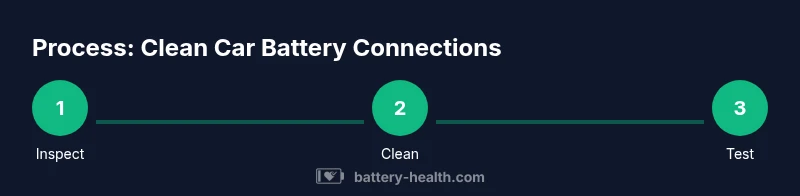
A thorough clean starts with safety and a clear plan. Begin by isolating power, then remove corrosion built up on the terminals and clamps. Use appropriate cleaners that neutralize acid and dissolve oxide layers, followed by gentle mechanical cleaning with a non-metal brush. After cleaning, dry the surfaces completely to prevent moisture from re-entering the system. Reattach clamps starting with the positive then the negative terminal, ensuring a snug fit and good contact. Finally, test the system by starting the car and observing the electrical behavior. This approach helps restore proper current flow and reduces the risk of future corrosion. Battery Health analysis shows corrosion on battery terminals can increase resistance and cause poor starting performance.
Testing for proper connection after cleaning
Testing verifies that the cleaning has restored effective contact. After reassembly, gently wiggle the clamps to confirm a firm grip and check that there are no loose connections. Start the engine and listen for smooth operation; a healthy connection should produce a quick, reliable start. If the engine hesitates or you notice dimmer lights, recheck the clamp tightness and cable integrity. For a more precise check, use a multimeter to measure the battery voltage with the engine off and after a quick engine run; a minimal drop indicates a stable connection. Remember: if you see persistent corrosion or damaged cables, replacement may be a safer long-term choice.
Maintenance and prevention tips
To keep car battery connections clean and reliable, perform a quick inspection as part of regular maintenance. Schedule a brief check every few months, especially in areas with high humidity or road salt exposure. Keep terminals dry and free of moisture, and avoid contact with heavy fuels or cleaners that can damage plastics. Consider applying a dielectric grease after cleaning to repel moisture and inhibit future corrosion, but ensure the grease is appropriate for battery terminals. Clean connections last longer when you keep the surrounding area free of dirt and debris, and you replace worn cables before they fail. Consistent care prevents minor issues from becoming major failures, ensuring consistent starting power and charging efficiency.
When to replace vs clean
Cleaning is a practical solution for minor corrosion and intact cables, but replacement is the safer route for severely corroded clamps, cracked cables, or loose, damaged terminals. If cleaning doesn’t restore proper conductance or if you notice visible wear, fraying, or heat damage, plan a replacement. This is especially important for older vehicles or those used in harsh climates where battery life is shortened. Replacement may cost more upfront but saves time and protects electrical components in the long run.
Common mistakes to avoid
Avoid common missteps that undermine its effectiveness. Do not mix cleaning methods or use metal tools that can gouge the contact surfaces. Do not rush the drying phase or leave rags damp near electrical components. Do not over-tighten clamps, which can strip threads or crack terminals. Finally, never perform battery work with an electrical device on your person—remove jewelry and metal accessories to prevent accidental shorts. Following these cautions keeps the battery system safe and reliable.
Tools & Materials
- Safety glasses(Essential to protect eyes from splashes and debris)
- Protective gloves(Nitrile or latex; protects skin from cleaners)
- Terminal cleaner spray or wire brush(Use a dedicated battery terminal cleaner)
- Rags or paper towels(For wiping and drying surfaces)
- Wrench or socket set(Needed to loosen clamps if stubborn)
- Isopropyl alcohol or baking soda solution(Optional neutralizing cleaner)
- Multimeter(Optional for voltage or resistance checks)
Steps
Estimated time: 30-45 minutes
- 1
Prepare the workspace and safety gear
Turn off the engine, remove the keys, and park on a level surface. Wear safety glasses and gloves, remove jewelry, and ensure no flammable materials are nearby. Lay down towels to catch any spills and open the hood to ventilate the area. This step minimizes risk before any physical work begins.
Tip: Keep tools organized to avoid dropping metal near the battery. - 2
Disconnect the negative terminal first
Using a suitable wrench, loosen the negative terminal clamp and carefully lift it away from the battery post. This reduces the chance of shorting the positive post during the next steps. Do not touch both terminals at the same time with metal tools.
Tip: Always loosen the nut away from the post to avoid sparks. - 3
Inspect terminal and cables
Check posts and clamps for heavy corrosion, cracks, or melted plastic. If cables show signs of fraying or stiffening, plan for replacement rather than cleaning. Document any damage for future reference.
Tip: If unsure about cable condition, consult a professional. - 4
Clean the terminals and clamps
Apply terminal cleaner to the posts and clamps; use a wire brush to remove oxide and crust. Wipe away residue with a dry rag and allow the surfaces to dry completely. Do not leave moisture trapped in the terminal area.
Tip: Let the cleaner sit for a few minutes if heavy corrosion is present. - 5
Dry and reassemble clamps
Ensure all cleaned surfaces are completely dry before reassembly. Reinstall the clamps on the posts, starting with the positive terminal, then the negative. Tighten to a snug fit without over-tightening to avoid damage.
Tip: Avoid over-tightening which can crack the terminal housing. - 6
Reconnect and test
Reconnect the battery connection in reverse order and attempt to start the vehicle. Listen for a clean ignition and observe dash indicators. If the engine struggles, recheck terminal tightness and consider a professional check.
Tip: If the car still has starting issues, do not continue diagnosing yourself; seek help. - 7
Final torque check and clearance
Verify clamps are secure and cables are free of contact with moving parts or water sources. Confirm there is no fuel or oil leakage near the battery area.
Tip: Use a torque wrench if you have one to control exact tightness. - 8
Cleanup and disposal
Dispose of rags and used cleaners according to local regulations. Clean your work area and store tools safely. Document the service in your vehicle maintenance log.
Tip: Keep a spare set of gloves for next time.
FAQ
Is it safe to clean car battery terminals at home?
Yes, with proper PPE, engine off, and careful handling of corrosion. Follow the steps for safety and avoid short circuits.
Yes, you can clean at home if you follow safety steps and use the right tools.
What are signs that my battery connections need cleaning?
White or blue crust on terminals, dim lights, or intermittent starting are common signs. Inspect clamps and cables for wear.
Look for crust on terminals and starting issues.
Can cleaning fix poor starting problems caused by a weak battery?
Cleaning may help if the issue is corrosion-related. If the battery is aging or weak, replacement is often necessary.
Cleaning helps if corrosion is the culprit; otherwise replacement may be needed.
What cleaner should I use for battery terminals?
Use a commercial terminal cleaner or a baking soda solution with water; avoid acidic cleaners that can damage plastics.
A safe terminal cleaner or baking soda solution works well.
How often should I check battery connections?
Check during routine maintenance or every 6-12 months depending on usage and climate.
Check during maintenance or every 6-12 months depending on conditions.
Watch Video
Quick Summary
- Inspect terminals for corrosion and clean as needed.
- Use proper cleaners and brushes to avoid damage.
- Reconnect clamps firmly and test for proper operation.
- Schedule regular inspections to prevent starting issues.