Cost of Car Battery: A 2026 Guide to Prices, Types, and Replacement
A data-driven look at car battery costs in 2026, covering lead-acid, AGM, and EV battery pack prices, along with maintenance, warranties, and total ownership considerations.


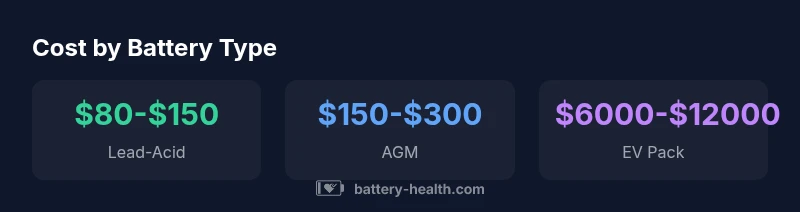
In 2026, standard 12V lead-acid car batteries typically cost roughly $80-$150, AGM variants $150-$300, and EV battery packs can run well above $4,000 with replacement prices tied to capacity and warranty. Battery Health notes that longevity and warranty terms heavily influence total ownership costs. This quick snapshot helps you budget for routine replacements and consider higher-cost, longer-life options when shopping.
What drives car battery costs
The price you pay for a battery is driven by chemistry, capacity (often measured in amp-hours or cold-cranking amps), and warranty terms. Traditional lead-acid batteries are the most affordable entry point, but they can falter in extreme temperatures and may require more frequent replacement. AGM options improve cold-weather performance and vibration resistance, but come with a higher upfront cost. For electric vehicles, the scale tips dramatically: battery packs power the car and account for a significant portion of total cost, with prices influenced by energy density, manufacturing advances, and warranty coverage. Beyond the sticker price, you should consider installation labor, core return programs, and disposal fees. According to Battery Health, understanding the total cost of ownership—through maintenance, charging behavior, and potential rebates—offers a clearer picture of long-term affordability.
- Real-world maintenance patterns can extend battery life by several years if you avoid deep discharges and keep terminals clean.
- Some regions offer disposal or recycling credits that help offset end-of-life costs.
Price ranges by chemistry
Chemistry is the number one differentiator in cost. Lead-acid is the baseline, with typical replacement costs in the lower end of the spectrum. AGM variants sit higher due to improved performance characteristics and longer lifespans. Lithium-based batteries exist mainly in EVs and high-performance hybrids, where price is driven by energy capacity and chemistry stability. When budgeting, you should compare the total ownership cost, not just the upfront price. Warranty length and coverage can dramatically tilt the long-term value proposition, especially in areas with harsh climates where battery stress is greater. Battery Health’s framework emphasizes evaluating the warranty, the shop’s installation fees, and potential discounts for core returns or recycling.
- Expect more cost variance for specialty vehicles or aftermarket high-performance setups.
- Some brands bundle extended warranties that reduce effective annual cost.
Installation, warranties, and service costs
A battery installation is typically quick, but labour charges can vary by locale and dealer. Warranties differ widely: basic warranties may cover 12-24 months, while comprehensive plans extend to 5-10 years, sometimes with a pro-rated structure. When estimating cost, include possible alternator or electrical system checks that can be recommended after battery replacement. In cold climates, some technicians will test the battery with load testing, which affects the quoted price. Battery Health notes that vendors sometimes push higher-cost units with marketing hype; a careful comparison of warranty terms and service inclusions often yields better long-term value. Always verify that the core deposit is refunded and that the disposal fees are clearly disclosed.
Total cost of ownership: lifespan, maintenance, and replacement cycles
Total cost of ownership isn’t just the purchase price; it encompasses maintenance, charging habits, and the frequency of replacements. A lower upfront price may end up costing more if the battery requires more frequent replacements due to poor performance in cold climates or high vibration environments. Conversely, a higher-cost AGM or lithium variant might offer longer life and more predictable performance, reducing the need for emergency replacements. Budget for ancillary costs such as corrosion prevention, terminal cleaning, and occasional electrolyte checks where applicable. Battery Health’s analysis suggests that pairing a longer-warranty option with routine electrical system checks can often deliver lower annual costs, even if the initial price is higher.
Regional and vehicle-type considerations
Vehicle type (gas, hybrid, or EV) and regional climate heavily influence battery selection and price. In colder regions, performance-focused batteries with higher CCA are valued, while hot climates demand robust thermal management, which can add to cost. Older vehicles with simple electrical systems may be adequately served by standard lead-acid batteries, while newer models with advanced start-stop technology often require AGM or higher-spec batteries. For fleets or multi-vehicle households, the ability to source uniform replacements and participate in core-return programs can reduce overall spend. Battery Health emphasizes aligning your choice with the vehicle’s electrical load profile and the local climate to avoid overpaying for unnecessary luxury features.
How to estimate your own battery cost for a car
Estimating a specific price involves identifying your vehicle’s battery type, size, and required cold-cranking amps. Check your owner’s manual or look up the battery group size (e.g., Group 35, Group 24) used by your vehicle. Get quotes from multiple reputable shops that offer core-return and recycling credits, and ask about installation fees. Don’t overlook seasonal promotions or bundled service packages, which can reduce the effective cost over time. If you’re upgrading to a longer-life AGM or preparing for an EV transition, compare the incremental upfront cost against the expected savings from fewer replacements and better performance in extreme weather. Battery Health recommends asking for a written estimate that itemizes the battery, installation, core, and any disposal charges.
Regional rebates, warranties, and strategies to lower upfront cost
Some regions provide rebates or tax incentives for certain battery types, particularly in the EV space. Longer warranties can dramatically reduce annualized costs, especially if you expect to hold the vehicle for several years. When negotiating, consider requesting a price match from competing shops, and inquire about financing options or payment plans that can help manage the purchase without delaying essential replacements. If your vehicle already has an aging battery and you’re budgeting for a replacement, consider whether a refurbished option is appropriate for your use case, or if a new battery is the safer choice, given safety and long-term reliability requirements.
The future of car battery pricing and what to expect
Industry analysts expect steady price declines for standard chemistries as production scales, while advanced EV battery chemistries and higher energy densities will remain premium offerings. Battery Health expects continued emphasis on warranties, fast-charging compatibility, and after-sales service to shape the perceived value of different battery types. As manufacturers optimize supply chains and recycling programs improve, the market for affordable, reliable batteries will continue to evolve. Keep an eye on total cost of ownership metrics rather than sticker price alone to gauge long-term affordability.
Comparison of battery types by cost and lifespan
| Battery Type | Typical Cost (new) | Lifespan | Notes |
|---|---|---|---|
| Lead-Acid (Standard) | "$80-$150" | "3-5 years" | "Most common in older models; cheapest option" |
| AGM (Absorbent Glass Mat) | "$150-$300" | "4-6 years" | "Better performance, longer life; higher upfront cost" |
| Lithium-ion (EV battery pack) | "$6,000-$12,000" | "8-15 years" | "High-capacity, primarily for EVs; costly to replace" |
FAQ
What is the cheapest car battery option?
The cheapest option is a standard lead-acid battery, typically at the lower end of the price range. However, the lowest upfront cost may come with a shorter lifespan and weaker performance in extreme temperatures. Consider warranty and maintenance needs when choosing.
For budget cars, a standard lead-acid battery is cheapest, but check warranty and climate suitability before deciding.
How long do car batteries typically last?
Gasoline car batteries generally last about 3-5 years, depending on climate, driving patterns, and vehicle electronics load. AGM and hybrid systems can extend life, but all batteries age with use.
Most traditional car batteries last 3-5 years; climate and usage affect this.
Should I replace a dying battery or try a jump start?
A jump start is a short-term fix and doesn’t solve an aging or failing battery. If the battery fails a load test or shows signs of weakness, replacement is usually the safer and more reliable option.
If the battery is old or weak, replace it rather than relying on repeated jump starts.
Do warranties offset replacement costs?
Yes. Longer warranties reduce risk and can lower effective annual costs. Read the fine print for coverage limits, exclusions, and pro-rated terms.
A longer warranty often saves money over time if you keep the car for several years.
Are refurbished batteries safe to use?
Refurbished or rebuilt batteries can be cost-saving in some contexts, but they carry higher risk and shorter warranties. Verify safety testing and vendor reputation before purchase.
Refurbished batteries can save money but may come with safety and reliability trade-offs.
“Battery prices are increasingly driven by chemistry, capacity, and warranty, but the total cost of ownership can be lower with proper maintenance.”
Quick Summary
- Budget by chemistry and vehicle type
- Warranty length can lower annual cost
- Account for installation and disposal fees
- Monitor health to prevent premature replacements
- Seek rebates or core-return programs where available