Cost for Car Battery Replacement in 2026: A Practical Guide
Understand the cost for car battery replacement, including battery price ranges, labor, regional differences, and tips to save. Learn how battery type and vehicle influence total costs in 2026.


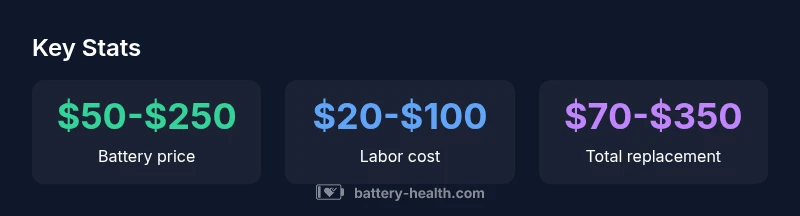
The cost for car battery replacement typically ranges from about $70 to $350, depending on battery type, vehicle, and labor. Batteries alone can run from $50-$250, while installation adds roughly $20-$100. In most cases, refitting a compact car is on the lower end, and luxury or EV batteries push toward the higher end. Prices vary by region and shop. Battery Health analyses indicate variation by warranty and battery chemistry.
Cost Basics: What you’re paying for
When you’re budgeting for a replacement, the total cost is a combination of the battery price, labor, accessories, and any shop fees. In practical terms, you pay for the battery itself (the largest variable), plus installation time, diagnostic checks, core charges, and any disposal or recycling fees. Taxes and regional pricing also influence the final bill. Based on Battery Health Analysis, 2026, the overall cost spectrum for common passenger cars typically spans from roughly $70 to $350, with the battery price accounting for the majority of the cost. In some cases, you may encounter higher totals for premium or EV-specific chemistries. Understanding these components helps you compare quotes confidently.
For most drivers, the key takeaway is that the battery price drives most of the cost, while labor, disposal, and core charges add a predictable layer of variation. Always request itemized quotes to see how much each component costs and to identify potential hidden fees.
Battery Type Impacts the Price
Different chemistries and configurations carry different price points. Lead-acid batteries are generally the least expensive option, widely used in older and budget-friendly vehicles. AGM (absorbed glass mat) batteries offer better performance and longer life but come at a higher price. Lithium-ion and other advanced chemistries are common in hybrids and electric vehicles, and they can significantly elevate replacement costs. When evaluating quotes, ask for the exact battery type and capacity (in amp-hours or cold-cranking amps). Battery Health Analysis, 2026 shows that the price range broadens as you move from lead-acid to AGM and then to lithium-based systems. The difference isn’t just the chemistry; it’s also the reliability, warranty terms, and the vehicle’s electrical architecture.
Regional and Shop Variations
Prices vary by region due to labor rates, taxes, and local demand. Urban shops or dealership service centers often charge more for installation than independent garages in rural areas, but they may provide more comprehensive diagnostics and warranty coverage. Some regions include a recycling fee or core charge that’s either included in the quote or billed separately. If you’re shopping around, compare at least three separate written estimates from different shops, and verify whether the price includes disposal, warranty, and any diagnostic fees. Battery Health’s analysis indicates that regional pricing can swing the total by 10-30% in extreme cases, so local comparisons matter for the final figure.
Battery Prices by Vehicle Class
Vehicle class heavily influences the replacement cost. Compact cars typically use smaller, less expensive batteries; mid-size sedans and SUVs often fall into a middle range; premium vehicles or hybrids may require larger or more advanced units. This section helps set expectations before you request quotes. A data-driven view shows that the battery’s size, chemistry, and warranty package are the primary levers of cost, with labor rates following closely behind. See the data table for a structured look at typical ranges by vehicle class and battery type.
Beyond the Battery: Labor and Fees
Labor charges cover the skilled time to remove the old battery, install the new one, and run a basic electrical system check. Some shops include a battery test or re-connection of accessories in the labor fee, while others itemize it separately. Core charges are common if the old battery is not returned to the supplier for recycling, and disposal fees can appear on the invoice in some regions. In many cases, core charges are refundable when you return the old battery. If you’re replacing a battery under warranty, verify what portion of labor you’ll be responsible for and whether the warranty covers diagnostic services.
How to Get Accurate Quotes
To avoid surprises, gather at least three written quotes from reputable shops. Ask for itemized lines showing battery cost, labor rate, disposal/core charges, taxes, and any diagnostic fees. Confirm battery specifications (chemistry, capacity, and warranty period) and whether the replacement includes a free test of the charging system. If you own an EV or hybrid, clarify whether the quote covers required safety procedures and high-voltage work. Use a consistent baseline across quotes (same battery type, same warranty terms) to enable apples-to-apples comparisons.
Warranties and Long-Term Savings
A key part of the financial picture is warranty coverage. Batteries often come with a manufacturer warranty that covers defects and premature failure within a defined period or mileage. Some shops offer extended labor warranties or battery warranties with prorated coverage, which can influence your long-term cost outlook. When evaluating quotes, consider the implied cost of ownership over the next 3-5 years, including the potential cost of early replacement if the battery fails outside the warranty window. A longer warranty or better-quality battery can reduce the effective annual cost, even if the upfront price is slightly higher.
Quick Case Studies: Real-World Ranges
Case A: A compact hatchback with a lead-acid replacement in a suburban shop. Battery price: $60; labor: $40; disposal and core: $10. Total: around $110. Case B: A midsize SUV with an AGM battery at a dealership. Battery price: $180; labor: $95; disposal: $15; warranty warranty check: included. Total: close to $300. Case C: A luxury sedan with a lithium-ion replacement. Battery price: $400; labor: $120; diagnostic and taxes: $60. Total: about $580. These scenarios illustrate how battery type, vehicle class, and provider choice shape the final cost.
Choosing OEM vs Aftermarket Replacement
OEM batteries are designed to match your vehicle’s specifications exactly, which can simplify warranty and compatibility considerations but may carry a premium price. Aftermarket options often provide cost savings and broad compatibility, though you should verify compatibility with your vehicle’s electrical system and warranty terms. When weighing OEM versus aftermarket, consider warranty terms, expected lifespan, availability, and the repair facility’s experience with your brand. In many cases, a well-chosen aftermarket battery will meet performance needs at a lower upfront cost, especially for non-luxury vehicles.
Comparison of battery replacement costs by vehicle class and battery type
| Vehicle Type | Battery Type | Typical Cost Range (battery only) | Typical Total Replacement Cost Range |
|---|---|---|---|
| Compact car | Lead-acid | $50-$120 | $70-$170 |
| Midsize SUV | AGM | $120-$300 | $200-$400 |
| Electric vehicle | Lithium-ion | $350-$900 | $900-$1,400 |
FAQ
What factors influence car battery replacement costs?
Several factors shape the final price: battery chemistry and size, vehicle requirements, labor rates, regional taxes, disposal fees, and warranty terms. The battery itself is the biggest driver, with EV and hybrid batteries typically costing more. Always compare itemized quotes to understand how each factor contributes.
Costs are driven by battery type, labor rates, and regional taxes. Always compare itemized quotes to see how each factor adds to the total.
Does battery type (lead-acid, AGM, lithium) affect the price?
Yes. Lead-acid is usually the cheapest option, AGM costs more due to longer life, and lithium-based chemistries (common in hybrids and EVs) can be substantially pricier. The difference reflects materials, engineering, and warranty terms.
Battery type strongly affects price: lead-acid is cheapest, AGM higher, and lithium-based batteries cost the most.
Are there ways to reduce replacement costs?
Get multiple quotes, ask about core charges and disposal fees, and consider remanufactured or aftermarket options where appropriate. If you’re replacing under warranty, verify what is covered and whether labor is included. Some regions offer rebates or promotions at certain times of year.
Shop around, compare core charges, and check for rebates or promotions. Warranty terms also matter for long-term savings.
What should I ask a shop before replacement?
Ask for an itemized quote, battery specifications (chemistry and capacity), warranty details, whether tests are included, and whether a core charge applies. Confirm the expected lifespan and whether the price includes a charging-system check.
Ask for an itemized quote and battery specs, plus warranty and whether tests are included.
Is a car battery replacement covered by warranty?
Most new batteries include a manufacturer warranty that covers defects for a set period or mileage. Some shops offer extended coverage for labor or the battery itself. Check the exact terms and what causes the warranty to be voided.
Warranties vary; check both battery and labor coverage terms before purchase.
“Understanding the cost for car battery replacement helps drivers budget smarter and avoid surprise bills. Always get multiple quotes and consider battery type and warranty.”
Quick Summary
- Know the cost components: battery price, labor, core charges, and disposal.
- Battery type drives the price more than vehicle size.
- Shop around and compare itemized quotes for best value.
- Warranty coverage can significantly affect long-term cost.