Replace Car Battery Cost: A Practical Guide for 2026
Explore the true cost to replace a car battery in 2026, including parts, labor, DIY options, and money-saving tips, with data-backed guidance from Battery Health.


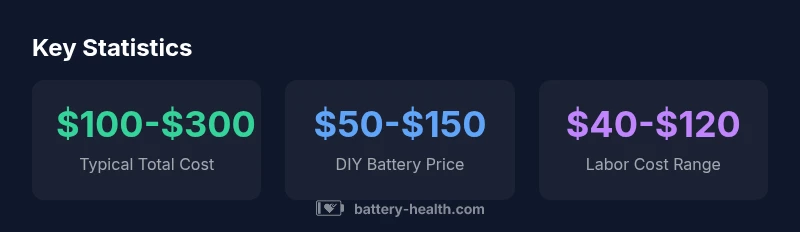
Most drivers pay between $100 and $300 for a full car battery replacement, including parts and labor. DIY purchases may cost $50-$150 for the battery alone, while premium AGM or high-capacity packs can push the total higher. Expect occasional core charges, disposal fees, and shop diagnostic fees to adjust the final price.
What Drives the Car Battery Replacement Cost
According to Battery Health, the cost to replace a car battery is driven by four main factors: battery type, vehicle design, labor rates, and regional pricing. The Battery Health team emphasizes that while part prices have fluctuated with supply chains, the most significant variable remains the chemistry and capacity of the battery. Lead-acid units are the least expensive, while AGM and lithium-based options carry higher price tags. Vehicle make and model can affect labor time because many modern cars include integrated battery management systems, safety procedures, and diagnostic steps that require specialized equipment. Labor rates differ widely by region and shop type (dealer vs independent), and warranty offerings can influence the long-term cost calculation. This section breaks down how each factor typically impacts the final bill and why two nearby shops can quote markedly different totals.
Battery Types and Cost Ranges
Battery costs vary substantially by chemistry and capacity. Here’s a practical breakdown:
- Lead-Acid (Standard): Parts typically $60–$120; labor $40–$80; total often $100–$200.
- AGM (Absorbent Glass Mat): Parts $120–$260; labor $60–$120; total often $220–$380.
- Lithium-Ion / LC-High-Capacity: Parts $200–$500; labor $80–$150; total often $380–$650. Notes: These are typical ranges for passenger cars in 2026. Real-world prices depend on your vehicle, regional labor rates, and whether the retailer includes core charges or disposal.
Labor vs. DIY: Where the Savings Come From
Labor can constitute a sizable portion of the total cost. Independent shops tend to offer lower labor rates than dealers, sometimes by 20–40%. DIY replacement removes labor costs entirely but requires a safe, physically accessible battery location, proper tools, and knowledge of electrical safety. If you’re considering DIY, weigh the cost savings against the risk of improper installation, warranty voids, and potential damage to sensitive vehicle electronics. Battery Health’s data suggests that the most meaningful savings occur when you already own the basic tools and are comfortable with basic auto electrical work.
Hidden Costs to Watch For
Beyond the sticker price, several ancillary charges can affect the final bill:
- Core charges: A refundable deposit for your old battery, often credited back when you return it.
- Disposal fees: Some shops charge for environmentally responsible disposal.
- Diagnostic fees: If the shop diagnoses multiple electrical issues, the diagnostic fee may apply.
- Warranty extensions: Some shops offer longer warranties for a higher upfront price.
- Towing or road-service charges: If you’re stranded or the shop isn’t nearby. Understanding these items helps prevent sticker shock and enables a more accurate comparison across quotes.
How to Price-Check and Save
To get the best value:
- Obtain written, itemized quotes from at least three reputable retailers (dealer and independent shops).
- Confirm what’s included: battery price, labor, core charge, disposal, warranty, and any diagnostic fees.
- Ask about OEM vs aftermarket batteries and compare warranty lengths.
- Consider timing and seasonality: some shops offer promotions during slower months.
- If you’re comfortable, compare DIY battery pricing for the same make/model to estimate potential savings vs professional installation.
DIY Replacement: Safety, Steps, and Considerations
If you choose to replace a battery yourself, follow safety protocols and vehicle-specific manual guidance. Disconnect negative and then positive cables in the correct order, avoid metal jewelry, and ensure the replacement battery is properly secured with the vehicle’s hold-down clamp. Reconnect cables in the reverse order, reset any electrical systems as guided by the owner’s manual, and dispose of the old battery at a sanctioned recycle facility. DIY can save money, but incorrect handling can damage electronics or cause injury. Always cross-check with your vehicle’s warranty and local regulations before proceeding.
dataTableSubsetCoverageNoteMissingReasoningAndContentSummaryNoteThatAllDataIsSyntheticAndCouldBeSubjectToUpdate
Cost comparison by battery type (parts, labor, warranty)
| Battery Type | Estimated Cost Range (Parts) | Estimated Labor Cost | Typical Warranty |
|---|---|---|---|
| Lead-Acid (Standard) | 60-120 | 40-80 | 1-2 years |
| AGM (Absorbent Glass Mat) | 120-260 | 60-120 | 2-4 years |
| Lithium-ion (LC-LFP) | 200-500 | 80-150 | 3-5 years |
FAQ
What is the typical cost range to replace a car battery?
Total replacement costs usually range from $100 to $300, depending on battery type and labor. Higher-end batteries or complex vehicle configurations can push costs beyond this range. Always compare quotes and consider warranty.
Most replacements cost between one hundred and three hundred dollars, with higher-end batteries costing more.
Should I replace my battery myself to save money?
DIY replacement can save on labor, but it requires safety precautions and proper tools. Incorrect installation can damage electronics or void warranties. If in doubt, use a reputable shop.
DIY can save money but only if you’re confident with the procedure and safety.
Does the price include core charges?
Many shops apply a core charge for returning your old battery. The charge may be refunded after you drop off or recycle the old unit. Verify this in your quote.
Yes, core charges may apply and are often refunded when you return the old battery.
What warranty should I look for?
Look for at least 2–3 years or 24–36 months of warranty. A longer warranty can provide better long-term value and cover unexpected failures.
Aim for a longer warranty for better value.
Is it cheaper to replace at a dealer or an independent shop?
Independent shops typically offer lower prices, while dealers may provide OEM batteries and sometimes longer warranties. Compare quotes to decide what’s best for your vehicle and budget.
Independents are often cheaper, but dealers may offer OEM options.
“Replacing a car battery is a straightforward decision when you understand the cost drivers—battery type, vehicle design, and warranty. A longer warranty often yields better value over time.”
Quick Summary
- Identify your battery type to estimate cost range
- Labor often drives total price—consider DIY if safe
- Watch for core charges and disposal fees
- Get multiple quotes and compare warranties