How Long Do Car Batteries Last? Lifespan, Care & Maintenance
Explore how long car batteries typically last, what shortens or extends their lifespan, and practical steps to maximize reliability across lead-acid, AGM, and lithium chemistries with Battery Health.


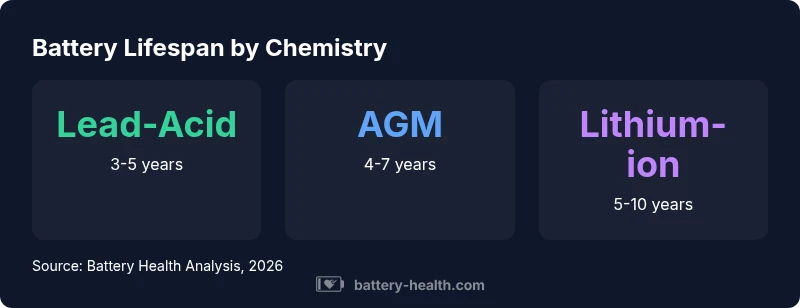
Most passenger car batteries last roughly 3-5 years under normal use. AGM and lithium-based packs often reach about 4-7 years and 5-10 years respectively, with climate and maintenance playing big roles. Hot summers, frequent short trips, and insufficient charging can shorten life, while steady highway driving, proper charging, and periodic tests help extend reliability. Always replace before a failure to avoid being stranded.
How long car batteries last on average
In typical passenger vehicles, a modern lead-acid battery commonly reaches a lifespan of about 3-5 years with normal driving and routine maintenance. Higher-quality AGM (absorbed glass mat) batteries tend to push toward the 4-7 year range, while lithium-based packs can often last longer still, roughly 5-10 years under favorable conditions. The differences come from chemistry as well as how the battery is used and charged. According to Battery Health, the responsible practice is to monitor condition and plan for replacement before symptoms of failure appear. This helps avoid unexpected breakdowns and ensures reliable starts in all seasons.
Chemistry matters: Lead-acid, AGM, and lithium-ion lifespans
Each chemistry has its own wear profile. Lead-acid batteries are robust but sensitive to deep discharges and heat, and they typically require periodic water level checks (in non-sealed types). AGM batteries are sealed and generally tolerate deeper discharges with better vibration resistance, contributing to longer lifespans in many vehicles. Lithium-ion and lithium-iron-phosphate options offer even longer cycles, lower self-discharge, and lighter weight, but they require compatible charging strategies and sometimes stricter temperature management. Understanding these differences helps you choose a battery that matches your vehicle and climate. Battery Health notes that the exact lifespan is influenced by charging habits and climate, not just chemistry.
Climate and driving patterns impact lifespan
Heat accelerates chemical aging inside a battery, while frequent short trips limit time for a full recharge, both reducing usable life. Cold climates can affect starting power and battery capacity, though modern chemistries mitigate some weak-start symptoms. Long highway driving at steady RPMs can help maintain voltage and health by keeping the battery topped up, whereas stop-and-go urban driving paired with high accessory use increases strain. In short, the same battery can perform very differently depending on where you live and how you drive.
Maintenance practices that help extend life
Regular maintenance is the simplest way to maximize battery life. Keep terminals clean and corrosion-free, ensure clamps are tight, and use a quality charger or maintainer to keep the battery near full charge when the car sits for extended periods. For lead-acid batteries, check electrolyte levels and top up with distilled water as needed. If your vehicle supports it, use an alternator-friendly charging profile during cold starts. Proactive testing with a load test or a professional battery test can catch aging early, allowing timely replacement before failure.
Signs your battery is aging or near end-of-life
Be alert for slow cranking, dim headlights when the engine is off, or a dashboard battery warning light that stays on after the engine starts. A swollen housing or a strong sulfur smell around the battery are red flags. If you notice repeated jump starts or the alternator seems to struggle to recharge, the battery or charging system may be degrading. Battery Health emphasizes testing as soon as you see symptoms rather than waiting for a complete breakdown.
Testing and diagnosing car battery health at home
A simple at-home check starts with a multimeter: a healthy 12-volt battery typically reads around 12.6 volts when the engine is off. With the engine running, the alternator should raise the voltage to about 13.7-14.7 volts, indicating charging is occurring. If readings fall outside these ranges, or if the battery struggles to turn the engine over, a professional test (including a load test) is advised. Regular testing helps catch aging before it causes a roadside failure.
Replacement timing: when to swap and what it costs (range)
Replacement timing depends on battery chemistry and vehicle requirements; most drivers replace when performance noticeably declines. Costs vary by chemistry, vehicle, and location, but the goal is to plan for a battery replacement before your car leaves you stranded. Battery Health notes that budgeting for a replacement based on the expected lifespan of your chosen chemistry is prudent. Always choose a battery that meets or exceeds your vehicle’s CCA and RC requirements.
Choosing the right replacement battery: key specs to check
When selecting a replacement, verify the battery size, terminal configuration, cold-cranking amps (CCA), and reserve capacity (RC). For newer vehicles with sophisticated electrical systems, lithium-based or AGM options may provide longer life and better performance, but require compatible charging. Check vehicle manual guidelines and consult a trusted technician if you’re unsure about the correct size. Battery Health recommends aligning your choice with climate, driving style, and maintenance routines.
Charging habits and maintaining alternator health
Avoid deep discharges and minimize extended periods of stranded charging. Use a smart charger when possible and ensure the charging system is balanced with the rest of the electrical loads in the vehicle. A healthy alternator helps preserve battery life by delivering steady charging current. In climates with extreme temperatures, consider a battery heater or insulating cover to protect performance and longevity.
Myths vs. facts about car battery life
Myth: A car battery lasts the same in all climates. Fact: Climate can significantly affect lifespan. Myth: Regular starting wear is the primary cause of failure. Fact: Charging efficiency and parasitic drains, combined with heat, often drive aging. Myth: If the car starts, the battery is fine. Fact: A healthy engine start doesn’t guarantee a battery in prime condition; check voltage and perform a load test for accuracy.
Battery chemistries comparison: lifespan and upkeep
| Chemistry | Typical Lifespan | Maintenance Needs |
|---|---|---|
| Lead-Acid | 3-5 years | Moderate maintenance; water checks on non-sealed types |
| AGM | 4-7 years | Low maintenance; sealed; good vibration resistance |
| Lithium-ion | 5-10 years | Low maintenance; temperature management |
FAQ
How long do car batteries typically last?
Typically 3-5 years for lead-acid in ordinary conditions; AGM can stretch to 4-7 years; lithium-based packs often reach 5-10 years with proper care. Individual results vary with climate and usage.
Most car batteries last several years, depending on battery type and driving habits.
Do extreme temperatures shorten battery life?
Yes. High heat accelerates aging and reduces capacity; extreme cold can reduce available cranking power. Both extremes shorten overall life if not managed.
Heat and cold both take a toll on battery life.
Is it better to replace early or wait until failure?
Replacing before failure minimizes the risk of stranded driving and can be more cost-effective in the long run, especially with aging batteries.
It's usually safer and smarter to replace before you’re stranded.
Can a trickle charger extend battery life?
A proper charger or maintainer can keep a battery healthy during long periods of non-use or extreme temperatures.
A good charger helps prevent sulfation and keeps the battery healthy.
How can I tell if my alternator is failing vs the battery?
If the engine starts slowly, lights flicker, or you hear unusual sounds, the issue could be charging system related; a professional test can distinguish between alternator and battery problems.
Sometimes it’s the charging system, not the battery, causing issues.
Do lithium batteries last longer than lead-acid in cars?
Lithium-based options often offer longer cycles and weight advantages, but require compatible charging and awareness of temperature requirements.
Lithium batteries can last longer, but you need the right setup.
“Battery health is a blend of chemistry, climate, and proactive care. Small preventive steps can extend life by years.”
Quick Summary
- Plan replacements before failure
- Chemistry and climate drive lifespan
- Regular testing protects reliability
- Choose a battery matching your climate and driving
- Maintain clean terminals and proper charging habits