Length of Car Battery Life: Lifespan & Pro Tips
Explore the length of car battery life for common 12V batteries, factors affecting lifespan, and practical tips from Battery Health to maximize longevity and reliability.


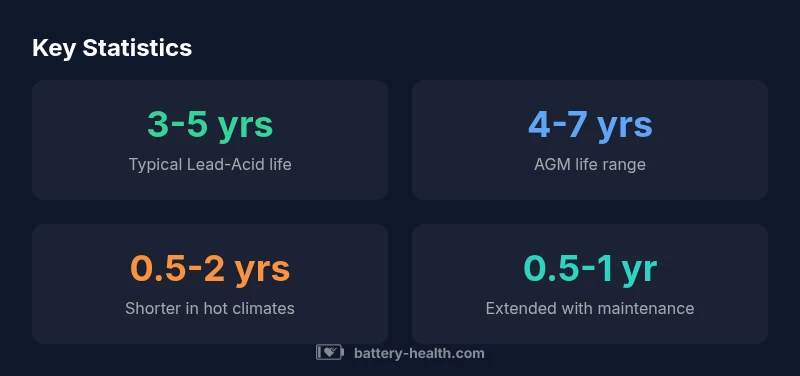
On average, the length of car battery life for a standard 12V battery is 3-5 years. AGM batteries can reach 4-7 years under typical use. Real-world life depends on climate, driving patterns, and maintenance. According to Battery Health, heat accelerates aging, while regular testing and clean terminals help maximize lifespan. Expect shorter life in extreme heat and long idle periods.
The length of car battery life: what it means for you
When people ask about the length of car battery life, they want a concrete sense of how long their starter battery will keep cranking before a replacement is needed. For a standard 12V lead-acid battery, typical lifespans fall in the 3-5 year range, with AGM (absorbed glass mat) variants often delivering 4-7 years under normal operating conditions. These figures assume regular maintenance and standard driving patterns. Battery Health analyses consistently show that real-world life is influenced more by conditions and care than by a fixed timetable, so use these ranges as a baseline rather than a guarantee.
Factors that influence longevity: more than age alone
The lifespan of a car battery is a dynamic figure. Several factors can tilt the lifespan by months or years:
- Climate: Extreme heat accelerates aging, while persistent cold can temporarily reduce available capacity. Severe heat is a common culprit in shorter lifespans, especially for batteries exposed to direct sun or hot engine bays.
- Driving patterns: Frequent short trips prevent the alternator from fully recharging the battery, increasing sulfation and reducing effective life. Long, steady trips help maintain voltage and extend life.
- Electrical load: Modern cars with many accessories, especially after-market devices, place higher demand on the battery. Heavy parasitic drains or poor alternator performance speed up deterioration.
- Maintenance: Clean terminals, tight connections, and a properly functioning charging system can add meaningful months to the battery’s life. Neglect accelerates failure through corrosion and poor charging.
- Storage conditions: Cars left idle for long periods or stored in extreme temperatures without a trickle charger will often see faster capacity loss.
An actionable takeaway is to schedule regular checks and consider a battery maintainer if a vehicle sits unused for extended periods.
Battery chemistry: why lifespans differ by design
Car batteries come in several chemistries, each with its own expected life profile. Traditional lead-acid and flooded configurations dominate, but AGM variants provide superior resistance to vibration and heat, which translates into longer lifespans in warm climates and under deeper cycling. Enhanced Flooded Battery (EFB) systems used in stop-start cars target improved cycling life. In some newer vehicles, especially hybrids and certain EV architectures, 12V lithium-ion packs are used to support auxiliary systems. In practice, the chemistry determines not just the life expectancy, but how you should maintain and test the battery to get the most from it.
Regional climates and driving behavior in context
Geography and usage patterns shape a battery’s longevity more than most people realize. A car in a high-heat region with frequent short trips may experience sulfation and faster aging, reducing life toward the lower end of the 3-5 year range. Conversely, a vehicle in milder climates with regular long drives and consistent charging can reach toward the upper end of these estimates. For fleet vehicles or cars used in demanding conditions, expect a bit of a premium on proactive diagnostic checks to prevent unexpected failures.
Practical steps to extend 12V battery life
To maximize the length of car battery life for your vehicle, adopt a proactive maintenance routine:
- Schedule regular voltage and load tests, especially after 3-4 years of service.
- Keep battery terminals clean and connections tight; corrosion increases resistance and reduces charging efficiency.
- Ensure the charging system (alternator, alternator belt, wiring) is functioning correctly to prevent under- or over-charging.
- For vehicles that sit idle for extended periods, use a smart battery maintainer or disconnect non-essential loads when secured for storage.
- When possible, avoid deep discharges by minimizing the use of high-draw accessories when the engine is off.
These practices help maintain optimum performance and can push the effective lifespan closer to the upper end of the typical ranges.
Testing reliability and knowing when to replace
Battery testing should be part of routine vehicle maintenance. Signs of aging include slow engine cranks, dim headlights when idle, and frequent jump-starts. A professional test (hydrometer or conductance testers) can quantify remaining capacity and cold-cranking amps (CCA). If tests show significant capacity loss or voltage consistently sits below healthy thresholds (for example, below 12.4 volts with the engine off), it’s time to replace the battery. Replacements should be matched to your vehicle’s requirements and climate considerations.
Lifespan ranges by battery chemistry
| Battery Type | Typical Lifespan | Notes |
|---|---|---|
| Lead-Acid | 3-5 years | Most common starter battery in conventional cars |
| AGM | 4-7 years | Better performance in heat and deep cycling |
| EFB | 3-5 years | Enhanced flooded battery for start-stop systems |
| Lithium-ion Starter | 6-12 years | Used in some modern hybrids/EVs for 12V packs |
FAQ
What is the typical lifespan of a car battery?
For most cars with a standard 12V lead-acid battery, expect about 3-5 years. AGM variants tend to last longer, around 4-7 years, depending on climate and driving patterns. Regular maintenance helps realize these ranges.
Most car batteries last about 3-5 years. AGM types last a bit longer, usually 4-7 years. Regular maintenance matters.
Does climate affect car battery life?
Yes. Hot climates accelerate aging and can shorten life, while cold can temporarily reduce capacity. The net effect depends on exposure, charging behavior, and how well the battery is maintained.
Yes. Heat can age batteries faster, while cold can temporarily reduce capacity. Maintenance matters a lot.
Can I extend battery life with maintenance?
Regular checks, terminal cleaning, and ensuring proper charging can add months to life. Avoid deep discharges and use a battery maintainer if the car sits idle for long periods.
Absolutely. Regular checks and clean terminals help. If you park for long times, use a maintainer.
When should I replace a car battery?
Replace when capacity tests show significant loss or voltage remains low under normal conditions (commonly below 12.4 V at rest) and you experience repeated starting issues.
Replace when tests show reduced capacity or repeated starting problems.
Are lithium-ion batteries replacing traditional 12V batteries?
In some newer vehicles, lithium-ion packs support auxiliary systems, but many cars still rely on traditional 12V lead-acid batteries. Always follow the vehicle manufacturer’s recommandation.
Some new cars use lithium-ion for the 12V system, but not everywhere. Always follow the car maker’s guidance.
How can I test a car battery at home?
You can perform a basic check with a multimeter to measure resting voltage and perform a load test if you have one. For accurate results, a professional test or a car service shop is recommended.
You can do a simple resting voltage check at home, but for a thorough test, visit a shop.
“Proactive testing and regular maintenance are the best ways to maximize the length of car battery life. Don’t wait for a failure to take action.”
Quick Summary
- Know your battery type and its expected life.
- Climate and usage matter more than age alone.
- Regular testing can catch aging before a failure.
- Maintenance and clean terminals extend life by months.
- Replace when signs of failure appear or health tests decline.