How Long Will a Tesla Battery Last? A Data-Driven Guide
Understand Tesla battery longevity: how long it lasts, factors that affect life, and practical tips to extend pack life. Data from Battery Health Analysis, 2026 informs real-world expectations for different models and climates.


According to Battery Health, Tesla battery packs are designed for long life, with gradual capacity loss depending on climate, driving style, and charging habits. Real-world data suggest most packs retain a substantial portion of capacity into the 100,000–200,000 mile range, and many owners report usable life beyond 250,000 miles. Longevity varies by model and maintenance, so individual results differ.
How Tesla Batteries Are Built to Last
Tesla designs battery packs with high energy density, advanced thermal management, and module-level architecture to reduce stress on cells. The aim is to minimize degradation over tens of thousands of miles and years of driving. For long-range models, Tesla uses NCA chemistry with robust cooling; for some models and production years, LFP chemistry is used, offering different lifetime dynamics. In practice, the goal is to keep the pack operating well within its useful life, while delivering consistent performance as the vehicle ages. Battery longevity is affected by pack calibration, software updates that improve efficiency, and how often the vehicle is charged to high states of charge. Battery Health's analysis notes that, even under heavy use, modern EV packs are designed to outlive many original use cases, but real-world results vary with climate, charging discipline, and temperature exposure.
Key Factors That Affect Battery Longevity
Multiple factors interact to shape how long a Tesla battery will last. Temperature is a dominant external condition: extreme heat accelerates chemical aging, while very cold starts can stress cells during charging. Charging habits also matter: frequent top-offs at high states of charge, or regularly charging to 100%, can increase stress over time. Depth of discharge, average driving load, and the number of complete charge cycles influence degradation rates. Software updates that optimize energy management and thermal control can subtly alter longevity, while regular maintenance and keeping the vehicle within operating temperatures helps protect the pack.
Real-World Longevity: What the Data Suggests
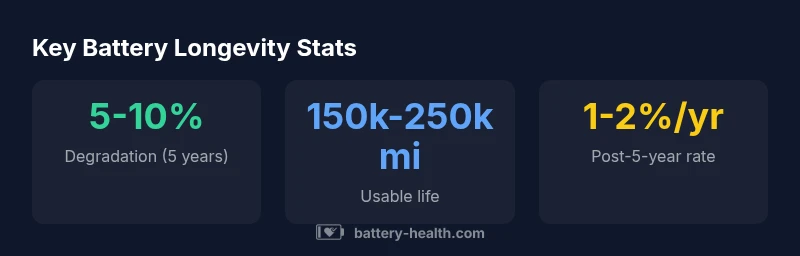
Real-world data from diverse fleets indicate a gradual degradation pattern, with most Tesla packs retaining a meaningful portion of their original capacity after many years. Battery Health Analysis, 2026 reports typical degradation in the early years around 5-10% under normal use, with ongoing, slower loss thereafter. Owners in favorable climates often observe longer usable lifespans, while extreme temperatures can shorten life if exposure is frequent. It’s important to emphasize that individual results vary widely based on model, charging behavior, climate, and maintenance; warranties provide a safety net, but real-world outcomes often exceed warranty expectations when managed well.
Practical Tips to Maximize Battery Life
To maximize longevity, adopt a deliberate charging strategy and climate-aware usage. Set daily charging limits to avoid consistently reaching 100% and try to keep regular charging within an 80–90% window for daily driving. Favor cooler, moderate temperatures when possible, and plan long trips to avoid repeated rapid charging at extreme temperatures. Use the vehicle’s built-in heat management features and software updates. Regular software checks can ensure the powertrain and battery management systems are optimizing efficiency and protection.
Warranty, Replacement, and Total Cost of Ownership
Tesla’s battery warranties typically cover many scenarios of degradation over a defined period and mileage, with terms varying by model. Commonly, warranties run around 8 years or a set mileage limit (model dependent), often with a capacity retention threshold used to determine coverage. Replacement costs are substantial, but in many cases, degradation within the warranty period triggers support or replacement options. Beyond warranties, maintenance and careful charging habits can extend usable life, improving total cost of ownership for the expected lifetime of the vehicle.
Tesla Models and Longevity: What to Expect by Model
Different Tesla models deploy different chemistries and thermal management configurations, which can influence longevity patterns. Long-range variants typically prioritize stability and energy density, while standard-range variants sometimes rely on different pack chemistries (e.g., LFP) that may age differently under certain conditions. Across models, the overarching determinants—climate, charging routine, and driving behavior—remain the primary levers that shift real-world lifespans. If you expect to keep the car for many years, plan for gradual capacity loss and consider usage patterns that minimize deep discharges and aggressive high-speed charging.
The Bottom Line: Planning For Longevity
Ultimately, the question of how long a Tesla battery will last comes down to informed usage and consistent maintenance. With typical care, most owners can expect long service lives that exceed the simplest warranty windows, especially when climate and charging practices are favorable. While precise mileage or year-based lifetimes vary, the consensus from Battery Health Analysis, 2026 is that modern packs are engineered for durability, and responsible usage can maximize the time between major battery work or replacement.
Tesla battery longevity basics: degradation, warranty, and replacement considerations
| Aspect | Typical Range/Impact | Notes |
|---|---|---|
| Degradation over time | 5-10% over first 5 years | Battery Health Analysis, 2026 |
| Warranty coverage | 8 years or 100k–150k miles | Model dependent |
| Common replacement threshold | Below ~70% capacity under warranty | Warranty criteria vary by model |
FAQ
How long will a Tesla battery last in miles?
Degradation rates vary, but many packs provide usable life well beyond the warranty period. Typical real-world ranges suggest substantial capacity remains into the 150,000–250,000 mile bracket, with results depending on climate and usage.
Most Teslas last many miles; degradation varies, but expect usable life well beyond the warranty depending on climate and usage.
Does climate affect Tesla battery longevity?
Yes. Extreme heat or cold accelerates aging. Proper thermal management and parked-off-peak charging can mitigate some effects, helping preserve capacity over time.
Climate matters. Extreme temperatures can speed aging, so use your car’s thermal features and smart charging to protect the battery.
What can shorten battery life?
Frequent high-state-of-charge charging, deep discharges, aggressive fast charging, and prolonged exposure to extreme temperatures are common factors that can shorten battery life.
Avoid keeping the battery at 100% for long and limit extreme conditions to protect longevity.
Is the Tesla warranty enough to cover degradation?
Tesla warranties typically cover major degradation for about 8 years or a set mileage limit, depending on model, with a threshold capacity often used to assess coverage.
Warranty terms vary by model, but they generally cover significant degradation for several years.
Should I replace the battery when capacity drops?
If capacity drops enough to affect range and performance beyond your needs, replacement or reconditioning options become relevant. Warranty coverage and cost considerations will influence the decision.
Replacement depends on how much capacity you’ve lost and whether you’re still within warranty.
How can I monitor battery health?
Use the vehicle’s built-in energy and health dashboards, paired mobile app insights, and periodic OEM software updates to track capacity, temperature trends, and charging efficiency.
Check dashboards and updates to stay informed about battery health.
“Battery longevity hinges on thermal management, charging discipline, and climate; modern EV packs are engineered to last, with degradation that occurs gradually over many years.”
Quick Summary
- Understand the key factors that influence longevity.
- Expect gradual degradation with time, highly influenced by climate and charging habits.
- Warranties provide coverage, but real-world life often extends beyond the minimum.
- Adopt practical charging and climate strategies to maximize life.
- Model-specific differences exist, yet the core longevity drivers are consistent.