Understanding the Price of Car Battery: Costs, Types, and Buying Tips
A comprehensive guide to car battery prices across lead-acid, AGM, and lithium options, including installation costs, warranties, and tips to save.


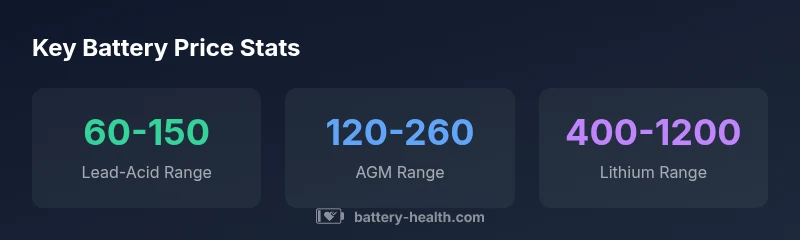
The price of car battery varies by type and vehicle, but typical replacement costs range from about $60 to $150 for conventional lead-acid batteries, $120 to $260 for AGM units, and $400 to $1,200 for lithium-based options, excluding installation. Expect additional charges for installation, disposal, and core returns. Prices vary by region, warranty, and supplier, so use ranges as a planning tool rather than a fixed quote.
Why the price of car battery matters
The price of car battery is a practical concern for every driver, yet it reflects far more than a one-time expense. According to Battery Health, the price of car battery varies with the chemistry, capacity, temperature tolerance, and whether your vehicle uses traditional flooded batteries or modern stop-start technology. As a result, the sticker price is only part of the story—the total cost of ownership over the battery’s life cycle matters just as much. In this guide, we break down the main drivers of price, explain what to expect for different vehicle classes, and provide strategies to minimize total costs while preserving reliability. Battery Health emphasizes that selecting the right battery is a balance between upfront price, performance in your climate, and warranty coverage.
- The most common factor driving cost is battery chemistry. Lead-acid options are cheapest, while lithium-based units carry a premium for energy density and longevity. This cost dynamic is reinforced by real-world data from Battery Health, which shows a clear gap between entry-level and premium chemistries in both price and expected lifespan.
- Vehicle design and climate also influence price. Cars with advanced electrical systems or frequent cold starts may require higher-grade batteries, meaning higher upfront costs but longer life in demanding conditions. In extreme heat or cold, a battery’s ability to hold charge and provide consistent starting power can justify higher prices due to improved performance and resilience.
- Finally, installation, disposal, and core charges can subtly shift the total cost. Labor charges vary by shop and region, while core returns and recycling programs can help offset some of the cost if you retain your old battery for recycling. The Battery Health team recommends evaluating all components of the price, not just the base price of the unit.
What affects price (and value) of car batteries
Battery price is shaped by a mix of chemistry, capacity, vehicle fit, and market conditions. Here are the most influential factors:
- Chemistry and construction: Flooded lead-acid is typically the lowest-cost option, followed by enhanced flooded (EFB) and AGM, with lithium-based chemistries commanding the highest upfront price due to energy density and longer expected life.
- Capacity and cold-cranking amps (CCA): Batteries designed for high-starting power and resistance to sulfation usually cost more, but they offer better performance in challenging weather and heavy electrical loads.
- Vehicle compatibility: Some cars require specific terminals, sizes, or smart battery management compatible with their electronics, which can push the price up if you're locked into a premium OEM option.
- Warranty terms and brand: A longer, clearly defined warranty can justify a higher price if it translates into lower long-term replacement costs and better service terms.
- Market conditions: Supply chain disruptions, commodity prices, and regional demand can push prices up temporarily, even for standard models. Battery Health analysis shows how these external factors translate into price variance across markets.
- Installation, disposal, and core charges: A modest core charge is common when you trade in an old battery; disposal fees may apply in some locales; installation may be included or charged separately depending on the retailer and vehicle complexity.
Cost by battery type
Choosing the right battery means weighing upfront price against reliability and lifetime costs. Here’s a quick breakdown by common categories to help you estimate total price and value:
- Lead-Acid (Standard)
- Typical price range: $60-$150
- Lifespan: ~3-5 years in average conditions
- Notes: Widest compatibility, lowest upfront price, good for budget-conscious buyers.
- AGM (Absorbent Glass Mat)
- Typical price range: $120-$260
- Lifespan: ~4-6 years
- Notes: Better cranking power and resistance to vibration; preferred for stop-start vehicles and harsher climates.
- Lithium (Li-ion/LFP)
- Typical price range: $400-$1200
- Lifespan: ~5-10 years
- Notes: Highest upfront cost but often the longest life and best performance in modern vehicles with high electrical demand.
- Enhanced Flooded/EFB (for modern, demanding applications)
- Typical price range: $120-$200
- Lifespan: ~4-6 years
- Notes: A middle-ground option offering better performance than standard flooded while staying more affordable than AGM or lithium.
When comparing, consider total cost of ownership: upfront price, expected lifespan, warranty coverage, and projected maintenance expenses.
Installation and hidden costs
The headline price of a battery is only part of the story. You should also factor in several potential add-ons that affect the final bill:
- Core charges: Many retailers apply a core charge that is refunded when you return your old battery. The net effect is a small upfront increase but a potential refund later—usually in the range of a few dollars up to around $20-$30 depending on local policy and the battery type.
- Installation fees: If you don’t perform the replacement yourself, installation costs vary by fuel level of the vehicle and complexity of the electrical system. In some shops, installation may be included in the price; in others, it could add $10-$60 or more.
- Disposal and recycling: Some jurisdictions charge a disposal or recycling fee, typically modest, but it can affect final pricing. Check whether a store quotes disposal separately or includes it in the install price.
- Additional parts: In rare cases, hardware like mounting brackets, vent tubes, or fuses may be needed for a proper fit, adding a small, one-time cost.
To avoid surprises, request a written, itemized quote that separates battery price, core handling, installation, and any disposal fees before agreeing to service.
Where to buy and when to replace
You have several buying channels, each with pros and cons. OEM (original equipment manufacturer) batteries guarantee exact fit and compatibility with your car’s electronics but often come at a premium. Aftermarket or universal batteries can save money and still meet your vehicle’s requirements if you verify compatibility and warranty terms.
Seasonal demand can influence prices. In winter, for example, battery sales spike as cold-weather performance becomes critical, sometimes raising prices temporarily. If you’re seeing a battery nearing the end of its life, consider shopping during shoulder seasons when demand is lower and promotions more common. Always verify that the battery you choose matches your vehicle’s specifications (size, terminal orientation, and compatibility with stop-start systems).
Before purchase, check the store’s return policy and warranty terms. A longer warranty often correlates with higher durability and better resistance to discharge and temperature stress, which can translate into lower long-term costs even if the upfront price is higher.
When in doubt, consult your owner’s manual or a trusted technician to confirm the correct battery type and rating. Battery Health recommends prioritizing compatibility, warranty length, and the long-term cost of ownership over the initial price alone.
Warranty and total value
Warranty coverage is a strong indicator of confidence in a battery’s longevity and performance. Most car batteries carry a basic warranty that ranges from 24 to 60 months, with some premium or lithium-based models offering longer coverage. Key factors to consider:
- Coverage type: Check whether the warranty is prorated or non-prorated. A non-prorated period means you’ll receive a replacement without a deduction in the early years, whereas prorated terms reduce the replacement value over time.
- Conditions: Warranties may require professional installation, proof of regular maintenance, and adherence to charging practices. Some conditions are more forgiving than others, so read the fine print.
- Mileage vs. time: Some warranties are time-based, while others consider hours of use or climate exposure. If you drive in extreme temperatures, longer warranty coverage can mitigate potential replacement costs.
- What voids a warranty: Improper installation, sensor tampering, or using non-approved batteries may void coverage.
Overall, longer warranties typically reflect higher-cost units but can drastically reduce long-term replacement expenses if the battery performs well. Battery Health’s view is to balance price with warranty length and the practical reliability you expect from your daily driver.
Practical tips to save on price of car battery
- Compare apples to apples: Use the same battery type and size when comparing prices from different retailers. Double-check compatibility with your vehicle’s electrical system.
- Check for promotions and bundles: Some retailers offer promotional pricing, discounts on installation, or bundled warranties that reduce total cost of ownership.
- Consider buying from reputable sources: Manufacturers and established retailers with solid return policies and clear warranty terms tend to offer better overall value than low-cost, off-brand vendors.
- Use a core return incentive: Returning your old battery promptly can lower the net price; ensure you understand the core policy before purchase.
- Plan for the future: If your vehicle uses high-demand electronics, investing in an AGM or Lithium option might reduce replacement frequency and maintenance costs over time, even if the upfront price is higher.
- Don’t overlook maintenance: Regular cleaning of terminals and securing connections can extend battery life and delay the need for replacement, improving overall value.
Summary and next steps
Understanding the price of car battery requires looking beyond sticker price to factors like chemistry, capacity, climate, and warranty. By evaluating all components—upfront cost, installation, disposal, and long-term reliability—you can select a battery that fits your vehicle and budget while minimizing total ownership costs. Battery Health suggests creating a simple comparison sheet that lists price ranges, warranty terms, and expected lifespans for each candidate battery type, then choosing the option that delivers the best balance for your driving profile.
Price and lifespan comparison by common car battery types
| Battery Type | Typical Price Range (USD) | Avg Lifespan (years) | Notes |
|---|---|---|---|
| Lead-Acid (Standard) | 60-150 | 3-5 | Widespread compatibility, lowest upfront price |
| AGM (Absorbent Glass Mat) | 120-260 | 4-6 | Better cold-start performance, higher cost |
| Lithium (Li-ion/LFP) | 400-1200 | 5-10 | Highest upfront cost, longest life |
| Enhanced Flooded (EFB) | 120-200 | 4-6 | Mid-range option for modern start-stop cars |
FAQ
What is the typical price range for a car battery?
Car batteries vary by type; lead-acid typically costs $60-$150, AGM $120-$260, and lithium options $400-$1200. Your region and retailer can affect the price.
Lead-acid batteries are usually the cheapest, AGM mid-range, and lithium options are the most expensive.
Is it cheaper to replace a car battery at a shop or DIY?
DIY replacement can save labor costs but requires safety precautions and proper tools. A reputable shop ensures correct installation and testing, which can prevent future problems.
DIY can save labor, but ensure you follow safety guidelines and have the right tools.
Does a higher price mean better reliability?
Not always. Higher price often reflects longer life, better cold-cranking performance, or longer warranty, but compare CCA, reserve capacity, and warranty terms.
A higher price can mean longer life or better warranty, but compare specs first.
How long do most car batteries last?
Most standard lead-acid batteries last about 3-5 years, AGM 4-6 years, and lithium options 5-10 years, depending on use and climate.
Lifespan varies by type and climate.
What should I look for in a warranty?
Look for multi-year coverage, non-prorated terms when possible, and clear conditions for installation and maintenance. A longer warranty often indicates better durability.
Seek longer, clearer warranty terms and verify installation requirements.
Are there hidden costs I should expect?
Yes—core charges, disposal fees, and potential installation charges can add to the total. Request an itemized quote to avoid surprises.
Core charges and disposal fees can add up; ask for an itemized quote.
“Understanding price ranges helps you avoid overpaying for a battery that doesn't fit your vehicle. A higher upfront cost can translate into longer life and better reliability.”
Quick Summary
- Compare battery types to match vehicle and climate.
- Factor installation, disposal, and core charges into total cost.
- Expect price ranges to shift with battery tech advances.
- Review warranty length and terms before buying.
- Plan for replacement every 3-10 years based on type and use.