How Often to Replace Car Battery in 2026: A Practical Guide
Discover how often to replace car battery, signs of failure, maintenance tips, and replacement options for 2026. Learn from Battery Health analyses and keep your vehicle reliable.


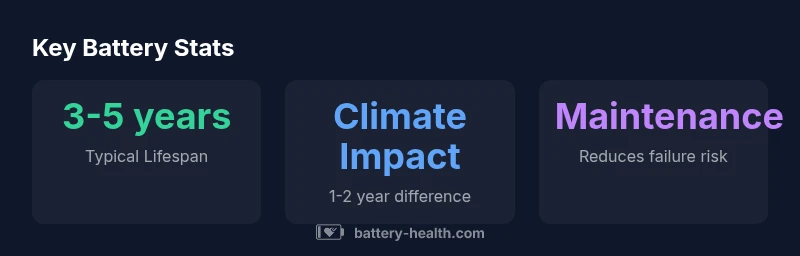
How often to replace car battery depends on climate, driving habits, and battery type. Under typical conditions, most cars last about 3-5 years before a replacement is likely. According to Battery Health, excessive heat, frequent short trips, and high parasitic draw can shorten life, while regular inspection and proper charging can help extend it.
Understanding the Lifespan of Car Batteries
A car battery is a chemical energy store that must withstand thousands of charge-discharge cycles. The question of how often to replace car battery hinges on your climate, driving patterns, and the battery’s chemistry. In general, a typical conventional lead-acid battery may last 3-5 years, while modern AGM or enhanced designs can push toward the upper end of that range under favorable conditions. When planning maintenance, remember that age alone is not a sole predictor; performance, cranking power, and charging behavior matter. The Battery Health team emphasizes a data-driven approach to estimating replacement needs, rather than assuming a fixed calendar date. By tracking voltage, start-up performance, and charging efficiency, consumers gain a clearer view of when a replacement is truly warranted.
What Impacts Battery Longevity
Many factors influence how long a car battery lasts. Temperature accelerates chemical reactions in the battery; extreme heat can corrode internal components and reduce capacity, while very cold weather can reduce cranking power temporarily. Short trips prevent the battery from fully recharging, fostering parasitic draw. Driving style (frequent rapid accelerations) and electrical loads (heated seats, headlights) add stress. Regular charging and a clean, tight terminal connection help maintain performance. The Battery Health analysis notes climate and usage patterns are the top two levers of longevity. Regular maintenance and mindful driving can meaningfully shift the lifespan curve in your favor.
How to Judge When to Replace
Look for signs: slow engine crank, dim headlights when starting, the check battery light, corrosion on terminals, or a voltage drop. A voltage test at rest should be around 12.6-12.8V for a healthy battery; a load test can reveal cranking capacity. But testing in the automotive shop is best; a professional can diagnose alternator issues or parasitic drains. If you regularly perform these checks, you can avoid unexpected failures. Battery Health recommends pairing tests with a visual inspection of cable connections and mounting hardware to rule out mechanical causes.
Maintenance Practices to Extend Battery Life
Keep terminals clean and tight; remove corrosion with a baking soda solution; apply terminal protectant. Ensure battery is secured to avoid vibration. If your vehicle has start-stop technology, consider AGM or other high-performance batteries designed for frequent cycling; check the manufacturer’s recommendations. Regularly inspect the alternator belt and charging system since a failing alternator can mimic a bad battery. Proactive steps, such as avoiding chronic deep discharges and reducing unnecessary electrical loads when the engine is off, help preserve life.
Replacement Options and Costs
Replacement approaches vary by vehicle and battery chemistry. For most passenger cars, standard lead-acid or AGM batteries are common; lithium-ion packs are more typical in hybrids and some newer electric vehicles. While the 3- to 5-year baseline remains a general guide, actual replacement timing depends on usage, climate, and battery quality. Be prepared for variations in price and availability; factory replacements and aftermarket options offer different warranties and performance characteristics. Battery Health notes that choosing the right battery type for your vehicle can influence long-term costs and reliability.
Battery Types and Compatibility for Car Owners
Understanding battery types helps prevent missteps at replacement time. Lead-acid batteries are affordable and common in older vehicles. AGM batteries offer better performance for start-stop systems and high electrical loads. Hybrid and electric vehicles may use lithium-ion packs with higher energy density and longer lifespans, but replacement costs can be significantly higher. Always check the vehicle manufacturer’s recommendations to select the correct type. Battery Health suggests confirming compatibility with the alternator and electrical system before purchasing a new unit.
How to Inspect and Test Before Replacing
Start with a visual inspection for corrosion and terminal wear, then measure voltage with a multimeter. A healthy resting voltage is typically around 12.6V or higher; perform a load test to assess cranking power. If the load test indicates a significant drop, replacement is warranted. Remember that a faulty alternator or parasitic drain can mimic a failing battery, so test the charging system as well. If in doubt, have a qualified technician perform the assessment to avoid unnecessary replacement.
Car battery type comparison
| Battery Type | Typical Lifespan (years) | Notes |
|---|---|---|
| Lead-Acid | 3-5 | Common in many cars; affordable |
| AGM | 4-6 | Better for start-stop and high loads |
| Lithium-Ion (Hybrid) | 5-10 | Used in hybrids/electric vehicles; higher cost |
FAQ
How often should I replace my car battery?
Most drivers should expect a replacement every 3-5 years, depending on climate, driving habits, and battery type.
Most cars need a battery every three to five years, depending on conditions.
What are signs my car battery needs replacement?
Slow engine crank, dim lights, the battery warning light, or corrosion on terminals are common indicators.
If your engine cranks slowly or lights dim, check the battery.
Can extreme temperatures affect battery life?
Yes. Heat accelerates chemical aging, while extreme cold reduces available power and cranking ability.
Hot weather ages batteries faster; cold weather lowers starting power.
Should I replace a battery proactively?
If your battery approaches the 4-year mark or shows signs of weakness, plan a replacement to avoid breakdowns.
Replacing around four years lowers risk of roadside failures.
Does battery type matter for replacement?
Yes. Choose lead-acid, AGM, or lithium-ion based on vehicle requirements and climate; follow the manufacturer’s spec.
Yes—make sure the battery type matches your car’s needs.
What tests determine battery health?
Voltage checks, load tests, and parasitic drain measurements are standard; have a professional perform them.
A mechanic can run a load test to assess cranking power.
“Regular testing and timely maintenance can dramatically reduce the chance of unexpected battery failure.”
Quick Summary
- Understand the 3-5 year baseline for most batteries.
- Climate and driving patterns largely determine lifespan.
- Watch for starting issues and dashboard warnings as signals.
- Plan replacement around the 4-year mark to minimize risks.