Remove Car Battery: Safe Step-by-Step Guide
Learn to remove a car battery safely with Battery Health's expert guidance. This step-by-step guide covers safety, tools, proper disconnection, disposal, and replacement tips for cars and home storage.


You will learn how to remove a car battery safely and correctly, including essential safety precautions, the required tools, and proper disposal or replacement options. The guide covers disconnecting the negative terminal first, loosening clamps, lifting the battery with help if needed, and rechecking connections before reinstalling.
Why removing a car battery is sometimes necessary
There are situations when removing a car battery is the safest and most practical option. A failing battery may prevent your vehicle from starting, cause parasitic drain, or lead to unpredictable electrical behavior. In winter climates, a stubborn battery can freeze and crack if left intact, risking leaks and spills. According to Battery Health, safe handling and correct procedure minimize acid exposure, electrolyte spills, and the risk of short circuits during removal. You may also need to access components under the hood, replace the battery with a new unit, or service the alternator and wiring. By understanding why you need to remove the battery, you can plan the process, reduce downtime, and protect yourself and your vehicle. This foundational knowledge sets the stage for the step-by-step guidance that follows.
Safety first: PPE and precautions
Safety must come first when you remove a car battery. The battery contains sulfuric acid and can release flammable hydrogen gas in some conditions. Wear safety goggles, chemical-resistant gloves, and a long-sleeved shirt. Work in a well-ventilated area away from flames or sparks, and keep a baking soda solution or water handy to neutralize any accidental spills. Disconnect the vehicle’s engine and accessories before touching the battery, and never touch both terminals with metal tools at the same time. If you have a history of chemical sensitivity or battery leaks, postpone the job and consult a professional. Battery Health emphasizes that protecting yourself reduces the risk of injuries and ensures a cleaner, safer workspace.
Planning the removal: prep and vehicle specifics
Before you touch the battery, plan your approach. Check your owner’s manual for model-specific steps or precautions, such as airbag safety, fuse panels, or battery location. If your vehicle is equipped with an engine cover, heat shields, or tight access, you may need specialized tools or a helper. Ensure the car is on a level surface, the parking brake is engaged, and you have clear access to the battery terminals. Having a replacement on hand and knowing where the spare is stored can speed up the process and prevent delays. This planning reduces surprises and supports a smoother, safer operation.
Tools and materials you’ll typically use
Having the right tools ready helps you work efficiently and safely. You’ll want insulated gloves and eye protection, a basic socket or wrench set, a battery terminal puller if available, a strap or carry handle for lifting, a wire brush for corrosion, baking soda and water for spills, and dielectric grease or terminal protector for after reinstall. A digital multimeter can verify voltage if you’re diagnosing the battery health, and a battery tray or dolly makes moving the unit safer. Keep a flashlight handy for dim engine bays and a clean rag to wipe residue. With these tools prepared, you’ll minimize delays and reduce the risk of slips or shorts.
Disconnecting and removing: the core actions
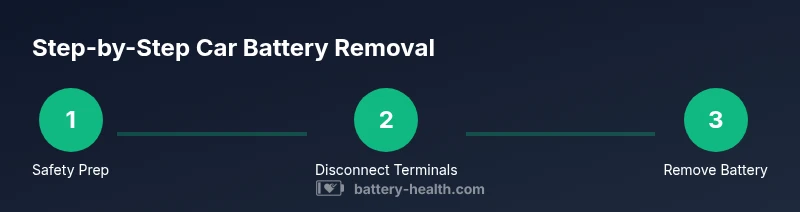
The core of removal involves two controlled disconnections and a careful lift. Start by switching off the ignition and removing keys, then disconnect the negative terminal first to minimize short-circuit risk. Use the correct size wrench to loosen the terminal clamp, then repeat for the positive terminal. Remove any hold-down clamps or brackets that secure the battery, and gently lift the unit straight up—not at an angle that could damage cables or the car frame. If access is tight, enlist a helper to stabilize the battery while you free it. This sequence reduces arc risk and protects sensitive electrical components.
Handling corrosion and battery post-cleaning
Corrosion around terminals is common and can reduce grip and conductivity. If you notice a white or greenish powder, gently scrub with a wire brush and a baking soda solution to neutralize acidity. Wipe dry after cleaning, then inspect cables for fraying or cracking. Clean terminals before reinstalling to ensure a solid electrical connection. Apply a thin layer of dielectric grease to protect against future corrosion. Avoid metal-to-metal contact that could bridge the terminals. Proper cleaning extends battery life and improves performance.
Disposal and replacement options
Used car batteries are recyclable and should never be discarded with household trash. If you’re replacing the battery, transport the old unit to an approved recycling center or automotive retailer that offers take-back programs. If you intend to reuse the same battery after testing, make sure it still meets proper voltage specifications and has no cracks. When replacing, verify compatibility with your vehicle’s make, model, and year, and install the new unit with the same hold-down method used for removal. Proper disposal and replacement protect the environment and avoid potential penalties.
Common mistakes to avoid
Avoid rushing through access points or forcing connections that seem tight. Don’t touch metal tools to both terminals at once, and never place tools on the battery surface. Ensure you’re logged off in the vehicle’s electrical system and disconnect the negative terminal first. Don’t ignore signs of corrosion, heat, or cracking, as these indicate risk of leaks or failure. Finally, never attempt replacement if the battery is physically damaged or swollen, as this can be hazardous. Following these guidelines keeps you safe and your vehicle reliable.
Environmental and safety considerations
Battery disposal and recycling are regulated in many areas. Always transport old batteries in a sturdy container and keep them upright to prevent leaks. Avoid mixing different battery chemistries, and never store a discharged battery in a hot or confined space. If you’re unsure about local disposal rules, consult your city or county waste management authority. Replacing a car battery responsibly reduces environmental impact and aligns with safety best practices promoted by Battery Health.
Tools & Materials
- Safety goggles(ANSI Z87.1 rating recommended)
- Chemical-resistant gloves(Nitrile or neoprene preferred)
- Long-sleeved shirt and pants(Flame-resistant if possible)
- Insulated hand tools (socket/wrench set)(12- to 14-inch handles recommended)
- Battery terminal puller (optional)(Helps separate terminals without prying)
- Battery lifting strap or helper(Heavy batteries require two people or a strap)
- Dolly or carrying tray(Secure to move the battery safely)
- Wire brush or terminal cleaner(Remove corrosion from posts)
- Baking soda and water solution(Neutralizes acid spills)
- Dielectric grease or terminal protector(Prevents future corrosion)
- Digital multimeter(Voltage check (12V system))
- Rags or paper towels(Clean up any residue)
- Owner’s manual(Model-specific steps)
- Fire extinguisher(General safety precaution)
Steps
Estimated time: 45-60 minutes
- 1
Power off and secure vehicle
Park on a level surface, set the parking brake, and turn off the ignition. Remove the key and wait a few minutes to let electrical systems de-energize. This reduces the risk of shorts and sparks during removal.
Tip: If you recently ran the engine, wait 5–10 minutes for components to cool before handling the battery. - 2
Locate the battery and assess access
Open the hood and locate the battery. Check for any shields or covers that need removing. Clear space around the terminals to avoid accidentally brushing metal across posts.
Tip: Take a photo of terminal layout before disconnecting in case you forget the wiring order. - 3
Loosen and remove the negative terminal
Using the appropriate tool, loosen the nut on the negative (-) terminal and detach the clamp. Wiggle gently to avoid damaging the terminal post. Move the cable away from the battery to prevent accidental contact.
Tip: Always disconnect the negative terminal first to minimize the risk of short circuits. - 4
Loosen and remove the positive terminal
Repeat the process for the positive (+) terminal. If there is any resistance, check for corrosion or a damaged clamp. Keep track of which cable was connected to which terminal.
Tip: Do not touch metal tools to both terminals simultaneously. - 5
Remove hold-down hardware
Loosen and remove any braces, clamps, or straps that secure the battery in place. These fasteners keep the battery from shifting during driving and must be removed before lifting.
Tip: If a bracket is stubborn, apply a small amount of penetrating oil and give it a moment to work. - 6
Lift and remove the battery
With a helper if possible, lift the battery straight up and out of the tray. Use a battery carrier or strap to keep it stable during transport. Avoid tilting the battery to minimize spills.
Tip: Keep the battery upright and avoid sliding it across metal surfaces. - 7
Inspect and clean battery tray and terminals
Inspect posts, cables, and the tray for corrosion or damage. Clean posts with a brush and baking soda solution if needed. Dry thoroughly before installing a new unit.
Tip: Wipe with a dry rag to remove any moisture that could cause shorts. - 8
Dispose of or store the old battery
If disposing, take the old battery to an approved recycling facility or retailer offering take-back services. If storing for later replacement, keep it in a ventilated, upright position in a safe area away from heat sources.
Tip: Never leave a used battery in a car where it could leak or overheat. - 9
Install or reconnect the new battery
Place the new battery in the tray and secure it with the hold-down hardware. Reconnect the positive terminal first, then the negative, ensuring tight, clean connections.
Tip: Apply dielectric grease to terminals to reduce future corrosion. - 10
Test and finalize
Check that the electrical system powers on and that dashboard indicators behave normally. If you have a multimeter, verify a stable 12V reading with the engine off. Recheck clamps and ensure no tools remain under the hood.
Tip: If indicators show abnormal readings, consult a professional before driving. - 11
Clean up and document
Return tools to their place and wipe down any spilled residue. If you replaced the battery, record the date and mileage for future maintenance notes.
Tip: Keep the warranty information with the new battery for reference. - 12
Plan post-removal maintenance
Schedule battery performance checks and periodic cleaning to extend life. Consider testing alternator output and reviewing charging system health during routine service.
Tip: Battery health improves with regular checks; set reminders for annual tests.
FAQ
Do I need to disconnect the negative terminal first?
Yes. Disconnecting the negative terminal first minimizes the risk of a short circuit if your tool touches a grounded part of the car frame. Always follow this sequence when working with car batteries.
Yes. Disconnect the negative terminal first to minimize short-circuit risk, then proceed to the positive terminal.
Can I remove a car battery myself if I’m not a professional?
You can remove a car battery yourself if you follow proper safety steps, wear PPE, and use the right tools. If you’re unsure about access or model-specific steps, consult a professional.
You can, but make sure you follow safety steps and have the right tools; if unsure, seek help.
What safety precautions should I always take?
Wear eye protection and gloves, work in a ventilated area, avoid sparks or flames, and keep baking soda handy to neutralize spills. Always disconnect power before touching terminals.
Wear protection, work in a ventilated area, avoid sparks, and keep baking soda handy.
What if the battery is corroded around the posts?
Gently scrub corrosion with a wire brush and a baking soda solution, then dry before reconnecting. Replace cables if insulation is damaged or posts are worn.
Gently clean corrosion with a brush and baking soda, then dry before reconnecting. Replace damaged cables.
Can I jump-start a car with the battery removed?
No. Jump-starting requires a connected battery and appropriate equipment. If the battery is removed, seek an alternate diagnostic method or professional assistance.
No, you shouldn’t jump-start with the battery removed; reconnect the battery or use proper diagnostic tools.
How should I dispose of a used car battery?
Take the used battery to an approved recycling facility, auto parts store, or local hazardous waste center that offers take-back programs. Do not throw it in the trash.
Take it to an approved recycling center or retailer that accepts used batteries.
Is there a risk of damaging electrical systems when removing a battery?
There is some risk if you mishandle terminals or tools, but following the proper sequence and using correct tools greatly reduces the chance of damage.
Yes, but the risk is minimized by following the correct steps and using the right tools.
Watch Video
Quick Summary
- Prepare with PPE and a clean workspace
- Disconnect negative terminal first to minimize risk
- Move and secure the battery safely with help or a carrier
- Inspect for corrosion and clean before reinstall
- Dispose of old batteries responsibly and verify replacement compatibility