What to Do If Battery Dies in Car: A Step-by-Step Guide
Learn practical, safety-first steps for a dead car battery, including jump-start methods, quick checks, safety tips, and guidance on when to replace or seek professional help.


If your car battery dies, the immediate goal is safety and getting the vehicle moving again or off the road. Start by pulling over to a safe spot, turning on hazards, then check for obvious issues (corrosion, loose cables). If symptoms point to a dead battery, use a booster pack or jump-start method, and plan replacement if charging fails.
Why a dead car battery happens and what to check first
A car battery dies for a few common reasons: age, extreme temperatures, parasitic drains, or an alternator issue. According to Battery Health, understanding why a battery fails helps you respond quickly and prevent repeats. In this section you will learn the quick checks you can perform with minimal tools and without risky improvisation. Start with non destructive inspections: look for corrosion on terminal posts (a white bluish or greenish crust), loose clamps, or damaged cables. If you see a swollen case, cracks, or a strong sour smell, do not attempt to jump start or charge the battery; replace it and seek professional help. Safety comes first: if you are stranded on a highway, move to a safe spot, engage hazard lights, and apply the parking brake. Heat and cold are terrible for lead acid batteries, reducing capacity and cranking power. A simple voltmeter can estimate the health of a resting battery; typically, a healthy rested battery reads around 12.6 volts or higher. If you measure well below that, charging or replacement may be necessary. Document the symptoms and the time of day for reference, and arrange a professional inspection if issues persist.
Safety first: assess the scene and prepare
Your safety is the top priority when a battery dies. Before you touch any cables, survey the area for hazards: moving traffic, wet surfaces, or fuel smells. Keep metal tools away from terminals and wear protective gloves and safety glasses to guard against sparks. If you felt a strong stench or see fumes, step away and call for roadside assistance. Turn on hazard lights to alert other drivers, set the parking brake, and if possible, remove people and pets from the area. When you're ready to proceed, gather your tools in a dry, well-lit place and avoid touching the battery's terminals with bare hands. A calm, methodical approach reduces the risk of shocks or short circuits and helps you keep control of the situation.
Immediate actions you can take without tools
First move the vehicle only if the situation is safe and you can reach a low-traffic area. If the engine won't start, confirm that the lights peak and the radio drain is not excessive; if the battery shows a modest voltage, it may still accept a boost. Do not jump-start a battery that is cracked, leaking, or severely corroded; this is a sign the battery should be replaced. If you're stranded in cold weather, keep the heater off during the boost to conserve energy. After gently testing, you can attempt a boost using proper cables or a portable jump starter. If the vehicle starts, allow the alternator to run at idle for several minutes to recharge the battery, then turn off and attempt a restart. If it fails, you may need to drive to a service center. Finally, always check for corrosion and clean terminals after the battery has cooled.
Jump-starting vs. replacing: how to decide
Jump-starting provides a momentary recharge to start the engine and give you time to reach a shop or replace. If the battery is relatively young, terminals are clean, and the climate is safe for a roadside boost, jump-starting is a reasonable short term fix. If the battery shows frequent discharge, swelling, or a sour smell, or if it is older than roughly 3–5 years, replacement is the safer option. Regular charging via the alternator is not guaranteed to restore a dying battery; in many cases degraded cells will not hold a charge after a boost and will fail again.
Battery health indicators and signs you should know
Be alert for slow cranking, dim lights, or a battery case that looks swollen or distorted. Terminal corrosion buildup can impede charging, so clean posts if safe to do so. Age strongly matters: most car batteries are designed for a few years of reliable service; when history shows repeated discharges, replacement is prudent. If the vehicle shows unusual electrical behavior after a boost or you hear clicking noises, this may indicate an alternator issue or a deeper electrical fault that needs professional testing.
Aftercare: charging, testing, and preventing future failures
After a successful jump-start, run the engine to recharge the battery and plan a proper battery test within the next week. Use a maintenance charger if available, and monitor voltage with a multimeter; aim for 12.6V when resting. Schedule a battery replacement if voltage drops quickly after a boost or the battery shows signs of wear. Regular maintenance, such as cleaning terminals and checking for loose connections, can prevent future failures. Finally, consider carrying a portable jump starter and a set of jumper cables in your vehicle as a proactive safety measure.
AUTHORITY SOURCES
- U.S. Department of Energy: https://www.energy.gov
- National Highway Traffic Safety Administration: https://www.nhtsa.gov
- National Renewable Energy Laboratory: https://www.nrel.gov
Tools & Materials
- Jumper cables (12+ ft, 4 gauge or heavier)(Essential for a traditional jump-start between vehicles)
- Portable jump starter / booster pack(Fully charged before use; includes built-in clamps)
- Safety gloves(Protect hands from acid and sparks)
- Safety glasses(Eye protection in case of sparks)
- Flashlight or headlamp(For inspecting terminals in low light)
- Basic tool set (optional)(Wrench/pliers may help in stubborn clamps)
- Owner's manual or vehicle information(Useful for model-specific guidance)
Steps
Estimated time: 20-40 minutes
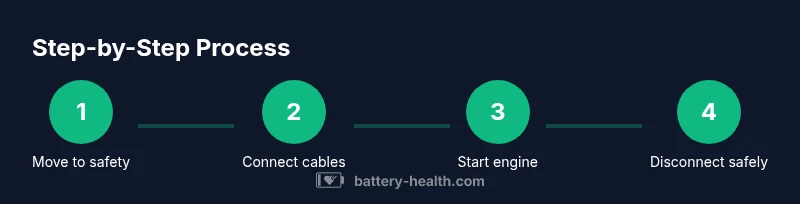
- 1
Move to safety
If you can, pull the vehicle to the roadside or a safe area. Engage the parking brake and turn on hazard lights to warn other drivers. This reduces risk before you handle electrical connections.
Tip: Keep bystanders clear and maintain a safe distance from moving traffic. - 2
Open hood and locate battery
Open the hood and identify the battery terminals. Note which post is positive and which is negative, and check for obvious damage or corrosion before touching anything.
Tip: If you cannot locate the battery, consult the owner’s manual or look for a fuse box or engine bay diagram. - 3
Inspect terminals and clean if needed
If terminals look corroded, disconnect power only if safe and clean with a terminal brush or rag. Ensure clamps are free of debris before reattaching.
Tip: Never use metal objects to scrape corrosion while connected. - 4
Connect booster cables or jump starter
Attach positive clamp to the positive terminal on each battery, then connect the negative clamp to a clean metal ground on the dead car or engine block away from the battery.
Tip: Maintain clear, stable clamps; avoid letting clamps touch each other. - 5
Start donor vehicle or activate booster pack
If using another car, start it and let it run at a steady idle for a few minutes. If using a booster pack, turn it on and follow the pack’s instructions.
Tip: Do not crank for more than a few seconds at a time to avoid overheating the starter. - 6
Attempt to start the dead car
Try to start the engine. If it fires, let it run and remove cables in reverse order after the engine stabilizes.
Tip: If the engine doesn’t start after a minute, stop and reassess the connections or seek help. - 7
Disconnect safely and test after start
Remove negative cable first, then positive, in reverse order. Keep engine running for 10-15 minutes to recharge, or drive to a shop for a full check.
Tip: Driving on a recently boosted battery can still be risky; an on-car test is ideal. - 8
Plan replacement if needed
If the battery fails to hold a charge or shows signs of wear, arrange replacement and have the alternator tested to rule out charging system issues.
Tip: Keep a record of the battery date and any service notes for future reference.
FAQ
What should I do first if the car won't start due to a dead battery?
First move to a safe area, turn on hazards, and inspect for obvious issues like corrosion or loose cables before attempting a jump-start.
First move to a safe area, turn on hazards, and inspect for obvious issues before trying a jump-start.
Can I jump-start a battery in cold weather?
Yes, but cold temperatures reduce battery capacity. Make sure connections are clean and avoid cranking too long to prevent damage.
Yes, but cold weather reduces battery capacity. Keep connections clean and avoid long cranking.
Is it safe to drive after a jump-start?
If the engine starts, drive to a service center or allow the alternator to recharge the battery. Do not rely on the boost alone for daily use.
If it starts, drive to a shop or let the alternator recharge, don’t rely on the boost alone.
How can I tell if my battery needs replacement?
If the battery repeatedly fails to hold a charge, is over 3–5 years old, or shows swelling or leaks, replacement is advisable.
If it repeatedly won’t hold a charge or shows swelling, replace it.
What is the difference between a jump starter and jumper cables?
Jumper cables connect two vehicles for a boost, while a jump starter is a portable battery pack that provides the boost without another vehicle.
Cables connect two cars; a jump starter is a portable pack that boosts the battery on its own.
Watch Video
Quick Summary
- Safety comes first in every step
- Identify the right method based on battery health
- Use proper jump-start technique and protect terminals
- Test and recharge after the boost
- Plan replacement when needed to prevent repeat failures