When Your Car Battery Dies: Practical Safety Guide
Learn what to do when your car battery dies, how to jump-start safely, common causes, replacement options, and maintenance tips. Battery Health provides a step-by-step, human-centered approach to staying on the road.


When the car battery dies, the engine won’t crank, lights sag, and warning indicators may flash. You can typically revive it with a jump-start using proper jumper cables or a portable jump pack. If the car won’t start after the jump, or you smell burning or see corroded terminals, stop and seek roadside assistance.
What happens when the battery dies in a car
When a car battery reaches the end of its usable life or experiences a sudden drain, the engine may not crank, lights dim, and the dash may show warning indicators. This happens when the chemical reactions inside the battery can no longer supply the surge current needed to start the engine. In many cases, the vehicle will still be able to power simple systems like the radio or lights, but the starter won’t engage. Understanding these symptoms helps you distinguish a genuine battery issue from related problems like a faulty alternator or poor cable connections. If you notice corrosion on terminals, a swollen case, or a battery that refuses to stay charged, treat it as a battery-health issue and act quickly. Battery Health notes that timely diagnosis reduces the risk of being stranded and helps you plan replacement before a failure leaves you stranded.
Common causes of automotive battery failure
Battery failures happen for several reasons: aging cells that lose their ability to hold a charge, parasitic power drains from accessories or devices left on, extreme temperatures that accelerate chemical reactions, and a damaged alternator that doesn’t replenish the charge while the engine runs. Short trips prevent the alternator from fully recharging the battery, which accelerates wear. Corroded or loose terminals can also mimic a dead battery. Regularly inspecting terminals for corrosion and ensuring proper alternator function are key preventive steps recommended by Battery Health and major safety organizations.
Diagnostic steps to confirm battery health
Start with a visual inspection: look for loose connections, corrosion, or a swollen case. Use a multimeter to check voltage: a healthy car battery should show roughly 12.6 volts when at rest, and you should see a rise when the engine runs if the alternator is charging. Load testing, performed at most auto shops, can reveal capacity under load. If the battery is more than three to five years old or shows low voltage under load, replacement is likely the better option. In some cases, intermittent failures point to a failing alternator rather than the battery itself.
Safety considerations and immediate actions if you're stranded
If you’re stranded, first ensure your safety: move to a safe location away from traffic, turn on hazard lights, and set the parking brake. Do not lean over the battery while jumping, and avoid smoking or open flames nearby due to possible hydrogen gas. Wear eye protection and gloves, and keep bystanders away. If you can’t safely reach a jump-start point, call roadside assistance. Never attempt to disconnect a live battery while the engine is running or when you’re unsure of the battery’s condition.
Jump-starting: safe, step-by-step guidance
When you’re ready to jump-start, ensure both vehicles (or the jump pack) are off. Connect the donor clamp to the positive (+) terminal first, then connect the other end to the positive on the dead battery. Attach the negative clamp to a solid ground on the donor vehicle or engine block away from the dead battery. Start the donor vehicle and let it run for a few minutes before attempting to start the dead car. If it starts, remove cables in the reverse order. Do not crank the engine for more than a few seconds at a time; give the battery a moment to recover between attempts. Pro tip: check for visible corrosion and terminal tightness after the jump. If the dead car starts but dies shortly after, the issue may be the alternator rather than the battery.
Replacing or upgrading the car battery: a practical guide
If a jump-start gets you back on the road, that’s a temporary fix. Plan to replace the battery promptly if tests show a weak cell, low cranking amps, or if the battery is older than the expected lifespan for your vehicle. When choosing a replacement, verify the correct group size, minimum cold-cranking amps (CCA), and battery chemistry compatible with your car. Consider upgrading to a maintenance-free battery and a slightly higher CCA rating for better performance in extreme temperatures. Have the installation done by a qualified technician if you’re unsure about handling the terminals safely. Recycling the old battery is required in many regions; most auto parts stores will accept your old battery for a small fee or free.
Maintenance tips to extend battery life
Proactively maintaining battery health helps prevent unexpected failure. Regularly check terminals for corrosion, clean with a baking-soda solution if needed, and ensure clamps are tight. Minimize deep discharges by turning off extra devices when the engine isn’t running. If you frequently take short trips, consider a trickle charger or a battery maintainer to keep the charge up. Schedule periodic battery testing at your local shop, especially before winter and hot summer seasons when performance drops. A well-maintained battery reduces the risk of roadside emergencies.
Roadside kit checklist for battery issues
Prepare a compact roadside kit that includes: jumper cables, a portable jump starter, gloves, eye protection, a flashlight, a tire gauge, and a small brush or terminal spray. Add a user-friendly owner’s manual for your vehicle and a sheet with your battery’s technical specs. Keeping a charged device to call for help and reflective safety tape can improve safety if you are stranded at night. Regularly refresh the kit’s contents and ensure cables are free of damage.
Authority sources
- NHTSA (National Highway Traffic Safety Administration): Vehicle battery safety and roadside emergency tips. https://www.nhtsa.gov/road-safety/vehicle-battery-safety
- Department of Energy/DOE: Vehicle battery care and maintenance guidance. https://www.energy.gov/eere/vehicles/articles/maintaining-your-vehicle-battery
- National Renewable Energy Laboratory (NREL): Battery health and charging fundamentals. https://www.nrel.gov/partners.html
Tools & Materials
- Jump-start cables(13- to 16-foot length recommended)
- Portable jump starter(Fully charged before use)
- Safety gloves(Non-slip, insulated)
- Eye protection(Impact-resistant goggles or glasses)
- Battery terminal cleaner(Wire brush or terminal spray)
- Rags(For cleaning terminals)
- Owner’s manual(Vehicle-specific instructions)
- Replacement battery (optional)(If needed after testing)
Steps
Estimated time: 45-60 minutes
- 1
Assess safety and gather gear
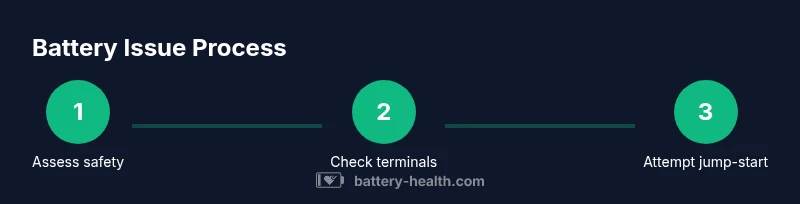
Before touching anything, park on a dry, level surface and turn off the ignition. Engage the parking brake, remove metal jewelry, and wear eye protection. Collect jump cables or a portable power pack and inspect them for damage.
Tip: Safety first: do not proceed if you smell gas or see a swollen battery. - 2
Inspect the battery and terminals
Open the hood and examine terminals for corrosion, cracks, or loose connections. If connectors are corroded, gently clean them with a terminal brush and a baking-soda solution. Ensure cables are tight and free from fraying.
Tip: Corrosion can hide a weak connection; cleaning improves contact. - 3
Connect jump cables in the correct order
Attach the red clamp to the positive terminal of the donor battery, then to the positive terminal of the dead battery. Connect the black clamp to a solid ground on the donor battery, and ground the other end to a metal surface away from the dead battery. Avoid touching clamps together.
Tip: Clamps should never touch metal surfaces while connected to the batteries. - 4
Start the donor vehicle and attempt to start the dead car
Start the donor vehicle and let it run for a few minutes to feed the dead battery. If the dead car lurches or fails to crank, stop and recheck connections. Do not crank for more than a few seconds at a time.
Tip: A slow, patient approach reduces risk of electrical shock or damage. - 5
Remove cables in reverse order
After the dead car starts, remove the negative clamp first, then the positive clamp, in reverse order of connection. Keep the engines running for about 15–30 minutes to allow the alternator to recharge the battery.
Tip: Drive or idle to recharge; a longer drive helps restore charging. - 6
Test and decide on replacement
If the dead car starts but dies again soon after, the issue may be the alternator rather than the battery. Have the battery tested under load at a shop and replace if necessary. If the battery is old or weak, replace it to avoid future failures.
Tip: Weak cells often fail under load; replacement is the safer long-term option. - 7
Dispose of old battery properly
Old car batteries contain hazardous materials and must be recycled. Take the battery to an authorized recycling center or an auto parts store that offers recycling services. Keep the old battery away from children during transport.
Tip: Most retailers offer free disposal with purchase of a new battery.
FAQ
Can a dead car battery be recharged?
Yes. A completely dead battery can often be recharged with a proper jump-start or a portable power pack, and then driven to recharge the alternator. However, repeated deep discharges can shorten battery life and indicate an aging battery.
A dead battery can often be recharged with a jump-start, but repeated deep discharges mean you may need a replacement soon.
How long do car batteries typically last?
Most car batteries last around three to five years under normal use, but climate, driving patterns, and maintenance affect longevity. If you notice frequent starts or slow cranking, have the battery tested.
Most car batteries last three to five years depending on usage and climate.
What should I do if the jump start fails?
If a jump start doesn’t work, stop attempting and check for safe connections. The issue may be the alternator, a damaged battery, or a wiring problem. Call roadside assistance or visit a shop for a professional diagnosis.
If the jump doesn’t work, stop and seek professional help to diagnose alternator or wiring issues.
Is it safe to jump-start a swollen or smoking battery?
No. A swollen or smoking battery indicates a dangerous condition and should not be jumped or opened. Evacuate the area and call for roadside assistance or professional help.
Avoid attempting to jump a swollen or smoking battery; seek professional help.
Do I need to replace the alternator if the battery dies frequently?
Frequent battery failures can point to a faulty alternator. Have the charging system tested at a shop to determine whether the issue lies with the battery itself or the alternator.
If failures happen often, have the charging system checked; the alternator may be the culprit.
Can cold weather affect battery performance?
Yes. Cold temperatures reduce battery capacity and make starting harder. In winter, consider a battery with higher cold-cranking amps and ensure it’s kept charged.
Cold weather reduces battery performance and may require a higher-CCA battery.
Watch Video
Quick Summary
- Diagnose before replacing: many starts are due to weak connections or aging batteries.
- Safety first: wear eye protection and avoid sparks near the battery.
- Jump-starts are a temporary fix; test the charging system and plan replacement.
- Recycle old batteries responsibly and follow local guidelines.
- Regular maintenance reduces the chance of a roadside failure.