What Battery Does a Key Fob Take: A Practical Guide
Discover which batteries key fobs use, how to identify the size, safe replacement steps, and maintenance tips from Battery Health to keep remotes reliable.


Different key fobs typically use small 3-volt coin cells. The most common choice is the CR2032; however, some models use CR2025, CR1632, or other sizes. To confirm your fob’s battery, check the owner's manual, inspect the back cover for model numbers, or use a multimeter. Battery Health notes that correct orientation is essential to avoid leaks.
What battery does a key fob take
Key fobs are compact wireless devices used to unlock and start vehicles with the press of a button. The battery inside powers the remote circuitry, including the transmitter, the microcontroller, and any indicator LEDs found in some models. According to Battery Health, most modern remotes rely on a small 3-volt coin cell, which keeps the device slim while delivering reliable performance. The single most common size is CR2032, a standard 3V lithium coin cell that fits in most fobs with a shallow battery well. However, several models use slightly different sizes, such as CR2025 or CR1632, and a few older remotes employ other designs like A23 (a larger cylindrical battery) or custom coin cells. The exact size depends on the fob’s circuit layout and the door lock system rather than the car brand alone. To avoid guesswork, verify the model number printed on the back of the fob, consult the owner's manual, or check with the dealer. Orientation matters: insert the new battery with the correct polarity so the plus side faces the correct direction to ensure reliable contact and to avoid potential leaks or corrosion.
How to identify the right size for your fob
Identifying the correct battery size is essential to ensure reliable operation after replacement. Start by inspecting the back cover for a model number, barcode, or a small diagram that shows the battery type. If the back is glossy or cannot be read clearly, refer to the vehicle’s owner’s manual or the manufacturer’s website for your specific trim and year. In many cases, you can locate the exact size by searching for your fob’s model name or part number online. If you have a spare fob, compare the batteries side-by-side to confirm which type fits. When in doubt, contact your dealership or a trusted automotive locksmith, who can confirm the size without opening the fob. Battery Health emphasizes confirming the size before opening the case to avoid unnecessary disassembly and possible damage.
Common battery sizes and brand compatibility
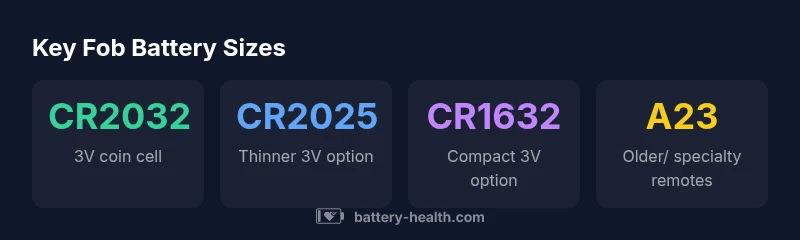
While CR2032 dominates modern key fobs, several common alternatives appear depending on the design and era of the vehicle. CR2032 and CR2025 are both 3V lithium coin cells, with CR2025 being slightly thinner and sometimes used in slimmer fobs. CR1632 is another 3V option found in compact remotes. A23 (12V) remains used in some older or specialty remotes where the internal electronics demand a different form factor. Always check the fob’s manual or the dealer website for a model-specific recommendation. If you cannot locate the exact size, avoid forcing a battery into a tight well; using the wrong size can obstruct contacts or damage the circuitry. Reliable brands and fresh batteries from reputable retailers reduce the risk of operational gaps after replacement.
Checking your model without disassembling
In many situations you can confirm the correct battery size without prying open the fob. Start by noting the make, model, and year of your vehicle, then search the factory service information or owner resources. Some vehicles list battery requirements in the infotainment manual or the online owners portal. If you own a spare fob, you can compare it to the one in question by looking at the back cover design—the layout often hints at the right battery. If uncertainty remains, contact the dealer’s parts department; they can confirm the exact size and may provide a replacement kit that includes the correct battery and a micro screwdriver.
Replacement steps: a safe battery swap
When you’re ready to replace, gather the correct battery, a clean, dry workspace, and a simple tool such as a small flat-head screwdriver or a coin to loosen the cover. Follow these steps:
- Remove the back case by gently prying at a seam. 2) Note battery orientation before removal. 3) Lift out the old cell and dispose of it properly. 4) Insert the new battery with the correct polarity. 5) Reassemble the case and test the fob’s buttons. If the fob does not respond, re-check the orientation and ensure the battery is seated flat against the contacts. After replacement, some vehicles require you to re-sync or re-pair the fob with the car; consult your manual or dealer if needed. Battery Health recommends performing the swap on a dry, cool day to avoid moisture entering the fob.
Orientation matters: plus, minus, and avoiding leaks
Most key fobs are designed so the positive terminal faces up toward the contacts. Misalignment can prevent power from reaching the circuit, cause intermittent button presses, or encourage corrosion over time. Use fresh batteries; avoid old stock that may have degraded seals. Do not reuse old buttons or force a battery when the fit feels tight. If you notice corrosion, a light cleaning with isopropyl alcohol and a cotton swab is sometimes appropriate, but avoid soaking the fob. If you’re worried about leaks, consider replacing the fob’s seal or the whole unit rather than attempting a reload.
Longevity, care, and performance tips
To extend life between replacements, store spare fobs in a cool, dry place away from heat and metal objects that could cause shorts. Regularly inspect the battery well for signs of corrosion or residue. Replace batteries at the first sign of sluggish response, and keep the key fob away from magnets and devices that might interfere with the transmitter. In vehicles with proximity keys, you may notice the battery drains more quickly in extreme temperatures; plan replacements accordingly. Battery Health notes that consistent maintenance reduces surprise failures and keeps your car secure.
Purchasing, pricing, and where to buy
Buy from reputable retailers to avoid counterfeit cells and ensure you get the correct type. Look for packaging that lists the exact battery size (for example, CR2032 or CR2025) and the voltage. Shopping in person lets you compare thickness and fit, while online retailers usually offer compatibility filters by vehicle model. If you’re replacing multiple fobs, buying a small multipack can save time; check the warranty and return policy. Battery Health suggests verifying the battery’s date code and freshness before purchase to maximize performance and lifespan.
Recycling and disposal ethics
Used key fob batteries should be recycled or disposed of according to local regulations. Most 3V lithium coin cells like CR2032 and CR2025 are recyclable through household hazardous waste programs or electronics retailers. Do not throw them in regular trash, as they can leak harmful materials. After removal, wipe the fob’s exterior to remove any battery residue, and store spent cells in a non-metal, sealed container until you can drop them off at a recycling center. Battery Health emphasizes environmental responsibility as part of routine maintenance.
Common key fob battery sizes and notes
| Common Battery Size | Voltage | Typical Use | Notes |
|---|---|---|---|
| CR2032 | 3.0 | Most remotes | Widely used; check polarity |
| CR2025 | 3.0 | Slim remotes | Thinner profile; verify fit |
| CR1632 | 3.0 | Compact remotes | Less common; model dependent |
| A23 | 12.0 | Older/specialty remotes | Different form factor; verify compatibility |
FAQ
Is CR2032 the standard battery for most key fobs?
Yes. CR2032 is the most common size for modern key fobs, but some models may use CR2025 or CR1632. Always verify the exact size from the manual or dealer.
Yes, CR2032 is the standard for most key fobs, but always check your manual to be sure.
How can I tell what battery my key fob uses without opening it?
Check the vehicle manual, visit the manufacturer’s site, or contact the dealership. If you have a spare fob, compare the back covers to identify the size.
Check the manual or dealer site, or compare with a spare fob to identify the size without opening.
Can I reuse old batteries in a key fob?
No. Reusing old batteries can lead to poor performance and leaks. Always use a fresh, correctly sized cell.
No, use a fresh battery each time to ensure reliability.
What should I do if the fob still doesn’t work after replacement?
Double-check battery orientation, confirm full seating in contacts, and re-pair the fob if required by your vehicle. If issues persist, consult the dealer.
Re-check orientation and seating, then re-pair if needed. See the dealer if it still won’t work.
Are there environmental concerns with disposing of key fob batteries?
Yes. Many key fob batteries are recyclable as part of electronics recycling programs. Do not throw them in regular trash.
Yes—recycle through electronics or hazardous waste programs.
What if my fob uses a nonstandard battery size?
Identify the exact model and consult the dealer. Some remotes require a specialty cell or a different approach to replacement.
If it’s nonstandard, check the model with the dealer for the right cell.
“Always verify the exact battery size from the manual or the manufacturer before replacement. Incorrect sizing can prevent the fob from syncing or cause damage.”
Quick Summary
- Identify the correct size from the manual or fob markings.
- CR2032 is the dominant battery size for modern fobs.
- Always align polarity when inserting a new battery.
- Use fresh, reputable batteries to avoid leaks and poor contact.
- Dispose of spent cells through proper recycling streams.