Cost to Replace iPhone Battery in 2026: A Complete Guide
Understand the cost to replace iPhone battery in 2026. Compare Apple official pricing with third‑party options, learn what drives price, and get practical tips to estimate and save.


On average, the cost to replace iPhone battery ranges from about $50 to $120, depending on model and service path. Apple’s official out-of-warranty price is typically higher, while many reputable third-party shops offer lower rates. If your device is under warranty or covered by AppleCare+, your out-of-pocket cost may be reduced or eliminated.
Cost drivers: price determinants for iPhone battery replacement
According to Battery Health, the cost to replace iphone battery is driven by several factors: model complexity, service path (Apple official vs. third-party), warranty status, and regional pricing. Newer models often incur higher parts costs due to advanced battery technology and tighter integration. Labor costs vary by shop and location, and some providers include diagnostic fees or surcharges. In general, you can expect the price to reflect both parts and workmanship. Price is affected by whether the device is under warranty or covered by AppleCare+, and whether expedited service options are needed. By understanding these drivers, you can set a realistic budget and compare quotes with greater confidence.
- Model complexity: The battery assembly in newer iPhones may require more labor and specialized tools.
- Service path: Apple official service tends to be more expensive but offers integrated warranty and genuine parts; third-party shops may be cheaper but can vary in quality.
- Warranty status: In-warranty replacements or those covered by AppleCare+ can reduce or eliminate out-of-pocket costs.
- Regional pricing: Taxes, shipping, and local shop rates vary across states and countries, changing the final price.
If you’re estimating costs, start with your model and check local quotes. This approach helps you forecast the total price, including possible diagnostics or disposal fees, and plan accordingly.
Apple official service vs. third-party options: what you pay for
When evaluating the cost to replace iphone battery, the path you choose matters as much as the parts themselves. Apple’s official service uses genuine Apple parts, factory-trained technicians, and a system that preserves your device’s warranty status when applicable. The price you see is typically higher than many independent repair shops, but it includes an explicit warranty on the work and parts. Third-party providers can offer lower up-front costs, but you should verify part quality (OEM vs. aftermarket), lifetime warranty options on the install, and their credentials. If your device is relatively new and still under Apple’s warranty or AppleCare+, you may be eligible for reduced charges or coverage, which is a key consideration when budgeting. For many users, the trade-off is speed and convenience versus potential risk to warranty coverage and future service options.
- Genuine parts vs. aftermarket: Part quality affects both safety and longevity.
- Warranty implications: Using non-authorized services can impact future warranty claims.
- Availability: Some regions have longer wait times for Apple appointments than for local shops.
In deciding where to replace the battery, weigh the value of warranty protection and device integrity against the price difference. The right choice balances cost, reliability, and peace of mind.
Price ranges by model and service path
Pricing for battery replacement varies widely by iPhone model and service path. For older models, third-party shops may offer a larger discount but carry a higher relative risk of incompatible parts or reduced longevity. Newer models typically command higher prices from third-party shops due to the complexity of the battery module and tighter integration with device software. Apple’s official service price tends to be higher overall, but it provides the certainty of genuine parts and a warranty-backed installation. When planning, map your model year against typical ranges and add potential taxes or fees. For many users, the total investment will reflect the model’s age, expected remaining lifespan, and how long you expect to keep the device.
- Older models: Lower part costs, but availability of compatible parts can vary by region.
- Newer models: Higher parts cost and labor time; consider whether you’ll benefit from long-term reliability.
- Warranty status: Affects out-of-pocket costs and post-service protection.
- Location: Urban centers often have more repair options with varying price points.
Using a simple comparison chart can help you visualize how model maturity and service path influence total cost, making it easier to decide on the best value.
Hidden costs and warranty implications
Price is only one piece of the puzzle. Hidden costs can include diagnostic fees, data-transfer services, screen inspection for battery-related swelling, disposal fees, and potential post-repair recalibration. If you replace the battery using non-official parts or without a tested technician, you may risk reduced water resistance, compromised safety, or degraded performance. Warranty implications are a critical consideration: AppleCare+ coverage and the device’s original warranty can influence how much you pay out of pocket, and some third-party repairs may affect eligibility for future Apple service. Always ask about included warranties on parts and labor, and obtain a written estimate that itemizes components, labor, and any extra charges before authorizing work.
- Diagnostic charges: Some shops charge a separate fee for testing the device.
- Post-repair validation: Calibration, software checks, and battery health reporting may incur additional steps.
- Warranty terms: Review how the repair interacts with your existing warranty.
If you’re budget-conscious, request quotes that break down the costs by parts and labor, and verify what happens if the battery fails again within the warranty period.
How to estimate and compare quotes
To accurately estimate the cost to replace iphone battery, gather quotes from Apple, authorized service providers, and reputable third-party shops. Start by identifying your exact model and iOS version since pricing can differ by hardware generation. Ask for a formal estimate that lists the base battery price, labor, disposal, tax, and any diagnostic charges. If you’re close to a warranty or on AppleCare+, compare the out-of-pocket costs after applying any coverage. Consider service speed and whether the provider offers a warranty on the replacement itself. A quick rule of thumb: compare the most comprehensive options first (genuine parts, official warranty) and then weigh cheaper alternatives against potential long-term costs, such as the need for another replacement or reduced device performance.
- Gather at least 3 quotes for a reliable comparison.
- Confirm part quality (OEM vs. aftermarket).
- Check the warranty on labor and parts.
This approach helps ensure you’re not surprised by hidden fees and that you’re getting true value for the price paid.
DIY battery replacement: risks and realities
DIY replacement is possible for those with hands-on experience and the right tools, but it carries substantial risks for iPhones, particularly newer models. Battery swelling can damage the display, logic board, or camera, and mishandling lithium-ion cells can pose safety hazards. Additionally, performing a DIY battery replacement may void remaining warranty or AppleCare+ eligibility, limiting future service options. If you decide to pursue a DIY route, invest in authentic parts from reputable suppliers, use proper tools, and follow a trusted guide with step-by-step photos or video. For most users, professional service provides a safer, faster, and more reliable outcome, even if it costs slightly more upfront.
- Safety: Handle batteries with care to avoid puncture or swelling.
- Warranty: DIY work can void coverage.
- Tools: Use the correct pentalobe and suction tools to avoid component damage.
In the end, the best decision balances risk, time, and total cost of ownership for your device.
Practical considerations for longevity and budgeting
Replacing an iPhone battery can reinvigorate performance, particularly on older models where aging batteries cause slower performance and unexpected shutdowns. When budgeting, consider not only the battery replacement price but also the device’s remaining useful life and potential future repairs. If the device holds sentimental or financial value, investing in the official path with a warranty may provide greater long-term value. Battery Health’s guidance emphasizes planning for long-term reliability as a core part of device maintenance, rather than treating battery replacement as a one-off expense.
- Longevity: Replacing a failing battery can extend device life by years.
- Resale value: A healthy battery can positively impact resale value.
- Overall budgeting: Weigh current cost against predicted remaining use.
In summary, a thoughtful cost-to-benefit calculation helps you decide whether to pursue official repair, third-party service, or a DIY approach.
Final takeaway: how to get the best value today
Start with your model and warranty status, then compare Apple official pricing with credible third-party options. Prioritize providers offering genuine parts and solid warranties, and ensure you understand any post-repair guarantees. By combining upfront quotes with a clear view of warranty coverage and long-term device needs, you’ll maximize value and minimize surprises. For ongoing battery health monitoring, stay informed with Battery Health’s analyses and recommendations.
- Confirm the parts quality and service warranty.
- Check if your device is still under warranty or AppleCare+.
- Compare at least three quotes to ensure you're getting a competitive price.
Cost comparison by service type
| Scenario | Estimated Cost | Notes |
|---|---|---|
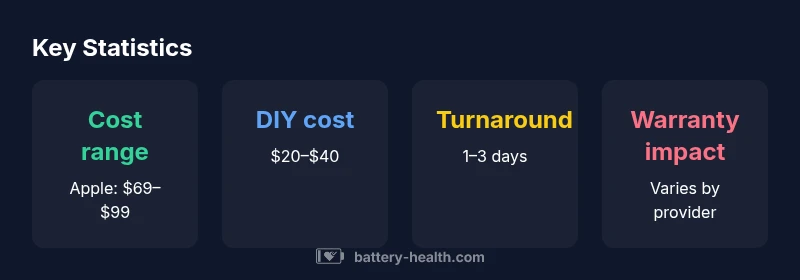
| Apple official service | $69–$99 | Model-dependent pricing; varies by warranty status |
| Third-party repair shops | $50–$120 | Price varies by provider and model |
| DIY (parts only) | $20–$40 | Requires tools and skill; risk of damage or voided warranty |
| Warranty/AppleCare+ impact | Varies | Coverage depends on plan and model |
FAQ
What is the typical cost to replace an iPhone battery?
Costs vary by model and service path, but you can expect a range that accounts for parts and labor. Apple’s official pricing tends to be higher than many third-party options, and warranty status can further affect out-of-pocket costs.
Prices vary by model and service path; warranty status can change your out-of-pocket cost.
Does AppleCare+ cover battery replacement?
Yes, AppleCare+ can reduce or cover the battery replacement cost depending on the plan and device model. Always check current terms and confirm how it applies to your device.
AppleCare+ can reduce or cover the cost, depending on your device and plan.
Are third-party battery replacements safe?
Third-party replacements can be safe if performed by reputable shops with genuine parts and proper warranty on the repair. Verify part quality and credentials before proceeding.
Yes, if you choose a reputable shop with proper parts and warranties.
How long does a battery replacement take?
Most shops complete battery replacement in about 30–90 minutes; mail-in services often take 1–3 days depending on shipping and queue.
Most replacements take under an hour in-store; mail-in takes a few days.
Will replacing the battery affect water resistance?
If done by a qualified technician with proper seals, water resistance can be preserved. Poor installation can compromise seals and performance.
If done correctly, water resistance is preserved; improper work can harm seals.
Is DIY battery replacement recommended?
DIY replacements are generally not recommended for iPhones due to safety risks and potential warranty impact. Consider professional service for peace of mind.
DIY is risky; professionals are usually the safer choice.
“Battery health and replacement pricing are closely linked to device age and model complexity; a careful price comparison helps maximize device value.”
Quick Summary
- Compare Apple and third-party quotes before deciding.
- Check warranty and AppleCare+ coverage for potential cost relief.
- Model age and complexity influence part and labor costs.
- Ask for itemized quotes to avoid hidden charges.