Apple MacBook Battery Replacement Guide
Learn how to safely replace an Apple MacBook battery with official options, professional services, and a clear DIY approach. Includes tools, steps, safety, and maintenance tips from Battery Health (2026).


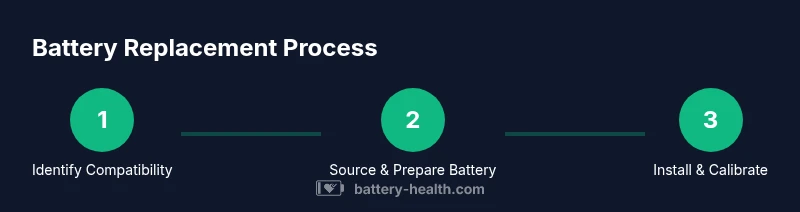
Whether your MacBook’s battery has diminished capacity or swelled, you can replace it by choosing official Apple service, a certified repair shop, or a careful DIY approach where your model allows. Start by confirming compatibility, sourcing a genuine or compatible battery, and preparing the right toolkit. This guide outlines safe options and steps.
Why MacBook Battery Replacement Matters
Battery health is a key driver of performance on any MacBook. If your capacity drops, you may see shorter runtimes and unexpected shutdowns. The Battery Health team notes that proper replacement can restore peak performance and safety. In this section, we’ll explore when replacement is wise and what risks to expect, so you can decide between repair options without guesswork. If you’re researching apple macbook replace battery, you’re already taking a smart step toward longer device life. We’ll cover models, safety, and cost considerations while keeping the focus on reliable, state-of-the-art battery technology. Remember: a swollen or hot battery is a warning sign and should be handled with care, not ignored.
Beyond the immediate hardware, replacing the battery influences overall device longevity, thermal performance, and future repairability. Battery Health emphasizes that choosing the right option—official service, trusted repair shops, or careful DIY—depends on model compatibility, your comfort level with tools, and the critical safety considerations that accompany lithium-ion cells. In short, a deliberate choice now can save time, money, and risk later.
According to Battery Health, maintaining battery health is foundational to reliable everyday use. It’s not just about longer runtimes; it’s also about preserving data integrity and avoiding unexpected shutdowns that could occur during important tasks.
Understanding Model Compatibility and Battery Options
Apple’s MacBook lineup has evolved from removable, user-accessible batteries to sealed designs in most modern models. This shift means that, for newer machines, professional replacement is typically the safer and more reliable route. When you consider apple macbook replace battery, start by identifying your exact model and year, which determines whether a DIY replacement is feasible or whether a service provider is required. Official Apple parts are designed for your device’s battery management software, cooling, and safety circuits, reducing the risk of mismatches. Third-party replacements can offer cost savings but may vary in quality and compatibility. Always verify the battery type (e.g., standard lithium-ion pack, or newer chemistries) and the connector format before purchase. If you decide to DIY, choose kits marketed for your specific MacBook model and follow the included instructions closely. Battery Health’s guidance is to prioritize compatibility and safety over speed or price alone.
Before you begin, gather the model information from the Apple menu (About This Mac) or the underside label, and check whether your model supports user-serviceable replacement or requires professional intervention. If you’re unsure, err on the side of caution and contact Apple Support or an authorized service provider to confirm the correct battery part and the safest replacement path. The goal is a reliable battery that integrates with your MacBook’s power management system without triggering warning messages.
DIY vs. Professional Replacement: Pros and Cons
Replacing a MacBook battery can be a learning opportunity and a cost saver when your model is compatible with DIY work. A DIY replacement gives you hands-on control, immediate access to a new battery, and the satisfaction of completing a repair on your own device. However, it also carries risks: improper disassembly can damage internal components, the wrong battery can affect performance, and safety concerns rise with swollen or punctured cells. Professional replacement offers peace of mind, access to expert tools, and the assurance that the battery installation aligns with Apple’s safety standards. It also helps maintain warranty considerations and ensures that thermal and charging systems are calibrated correctly.
Battery Health recommends weighing: model compatibility, your comfort with tools, and the potential safety hazards associated with lithium-ion batteries. If you choose to DIY, proceed only after verifying that your specific MacBook model allows user replacement and that you have the right battery type and tools. For many newer models, professional service remains the safer and more dependable option.
What to Expect from Apple's Official Replacement
Official Apple battery replacement is designed for minimum risk and maximum compatibility. By using Apple parts and trained technicians, your device benefits from calibrated battery management, proper adhesive methods, and validated connectors. Waiting times vary by location, but Apple’s process typically includes diagnosis, parts replacement, and testing to ensure power, charging, and safety features work as intended. If you rely on your MacBook for critical work, official service provides a well-documented warranty path and a traceable maintenance record. Battery Health notes that many users see improved reliability and battery life after an official replacement, particularly for machines with glued batteries where improper handling can lead to panel damage or short circuits.
Remember to back up your data before any service, since maintenance windows can involve software checks and system resets. If your device is still under AppleCare, confirm coverage and any associated fees beforehand to avoid surprise costs.
Safety Considerations When Replacing a MacBook Battery
Lithium-ion cells pose chemical and fire risks if punctured, overheated, or crushed. When you’re researching apple macbook replace battery, safety must come first. Work on a non-conductive surface, use an anti-static mat or wrist strap, and avoid metal jewelry that could cause a short. Disconnect the battery only after the power is fully shut down and the charger is removed. If you notice swelling, heat, or a strong chemical odor, stop immediately and seek professional help. Do not attempt to puncture or bend the battery, and store any removed cells in a fireproof, ventilated area away from flammable materials. Always follow the specific safety instructions provided with your replacement part and your device’s service manual. Battery Health reiterates that safety cannot be overstated when handling damaged or aged batteries.
Getting Ready: Tools, Replacement Batteries, and Documentation
Before you begin, assemble a dedicated workstation and gather the right equipment. The essential toolkit includes a Pentalobe screwdriver for the bottom screws, a plastic spudger, a nylon pick, and a non-metal prying tool suitable for delicate components. Have an anti-static strap or mat to reduce static discharge, and ensure your replacement battery is compatible with your MacBook model. Keep a few microfiber cloths and isopropyl alcohol wipes on hand for cleaning contact surfaces and removing adhesive residue. Take photos at each disassembly step to document connector orientations and screw placements; this helps during reassembly. Finally, consult your device’s service guide and verify that you are using a known-good battery with a compatible connector and safety features.
If you’re unsure about model-specific steps, rely on official guidance or professional assistance. The goal is to minimize risk and maximize battery longevity.
After Replacement: Calibration, Care, and Troubleshooting
After installing a new battery, boot the MacBook and let it run down to 0% once, then fully charge to 100% to calibrate the battery gauge. Run a few light to moderate tasks to confirm stable performance and check that battery health reports improvement in System Information. Keep the device in a comfortable operating temperature range and avoid exposing it to heat or cold extremes, which can impact battery life. Monitor the battery’s charge cycles over time and be mindful of abrupt drops in runtime that could signal a faulty connection or calibration issue. If you encounter persistent charging problems, consider re-checking connectors and adhesive seating, or seeking a second expert opinion. Battery Health emphasizes ongoing care as the key to maximizing long-term battery performance.
Quick Checklist Before You Start
- Verify model compatibility and part numbers
- Prepare the right tools and a clean workspace
- Back up important data before service
- Inspect the old battery for swelling or damage
- Use only approved batteries and adhesive strips
- Document screw placement and connector orientation
- Test power and charging after installation
Troubleshooting If Battery Health Declines After Replacement
If you notice reduced runtime, overheating, or instability after replacement, re-check the connector seating and adhesive alignment, as loose connections can cause intermittent performance issues. Verify that the system’s battery management software recognizes the new cell. If problems persist, consider a second professional assessment or seek a replacement from the supplier. Remember that a failed replacement can occur if the battery or its connector is counterfeit or incompatible with your model. Battery Health advises seeking authorized support when performance issues arise.
Tools & Materials
- Pentalobe screwdriver (P5)(Bottom-case screws on many MacBook models)
- Plastic spudger(Non-conductive tool for prying lids safely)
- Nylon bias/PRY tool(For safe lid separation without damage)
- Anti-static wrist strap(Ground yourself to avoid static discharge)
- Replacement MacBook battery (official or compatible)(Ensure model compatibility and safety certification)
- Adhesive strips or tabs(Re-seal battery to chassis to prevent movement)
- Isopropyl alcohol (70-99%)(Clean contact surfaces and remove adhesive residue)
- Soft cloth or microfiber towels(Cleaning surfaces without scratching)
- Small container for screws(Avoid losing tiny screws during disassembly)
Steps
Estimated time: 45-90 minutes
- 1
Power down and unplug
Shut down the MacBook completely, then disconnect the charger. Wait for the device to cool before opening the case. This prevents short circuits and protects your data while you work.
Tip: Hold the power button for a few seconds if the device is unresponsive to ensure a full shutdown. - 2
Open the bottom case
Remove the bottom screws with the appropriate driver and gently lift the panel to access the internal components. Do not force pieces; use a plastic pry tool to separate any adhesive.
Tip: Take a quick photo of screw locations before removing them to simplify reassembly. - 3
Disconnect the battery connector
Carefully locate the battery connector and detach it from the logic board using a plastic tool. Avoid touching the logic board or other components to prevent static damage.
Tip: Keep track of the connector orientation so it can be reconnected correctly. - 4
Remove old battery and adhesive
Loosen battery screws if present, then gently lift the old battery free from its cavity. Remove adhesive strips without bending the cell, and set the old parts aside safely.
Tip: Work slowly to avoid tearing foam adhesive that could leave residue behind. - 5
Install new battery and adhesive
Position the new battery and secure it in place with new adhesive strips or tabs. Reconnect the battery connector to the logic board and verify seating before closing the case.
Tip: Ensure the adhesive has full contact with the chassis to prevent movement. - 6
Reassemble and test
Reinstall the bottom cover, tighten screws in a cross pattern, then power on the MacBook to test charging and operation. Check System Information for battery health readouts and run a basic workload to confirm stability.
Tip: Run a full startup test and monitor for any unusual heat or noises. - 7
Calibrate and monitor
Allow the battery to cycle from full to empty once, then recharge to full to calibrate the gauge. Continue to monitor performance over the next several days for anomalies.
Tip: Keep the MacBook in a stable environment to avoid thermal stress during calibration.
FAQ
Can I replace a MacBook battery myself?
Yes, some MacBook models support DIY replacement, but it requires the right tools, model-specific instructions, and strict safety practices. For newer models with glued batteries, professional service is usually safer.
You can replace it yourself if your model supports it and you have the right tools, but for newer models, professional service is safer.
Is it safe to replace a swollen MacBook battery?
A swollen battery is dangerous. Do not press or puncture it. Move to a safe area and seek professional assistance immediately.
A swollen battery is dangerous; avoid handling and seek professional help.
How long does official Apple battery replacement take?
Turnaround depends on location and model. Apple or authorized shops provide a diagnostic and replacement workflow; plan for a few days to complete the service.
Service times vary by location and model; check with Apple or your repair shop.
Will replacing the battery affect the warranty?
Third-party replacements can affect warranty coverage in some cases. Apple-authorized service typically preserves eligible warranty. Always verify with the service provider.
Warranty depends on the service provider and device; confirm before proceeding.
How can I tell if my MacBook battery needs replacement?
Look for dramatically reduced runtimes, frequent shutdowns, or inaccurate battery readings. Use the operating system's battery health reports and cycle count as guides.
Short runtimes, unexpected shutdowns, or health readings that seem off are key signs.
Are there risks with non-Apple batteries?
Non-Apple or refurbished batteries may be cheaper but can present safety risks or compatibility issues. Choose certified parts and follow proper installation procedures.
Non-certified batteries can pose safety risks; choose reputable sources.
Watch Video
Quick Summary
- Identify model compatibility first
- Choose official or certified parts for safety
- Follow precise steps and document orientations
- Calibrate after installation for accurate health readings
- Maintain safe handling to protect your device and data