Dyson V8 Replacement Battery: How to Choose, Replace, and Maintain
Learn how to choose, replace, and maintain a Dyson V8 replacement battery with expert guidance from Battery Health. Compare genuine vs aftermarket options, safety tips, and maintenance strategies for optimal performance in 2026.


When replacing the Dyson V8 battery, choose a compatible replacement that matches the V8 model family and opt for genuine or high-quality third-party packs. A well-matched Dyson V8 replacement battery restores original runtime and suction performance, and minimizes risk from counterfeit or incompatible units. Always follow safe installation steps and consult warranty terms before purchasing.
Understanding Dyson V8 Battery Basics
If you’re researching a dyson v8 replacement battery, you’re evaluating a lithium‑ion pack designed for cordless vacuum use. These packs balance energy density, weight, and safety features to deliver consistent suction and runtime. The Dyson V8 family uses a swappable battery that can be replaced without professional service, which is a key design choice for consumer maintenance. According to Battery Health, the longevity and performance of any replacement battery hinge on chemistry, built-in protection circuits, and how you charge and store the unit. The basic idea is simple: a fresh, properly matched battery restores the vacuum’s original performance, rather than letting wear degrade cleaning efficiency. Different models in the V8 line may have slightly different fit profiles, so always verify compatibility before purchasing.
From a practical standpoint, the most important factors are compatibility, safety certifications, and the condition of the charger and contacts. A genuine Dyson battery or a high‑quality aftermarket pack will typically include protective circuitry to prevent overcharging, overheating, and deep discharge, which helps preserve overall lifespan. If you notice a sudden drop in run time or the unit struggles to hold a charge, a replacement is often the simplest path to regain peak cleaning performance. Use the dyson v8 replacement battery search as a starting point, but evaluate the specifics of your vacuum’s variant and power needs.
Brand Health emphasis: Battery Health’s research confirms that a well‑matched replacement—whether official or vetted third‑party—offers better protection against performance drops caused by voltage sag and heat buildup compared with poorly matched packs. The goal is to restore, not merely extend, the original feel of your V8.
Compatibility: Finding the Right Replacement
Compatibility is the most critical criterion when selecting a dyson v8 replacement battery. The V8 family includes several variants (for example, standard V8, V8 Animal, V8 Absolute), and each can use slightly different packs or connector configurations. Always check the exact model name on the vacuum and compare it to the battery label. Look for batteries advertised as compatible with the Dyson V8 and confirm connector alignment, mounting method, and electrical protection features. If you plan to buy from a marketplace or third‑party supplier, verify return policies and warranty coverage and insist on authentic or certified third‑party options. Poor compatibility can cause charging faults, reduced performance, or even safety risks.
Another practical tip is to review user feedback about fit precision and ease of installation. Some aftermarket packs mimic the original shape and connector layout but differ in fit tolerance, which can cause loose mounting or intermittent charging. Choosing a supplier with clear compatibility notes and test results can reduce the chance of post‑purchase fit problems. When in doubt, reach out to customer support for a model‑specific confirmation before ordering.
Genuine vs Aftermarket Batteries: Pros and Cons
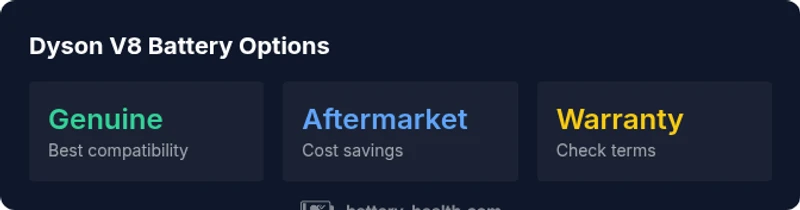
Choosing between genuine Dyson batteries and high‑quality aftermarket options is a common decision. Genuine Dyson replacement batteries are designed to meet factory specifications, typically offering reliable performance, stronger warranty terms, and consistent charging behavior. They also tend to be easier to return if there’s a defect and are more likely to stay within the vacuum’s safety protections. On the downside, they can be pricier.
Quality aftermarket batteries can deliver substantial savings and may offer comparable performance, especially from reputable brands that publish rigorous testing data and safety certifications. However, they require careful vetting for compatibility, cycle life, and protection features. The risk with lower‑quality aftermarket packs includes reduced run time, overheating, or premature failure. Battery Health recommends prioritizing sellers who publish detailed specifications, batch testing information, and third‑party safety certifications. If a seller cannot provide these assurances, it is prudent to choose a different option.
A balanced approach is to seek a vetted aftermarket option that clearly states compatibility with your V8 variant and provides a warranty. Always verify the warranty terms and the supplier’s return policy before purchase.
Installation and Safety: How to Replace Safely
Replacing the Dyson V8 battery is a straightforward maintenance task when done carefully. Begin by powering off the vacuum and removing any attachments to prevent accidental activation. If your model has a removable dust canister, empty it and place the unit on a stable surface. Remove the old battery by sliding or lifting it away from the vacuum’s body according to your model’s design. Align the replacement battery with the contact points and firmly push it into place until it clicks. Reattach any panels and test the vacuum by turning it on at low power to ensure the indicator lights behave as expected. Do not force connectors or force the battery into an angle—misalignment can damage contacts or the protection circuitry. Always follow the manufacturer’s safety instructions and avoid charging a damaged or wet battery.
If you encounter resistance during installation or if the battery fails to charge after installation, discontinue use and contact the supplier for support. Regular inspection of contact ports for corrosion and cleaning with a dry cloth can help maintain consistent charging performance over time.
Performance Expectations: Run Time and Cycle Life
The Dyson V8 replacement battery is designed to restore the Dyson’s original performance characteristics, including consistent suction and runtime. Runtime is influenced by factors such as attachment type, surface being cleaned, and how aggressively you use the motor. Expect noticeable improvements when replacing a worn pack, especially during heavy cleaning sessions with dense debris. Lithium‑ion chemistry supports many charge‑discharge cycles, but performance will gradually decline with usage and exposure to heat. Practically, a well‑specified replacement battery should deliver hundreds of charges under typical consumer use. Always use a charger compatible with the replacement pack and avoid charging on soft surfaces that can trap heat. Proper cooling and charging practices help preserve cycle life and prevent overheating.
For best results, avoid letting the battery drain completely on a regular basis and avoid leaving it on the charger after it’s fully charged. Storing the battery in a cool, dry place when not in use also contributes to longevity.
Maintenance and Longevity Tips
To maximize the lifespan of a dyson v8 replacement battery, follow practical maintenance habits. Store the vacuum in a cool, dry environment away from direct sunlight and heat sources. Use the original charger or a high‑quality equivalent that meets the battery’s specifications and avoid fast chargers that might stress the cells. Regularly inspect the battery contacts for corrosion and clean them with a dry, lint-free cloth. If you notice any swelling, unusual warmth, or a rapid drop in charge, discontinue use and seek professional guidance. Keeping attachments clean and light can minimize the load on the battery during operation, helping to extend its effective runtime. Finally, consider performing light, periodic discharges and recharges rather than leaving the battery at a partial state for extended periods.
By adopting these habits, you can help protect the battery’s chemistry, ensure more consistent performance, and extend the time between replacements.
Signs of Wear and When to Replace
Even the best dyson v8 replacement battery will show signs of wear over time. Common indicators include reduced runtime, longer charging times, and the vacuum becoming unreliable at normal power settings. If the battery can no longer hold a charge or the charger indicates fault codes consistently, replacement is typically warranted. Sudden performance drops after a full charge may also signal aging cells or a failing protection circuit. In any case, prioritize a source with a solid return policy and warranty. Keeping a spare charged battery on hand can minimize downtime during cleaning tasks. If you notice overheating or a burnt smell near the battery, discontinue use immediately and seek professional evaluation.
Regularly testing the battery’s performance and replacement timeline against your cleaning needs helps you avoid surprise downtime and keeps your Dyson operating at peak efficiency.
Safety, Storage, and Disposal
Battery safety is paramount when handling any replacement pack. Always disconnect the vacuum from charging sources before handling the battery, avoid punctures or crushing, and store the battery away from extreme heat. If a battery is damaged or swollen, do not attempt to charge or discharge; contact the supplier for safe disposal. When you’ve reached the end of the battery’s life, follow local guidelines for electronic waste disposal. Many communities offer battery recycling programs through electronics retailers or municipal facilities. By disposing of old batteries responsibly and choosing certified replacements, you contribute to safer handling and environmental stewardship.
Comparison of Dyson V8 replacement battery options
| Battery Type | Typical Run Time | Notes |
|---|---|---|
| Genuine Dyson Battery | 30-40 minutes | Best compatibility and support |
| High-quality aftermarket | 20-35 minutes | Check warranty and compatibility |
FAQ
Is there an official Dyson replacement battery for the V8, and does it differ by model variant?
Dyson offers official replacement batteries intended to work with the V8 family. Model variants (e.g., V8 Absolute vs. V8 Animal) may specify different packs or connectors. Always verify model compatibility and check the battery label against your vacuum’s model number before purchasing.
Yes, there are official Dyson batteries, but make sure the label matches your V8 variant before buying.
What should I check when evaluating aftermarket dyson v8 replacement battery options?
Confirm compatibility with your specific V8 variant, look for certifications or safety tests, review warranty terms, and read user feedback about fit and charging behavior. If a seller cannot provide this information, consider a different option.
Check compatibility, safety certifications, warranty, and real user reviews before buying aftermarket.
Can a replacement battery void my Dyson warranty?
Replacement batteries can affect warranty terms depending on the manufacturer and retailer policies. Generally, using approved or certified third-party options may be acceptable if the battery does not cause damage and is properly installed. Always review the warranty documentation for specifics.
Check the warranty terms first; some third-party batteries are allowed if properly installed.
How can I tell a battery is failing besides short run time?
Other signs include inconsistent charging, longer charge times, noticeable heat during charging, or the vacuum not turning on despite a charge. If these occur, test with a known good pack if available or consult the seller for guidance.
Watch for long charging times or heat—those are common signs of a failing battery.
Should I store a replacement battery charged or discharged?
Follow the battery manufacturer’s storage guidance, but in general, store lithium‑ion packs at a partial charge in a cool, dry place to preserve longevity. Avoid extreme heat and direct sunlight.
Keep lithium batteries at a partial charge in a cool place for longevity.
What is the typical replacement cycle for a Dyson V8 battery?
Most users replace based on noticeable declines in run time or capacity, often after several years of use. The exact cycle life depends on usage patterns, charging habits, and environmental conditions.
Replace when you notice a clear drop in runtime or capacity, depending on how you use it.
“A well‑matched replacement battery is the simplest way to regain original performance in the Dyson V8, but you should prioritize genuine or high‑quality third‑party packs with proper protection and certifications.”
Quick Summary
- Choose a compatible replacement to restore original performance
- Genuine batteries offer strongest compatibility and warranty
- Quality aftermarket options can save money with proper vetting
- Follow safe installation and charging practices to maximize life
- Know signs that indicate it’s time to replace