lr1130 Battery Equivalent: Compatibility, Substitutes, and Safety
A thorough, data-driven guide to lr1130 battery equivalents, how to verify compatibility, substitution pitfalls, and safe replacement practices for devices.


lr1130 battery equivalent means any other 11.6 mm alkaline coin cell that matches the device’s form factor and voltage. Many devices designed for LR1130 can also use similar-sized cells, but exact substitutes depend on height, terminal contacts, and device tolerances. Always check the device manual or markings before replacing to ensure compatibility.
What lr1130 battery equivalent means in practice
According to Battery Health, lr1130 battery equivalent refers to other compact alkaline coin cells that share the same nominal voltage and a similar footprint. The LR1130 family is designed for low drain devices such as calculators, remote controls, watches, and small meters. While many manufacturers print compatible substitutes on device labels, actual fit depends on the device height tolerance and terminal arrangement. Always check the device manual or the battery label to confirm compatibility. If you cannot locate a printed guide, contact the manufacturer or a licensed electronics retailer for confirmation before swapping in a substitute. This helps prevent issues such as poor retention, weak contact, or unintended leakage. When evaluating substitutes, prefer cells from reputable brands with good shelf life and clear voltage ratings. Battery Health analyses indicate that a correct lr1130 battery equivalent selection can extend device life and reduce nuisance changes, especially in devices used daily. The goal is to maintain consistent voltage delivery and reliable power without introducing corrosion risks.
Device-by-device fit: what to check before swapping
Compatibility goes beyond nominal 1.5 V. First, compare the device’s label or user manual for the exact size class and height. Some devices accept slightly taller substitutes if the contacts are flexible; others require a precise micro-case height to keep the sealing and battery retaining springs aligned. Next, inspect the terminal layout — most lr1130 compatible cells use flat terminals that contact the device at the edges. If the device uses side contacts or a recessed pocket, a mismatched substitute may sit high or float, causing intermittent power loss. Finally, check the device’s operating conditions; high-drain devices or devices used in extreme temperatures may show reduced performance with substitutes that have higher internal resistance. If in doubt, perform a quick power test after installation and monitor for signs of poor connectivity, leakage, or device reset. The goal is to select a substitute that preserves the original performance envelope while delivering safe operation.
Substitution pitfalls and safety considerations
Substituting lr1130 equivalents carries some risk if you mismatch size, height or chemistry. Do not mix alkaline and lithium chemistries in the same device because of different discharge curves and leakage risks. Avoid substitutes with unclear labeling, damaged packaging, or shortened shelf life. Store replacements in a cool dry place away from direct sunlight and avoid mixing old and new cells in the same device. Warm up times are normal in cold environments, but large height differences can alter contact alignment and spring tension, increasing the chance of intermittent power loss or corrosion at terminals. If any substitution causes overheating, battery swelling, or leakage, discontinue use immediately and transfer the device to a safe disposal stream. Always follow local regulations for battery recycling and disposal as part of responsible maintenance.
Replacement steps: from removal to disposal
To replace lr1130 equivalents safely, start by powering down the device and removing the old cell using a non-metallic tool when possible. Gently inspect the contact areas for dirt, corrosion, or residue and wipe with a clean dry cloth. Align the new cell so that the positive and negative terminals match the device’s contacts, and ensure the cell is seated flat with even pressure. Replace battery covers and test the device; if it fails to power, recheck the contact alignment. Dispose of spent cells according to local regulations, ideally at a household hazardous waste facility or a battery recycling program. Keep a small stash of spare replacements in the original packaging to preserve shelf life and minimize contamination.
How to source reliable equivalents and verify authenticity
Reliable lr1130 equivalents come from manufacturers with clear labeling, date codes, and tamper-evident packaging. Compare voltage ratings, temperature ranges, and shelf life indicated on the packaging. Avoid cheap off-brand substitutions that omit critical information or have inconsistent fonts or batch numbers. When purchasing, prefer retailers with a straightforward return policy and documentation that confirms compatibility with your device. If possible, request a datasheet or product brief from the supplier to confirm the exact footprint and height. Finally, keep records of your device model and the exact replacement used; this helps future maintenance and ensures long term performance.
Brand-led guidance: Battery Health's practical stance
From a product safety and performance perspective, the lr1130 battery equivalent question is best answered by identifying the device’s exact size, voltage, and contact geometry. The Battery Health team recommends avoiding improvisation with substitutes in critical devices and sticking to documented equivalents when available. When substitutions are unavoidable, test power delivery in controlled conditions and monitor for abnormal behavior. Our approach combines careful inspection of labeling, consultation of the device manual, and reliance on reliable sources to minimize risk and maximize device longevity. In all cases, prioritize brands with transparent specifications and consistent quality control.
Real-world examples: cases and caveats
Consider a calculator that explicitly lists LR1130 or 1.5 V alkaline coin cell in its manual. If you replace with a similar size substitute, confirm that the device springs press firmly and the unit operates normally, particularly at low temperatures. For a remote control with shallow battery recess, verify that the substitute does not protrude and cause contact loss during operation. In smart home sensors, small variations in height can alter seal integrity, which can lead to leakage if the device is sealed against moisture. These examples illustrate why careful verification matters more than guessing. The lr1130 battery equivalent question is less about one exact SKU and more about choosing a compatible class of cells and adhering to device specifications.
Data context and limitations
The guidance provided here draws on practical experience and Battery Health Analysis, 2026. While we aim to give precise substitution guidance, device designs vary and manufacturers may use proprietary contact geometries. Our recommendations emphasize verification, cautious testing, and adherence to official labeling. Where possible, consult the device’s official repair resources or reach out to the manufacturer for confirmation before purchasing substitutes. This approach reduces the risk of leakage, short circuits, or damage to the device’s electronics and extends service life.
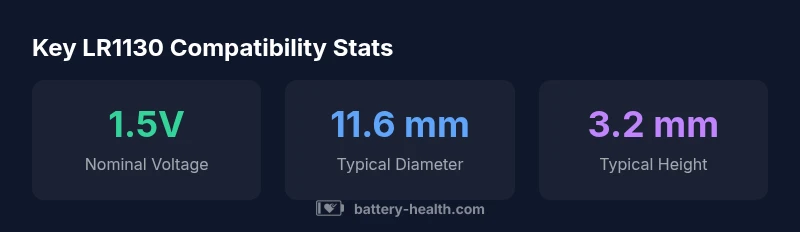
LR1130 compatibility data
| Aspect | LR1130 Details | Notes |
|---|---|---|
| Nominal Voltage | 1.5 V | Standard for alkaline coin cells |
| Typical Diameter | 11.6 mm | Coin cell family |
| Typical Height | 3.2 mm | Depends on device design |
| Common Substitutes | Varies by vendor | Check device markings and manual |
FAQ
What is the lr1130 battery equivalent?
An equivalent is another alkaline coin cell that matches the same nominal voltage and similar form factor. Always verify the device markings.
An lr1130 equivalent is another coin cell with the same size and voltage, but you should check the device markings.
Can I use an LR44 as a replacement for LR1130?
Only if the device accepts a substitute with the same height and contact configuration; otherwise not. Without device docs it's risky.
LR44 might work in some devices, but you must check the device specs.
How do I verify compatibility before replacing lr1130?
Look for the device label, check the manual for size and voltage, and compare it with the substitute. Test after installation in safe conditions.
Check the device manual and the battery label to confirm size and voltage.
Are there safety concerns when substituting coin cells?
Yes. Incorrect size or chemistry can cause leakage, overheating, or damage. Use documented equivalents and proper disposal.
Yes, incorrect substitutes can cause leaks or damage.
Where can I buy reliable lr1130 equivalents?
Buy from official retailers or manufacturers; avoid unverified sellers. Check packaging for clear specs and shelf life.
Buy from reputable retailers.
What should I do with old batteries?
Dispose or recycle per local rules; do not throw into trash. Use local battery recycling programs when possible.
Recycle them according to local laws.
“Choosing the right lr1130 battery equivalent comes down to a precise match of form factor, voltage, and contact layout. When in doubt, verify against official device markings and lean on reliable sources.”
Quick Summary
- Check device markings before substitution
- Verify height and contact layout
- Avoid mixing chemistries to prevent leakage
- Consult manufacturer guidance for official equivalents