Replace a Car Battery: Step-by-Step Guide for 2026
Learn how to replace a car battery safely with a practical, step-by-step guide. Covering battery types, tools, safety, installation, testing, disposal, and tips to extend battery life in 2026.


You will learn how to replace a car battery safely, including choosing the right battery type, prepping the vehicle, disconnecting and reconnecting terminals, and testing the system. This guide also covers safety gear, when to call a pro, and how to dispose of the old battery properly. We’ll provide a step-by-step process, a materials checklist, troubleshooting tips, and time estimates so you can plan the replacement with confidence.
Why replacing a car battery matters
Replacing a car battery is a practical maintenance task that keeps your vehicle reliable and ready to start when you need it. A healthy battery supports essential systems, from ignition to the alternator, and helps avoid unexpected breakdowns. According to Battery Health, battery health directly influences starting reliability and electrical system performance. When a battery nears the end of its life, you might notice slow engine cranks, dim or flickering lights, or a dashboard battery indicator. Addressing these signs promptly reduces the risk of getting stranded and protects other components from unnecessary strain. This guide walks you through how to replace a car battery safely and efficiently, including selecting the right replacement, planning the swap, performing the disconnect/reconnect sequence, testing the system, and disposing of the old unit responsibly. The goal is a clear, repeatable process you can rely on in 2026 and beyond.
Assessing battery types and compatibility
Most gasoline and diesel vehicles use flooded lead-acid batteries, while modern cars may use AGM (absorbed glass mat) variants. Some hybrids or high-performance models rely on different chemistries. When choosing a replacement, check your owner’s manual or the old battery label for the correct group size, as well as cold-cranking amps (CCA) and reserve capacity (RC). A correct fit ensures the battery sits securely, maintains proper electrical contact, and avoids terminal overload. If you’re unsure, consult a parts professional, but you’ll usually find the correct specs on the existing battery case or in the vehicle’s documentation. Battery Health analysis shows that mis-sizing a battery can lead to charging inefficiency and faster wear.
Safety precautions and planning
Working around car batteries requires respect for safety. Batteries contain acids and produce flammable hydrogen gas; never smoke nearby and ensure good ventilation. Wear protective gloves and safety glasses, keep tools insulated, and avoid metal jewelry that could accidentally bridge terminals. Plan the swap when the engine is cool and the vehicle is in a stable, non-slippery location. If you feel uncertain at any step, pause and seek help. Proper safety planning reduces the risk of electrical shock, burns, or accidental short circuits.
Tools and materials you’ll need
Before you start, gather the essential tools and a compatible replacement battery. Having everything at hand speeds up the process and reduces the chance of leaving parts loose in the engine bay. You’ll typically need a socket set, wrenches (often 10mm or 13mm), insulated gloves, safety glasses, a clean rag, a terminal brush, and battery grease or anti-corrosion compound. If your vehicle uses AGM or a different chemistry, verify the exact battery type and group size. A voltmeter can help verify the system after installation, though many cars only require basic startup checks.
Step-by-step removal (overview)
Removing the old battery is a careful, methodical process. Start by turning off the ignition and removing the keys to prevent electrical contact. Disconnect the negative (black) terminal first, followed by the positive (red) terminal. Remove the hold-down clamp or bracket, then lift the old battery straight upward with a firm grip. Inspect the battery tray for corrosion and clean as needed. This overview keeps you aligned with best practices before moving to the installation steps.
Step-by-step installation and testing (overview)
Install the new battery with the terminal layout oriented the same way as the old one. Connect the positive terminal first, then the negative, and snug all clamps without over-tightening. Reinstall the hold-down bracket, ensure the battery sits firmly, and reconnect any accessories you removed. Start the engine and check that all electrical systems function correctly (lights, radio, sensors). If your vehicle has a dedicated battery management system, you may need to follow manufacturer prompts. A proper test confirms the swap was successful and ready for use.
Disposal and recycling considerations
Old batteries contain hazardous materials and must be recycled properly. Do not throw a used battery in the trash. Many auto parts stores and recycling centers accept old batteries for safe disposal. When transporting the old unit, place it upright to prevent leaks and avoid tipping. By recycling, you help prevent environmental contamination and recover valuable materials for new batteries.
Troubleshooting and common issues
If the engine cranks slowly, check for terminal tightness and corrosion on the connectors. A battery that won’t hold a charge may indicate an old unit or an alternator issue. Ensure clamps are clean and making solid contact, and verify the battery’s group size and compatibility. If the vehicle still has electrical problems after replacement, consult a professional to diagnose the charging system. Battery Health notes that careful inspection of cable ends and connectors often resolves most issues without additional parts.
Maintenance tips to extend battery life
Regularly inspect battery terminals for corrosion and tightness, clean as needed, and apply anti-corrosion grease to reduce future buildup. Keep the battery case clean and dry, and park in shaded or ventilated areas to reduce heat exposure. If you frequently drain the battery through short trips, consider a battery maintainer or a periodic long drive to recharge. By following these practices, you can maximize the life of your new battery and avoid premature replacements.
Tools & Materials
- New battery matching vehicle group size(Check owner manual or old battery label for the correct group size and CCA/RC specs.)
- Socket set (metric and SAE)(Include a 10mm/13mm wrench for terminals and clamps.)
- Insulated gloves(Protect hands from acids and sharp edges.)
- Safety glasses(Eye protection in case of splashes or sparks.)
- Rags or paper towels(Clean battery terminals and tray as needed.)
- Terminal brush or anti-corrosion brush(Useful for cleaning corrosion from terminals.)
- Battery grease or anti-corrosion compound(Helps prevent future corrosion on terminals.)
- Wire brush or cleaning brush(For terminal cleaning and tray surface.)
- Multimeter or voltmeter (optional)(Can verify system voltage before and after replacement.)
- Gloves and tray protector (optional)(Protect surfaces from heat and spills.)
Steps
Estimated time: 60-90 minutes
- 1
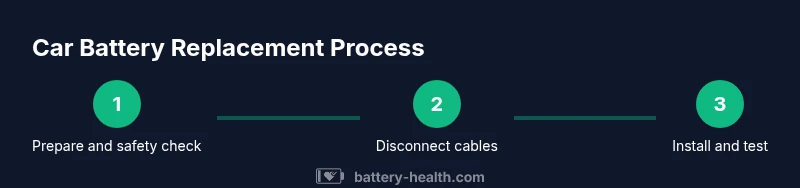
Prepare and safety check
Power down the vehicle, remove the keys, and ensure you’re wearing PPE. Clear the work area and open the hood to access the battery. If you smell gas or see signs of damage, stop and seek professional help.
Tip: Keep a fire extinguisher nearby and avoid metal jewelry near the battery. - 2
Locate battery and terminals
Identify the battery’s position, the negative (black) attached cable, and the positive (red) cable. Note any ancillary connections that may need relocation during the swap. Take a photo for reference if needed.
Tip: Verify the old battery model to ensure the replacement has the same terminal layout. - 3
Disconnect negative terminal
Loosen the negative terminal clamp slowly and lift it away from the battery post. Do not touch the wrench to any other metal surface while the terminal is exposed. This minimizes the risk of short circuits.
Tip: If the terminal is corroded, use a brush to clean before removal. - 4
Disconnect positive terminal
Repeat the process with the positive terminal after the negative is removed. Keep the tools insulated and away from any grounded metal parts. This step isolates the battery from the car’s electrical system.
Tip: Do not yank; apply steady pressure to avoid damaging posts. - 5
Remove hold-down and lift old battery
Remove the hold-down bracket or clamp securing the battery. Lift the old battery straight up using a firm grip, avoiding any tilting that could spill acid. Place it on a non-conductive surface.
Tip: If the battery is heavy, ask for a second person to assist. - 6
Install new battery and connect terminals
Place the new battery in the tray with the terminals oriented correctly. Connect the positive terminal first, then the negative, and snug clamps without over-tightening. Reinstall the hold-down and ensure the battery sits securely.
Tip: Do not overtighten; over-tightening can damage the terminals. - 7
Test and verify system
Start the engine to confirm a clean ignition and check all electrical components for proper function. If available, verify voltage with a multimeter (12.6V+ when fully charged)."
Tip: If the engine misfires or lights stay on, recheck connections and battery type compatibility. - 8
Clean up and dispose of old battery
Wipe any spills, close the hood, and dispose of the old battery at a designated recycling center or store to ensure safe handling of hazardous materials.
Tip: Transport the old battery upright in a non-conductive container.
FAQ
Do I need to disconnect the negative terminal first when replacing a car battery?
Yes. Disconnecting the negative terminal first minimizes the risk of short circuits when handling the battery. This is a standard safety practice for most vehicles.
Yes, always disconnect the negative terminal first to minimize the risk of short circuits.
Can I replace a car battery myself, or should I hire a pro?
Many car owners can replace a battery themselves with basic tools and safety precautions. If your vehicle uses special battery technology or you feel unsure, seeking professional help is wise.
You can usually replace it yourself with the right tools, but consider a pro if you’re unsure.
What size battery should I buy for my car?
Check your owner’s manual or the label on the old battery for the correct group size and electrical specs, including CCA and RC. Using the wrong size can cause fitment or charging issues.
Look up your car’s group size and CCA requirements in the manual or on the old battery.
How long does replacement take?
On average, a straightforward battery swap takes about 30 to 90 minutes, depending on vehicle design and any ancillary wiring or accessories.
Most replacements take about an hour, give or take.
Is there a risk of acid leaks or explosion?
Batteries can emit flammable gases and contain acid. Work in a ventilated area, avoid sparks, and handle with care to reduce the risk of leaks or ignition.
Yes, there is a risk if mishandled; ventilate and avoid sparks.
Should I reset electronics after replacement?
Some cars require reinitialization of certain modules after a battery swap. Start the engine and drive normally; consult your owner’s manual if you notice electronics behaving oddly.
In many cars you just start the engine and drive; some may need a reset by a professional.
Watch Video
Quick Summary
- Identify the correct battery size before replacement.
- Disconnect negative terminal first, then positive.
- Install new battery with positive terminal first, then negative.
- Test the system and ensure electrical components function.
- Dispose of old batteries at approved recycling locations.