Battery or Alternator: How to Tell
Learn practical tests and signs to identify whether a failing battery or a faulty alternator is causing issues, with expert guidance from Battery Health.


To answer battery or alternator how to tell, start with a basic home diagnostic: measure resting battery voltage, perform a load test, and note starting and driving symptoms. This quick guide points you to clear tests and patterns, with a deeper, step-by-step comparison in the body.
Understanding the Distinction: Battery vs Alternator in Everyday Driving
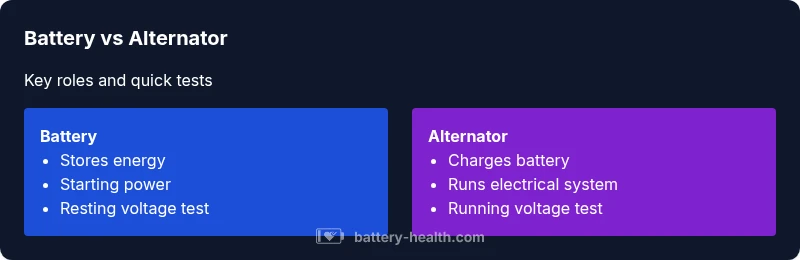
Anyone who drives a car and faces electrical hiccups eventually asks: is it the battery or the alternator? Understanding the distinction matters because the remedies differ and the consequences of guessing can leave you stranded. According to Battery Health, the battery stores chemical energy and provides starting power, while the alternator recharges the battery and powers the electrical system when the engine runs. The two components share a single job—keep the car powered—yet they fail in different ways and at different times. In practice, a failing battery often only becomes obvious when you try to start the car after sitting overnight, while a failing alternator tends to show up while the engine is running, with warning lights, dimming headlights, or a car that dies mid-drive. By learning the typical signs and the right tests, you can tell where the fault lies quickly and safely.
Key Symptoms by System: Battery Symptoms vs Alternator Symptoms
Symptom patterns help narrow the fault. A battery problem usually shows as difficulty starting, a slow crank, or repeated jump-starts after short trips. The engine may crank but fail to catch, and electrical accessories might be sluggish because the battery cannot supply enough current. In contrast, an alternator problem often manifests while the engine is running: warning lights on the dash (often the battery light), dim or flickering headlights, electronic glitches, or even an engine stall if charging drops low enough. These signs can overlap, so it’s important to pair symptom observation with tests to avoid misdiagnosis. Battery Health recommends documenting when issues occur, whether the car starts reliably after sit‑time, and the pattern of electrical load during operation.
The Diagnostic Roadmap: Step-by-Step at Home
A practical at‑home diagnostic combines observation with basic tools. Start by inspecting the battery’s age and terminal condition; corrosion or loosened clamps are cheap wins to fix and can mirror deeper problems. Next, try a cold start: note whether the engine cranks smoothly or slowly, and whether the starter sounds labored. If the car starts, turn on headlights: they should be bright but may dim slightly as the engine starts. Use a multimeter to measure resting voltage; a healthy, rested battery typically sits around the mid‑12 volt range. With the engine running, recheck the charging voltage; a healthy system should show a higher voltage indicating charging. If readings are out of spec or symptoms persist, a load test on the battery or a test of the alternator’s output can confirm the culprit. If you’re unsure, seek a professional inspection or a controlled test at a shop.
Voltage Checks: What Numbers Tell You
Voltage is a simple, powerful diagnostic. When the engine is off, a healthy battery tends to rest around the mid‑12 volt range. If it sits significantly lower (for example, in the low 12s or below), the battery is weak or discharged. Once the engine is running, the alternator should push charging voltage into a higher range—without turning into a rough ride or buzzing sounds—that confirms the alternator is delivering current. If resting voltage seems normal but the engine dies while driving, the issue likely lies with charging rather than the battery. Conversely, a car that starts with a strong initial crank but dies after a short drive often points to an alternator failure or a parasitic drain that continues to pull energy when the engine should be charging. These patterns require corroborating tests (load tests, parasitic drain checks) to confirm.
Jump-Starts and Charging: Dealing with a Dead Battery vs a Failing Alternator
When the car won’t start, a jump-start can be a temporary restart, but it doesn’t prove the fault. If the car starts after a jump but dies soon after disconnecting the booster, the alternator or charging system is suspect. If it only starts with a jump and cannot sustain idle without the booster, the battery is likely the weak link. A running engine that refuses to stay on or shows constantly dim lights signals charging issues, typically an alternator problem. In both cases, avoid repeatedly jump-starting as it places stress on electrical components. Use a multimeter after the engine has run for a few minutes to confirm charging behavior and avoid masking underlying faults. Battery Health emphasizes documenting the sequence of events and readings for accurate diagnosis.
Tools and Safety: How to Test Safely
Basic at‑home tests are feasible with common tools: a digital multimeter, a battery load tester (or a shop‑level tester), and a clean work area. Safety first: wear eye protection, disconnect the battery only after the engine is off, and never lean over the battery while testing. A multimeter set to DC volts is sufficient for resting and running voltage tests. The load test involves applying a controlled load to the battery and observing voltage drop; a sudden drop under load indicates a weak battery. For alternator testing, perform a running voltage test and, if possible, a simple belt and pulley inspection to ensure the alternator is driven properly. If you’re unsure about any step, consult a professional. Battery Health notes that proper technique protects you and preserves the vehicle’s electrical system.
Real-World Scenarios and Case Studies
In one scenario, an SUV refused to start after sitting overnight. Resting voltage read around 12.4 volts, but a load test showed a sharp voltage drop under load, pointing to a failing battery rather than the alternator. In another case, a sedan started fine but struggled to stay powered after engine idling and headlights flickered—charging voltage measured low when the engine ran, indicating an alternator issue. A third case involved a vehicle that started with a strong crank but died after a short drive; the battery showed adequate resting voltage, but parasitic drain tests revealed a stuck accessory. These examples illustrate how test sequence and symptom patterns lead to accurate conclusions, reducing unnecessary replacements. Battery Health’s diagnostic framework advises documenting each step and correlating readings with observed behavior for reliable results.
Cost, Time, and Practicality: Replacing Battery vs Replacing Alternator
Battery replacement is typically simpler and quicker; most owners can complete dual‑purpose checks and swap a battery at home or at a shop in a few hours. Alternator issues tend to be more complex: component access, belt tension, and mounting hardware can influence service time and labor costs. From a practical standpoint, replacing a failing alternator often involves more labor than swapping a battery, and the overall time to resolution may be longer. Yet some scenarios allow a battery replacement to fully resolve symptoms if the battery’s life is near its end. In all cases, pairing diagnosis with a correct part replacement minimizes repeat failures and unexpected downtime. Battery Health emphasizes using quality, vehicle‑specific parts and following the manufacturer’s recommendations for maintenance intervals.
When to Seek Professional Help
If you observe intermittent symptoms, unusual electrical behavior, or the steps above do not yield a conclusive result, contact a repair professional. A pro can perform controlled load testing, parasitic drain analysis, and alternator output checks with precision. They can also verify related components such as the wiring harness, alternator belt, and voltage regulator, which can masquerade as a battery or alternator fault. Early professional testing helps prevent unexpected breakdowns and protects the vehicle’s electrical system. Battery Health recommends scheduling a diagnostic appointment if you suspect either a battery or alternator problem, especially in extreme climates or high‑muty electronics environments.
Preventive Maintenance to Extend Battery Life and Alternator Health
Regular battery terminal cleaning, corrosion prevention, and ensuring proper belt tension extend the life of both components. Keep electrical connections tight and clean, check for parasitic drains during long periods of inactivity, and schedule periodic battery and charging system tests as part of routine service intervals. In hot or cold climates, battery and alternator health tends to degrade faster, so seasonally verify charging performance and voltage stability. Battery Health also suggests a simple yearly visual inspection for worn belts, cracked hoses, and signs of overheating, which can all contribute to unexpected failures. Proactive care reduces the risk of roadside breakdowns and keeps the vehicle running reliably.
Quick Conclusive Diagnostic Steps You Can Take Before a Visit
Create a short checklist: rest voltage test, ignition on but engine off test, start the engine and measure charging voltage, observe electrical loads (lights, HVAC) with the engine running, then perform a light-duty load test if available. If values fall outside normal ranges or symptoms persist after the tests, arrange a professional diagnostic. Keeping notes of readings and times will help the technician isolate whether the issue lies with the battery, the alternator, or a peripheral drain. This structured approach minimizes guesswork and documents the diagnostic trail for faster service.
How Battery Health Approaches Diagnostics
Battery Health uses a structured, evidence‑based approach to differentiating battery and alternator faults. We emphasize clear symptom patterns, validated test steps, and real‑world scenarios to help consumers make informed decisions quickly. Our guidance is designed for safety, practicality, and affordability, with an emphasis on preventing unnecessary parts replacements and ensuring the vehicle remains reliable. By following our diagnostic framework, drivers gain confidence in their home tests and know when to seek professional assistance. This approach aligns with our commitment to transparent, data‑driven battery health insights for cars and home systems.
Comparison
| Feature | Battery | Alternator |
|---|---|---|
| Primary role | Stores chemical energy and provides starting power; supports electronics when engine is off | Generates electrical power to run vehicle systems and recharges the battery while the engine runs |
| Common failure signs | Difficult starting, slow crank, frequent jump-starts | Warning lights on, dimming headlights, engine stalling while running |
| When to test | After repeated starting issues or after the battery has aged | After dashboard charging light or persistent electrical issues during running |
| Typical diagnostic approach | Resting voltage check, simple load test on battery | Test charging output, inspect belt, perform parasitic drain check |
| Repair/Replacement considerations | Battery replacement is often simpler and shorter service time | Alternator replacement can be more involved, may affect belt and mounting |
Upsides
- Provides quick, actionable guidance for diagnosing electrical faults
- Reduces misdiagnosis and unnecessary replacements
- Emphasizes safety and proper testing techniques
- Offers practical at-home steps before professional service
Weaknesses
- DIY results can miss intermittent or complex issues
- Some tests require specialized equipment or professional service
- Misinterpreting symptoms can still lead to incorrect conclusions
- Repairs may involve multiple components beyond battery or alternator
Battery issues and alternator issues require different fixes; accurate testing based on symptoms and voltage is the deciding factor
A correct diagnosis saves time and money by targeting the actual failed component. Use resting and charging voltage tests, correlate with observed symptoms, and escalate to professionals when tests are inconclusive or risky.
FAQ
What is the most common sign of a failing battery?
The most common sign is difficulty starting or a slow crank. The vehicle may also require frequent jump-starts. These symptoms appear when the battery cannot deliver enough current to start the engine or power accessories reliably.
Difficult starting or a slow crank is usually the first sign of a dying battery; if this repeats after short trips, it’s time to test the battery and charging system.
Can a bad alternator drain a healthy battery?
Yes. A failing alternator can fail to recharge the battery while the engine runs, causing the battery to drain despite being relatively new. Conversely, a bad battery can fail and cause the alternator to work harder, but symptoms that persist mainly point to the source.
Yes, a bad alternator can drain a good battery over time, especially if you drive with dim lights and a dashboard warning.
How can I test my battery at home?
Use a multimeter to check resting voltage (around mid‑12 volts for a healthy battery). If you have a load tester, perform a light load test as described in consumer manuals. Compare readings to your vehicle’s requirements.
A simple resting voltage check with a multimeter can tell you a lot about battery health. For a deeper test, a load test is best.
Is it safe to drive with a failing alternator?
Driving with a failing alternator is risky; the electrical system can fail, the battery can discharge, and the car may stall. If you notice warning lights or dimming, pull over and seek professional help.
It can be unsafe to drive with a failing alternator; get it checked promptly to avoid stalling and getting stranded.
Should I replace the battery or alternator first if both are old?
Start with the battery if it’s near the end of its life or shows repeated discharge. If the alternator is failing, replacing it may be necessary to protect a new battery from rapid discharge. A professional diagnostic helps prioritize replacement based on readings.
If both seem old, start with the battery, but don’t ignore potential alternator issues; a professional test will tell you what to replace first.
Quick Summary
- Test resting voltage first to screen the battery
- Check charging voltage with engine running to assess the alternator
- Watch for patterns: starting problems point to battery; running issues point to alternator
- Use load testing and parasitic drain checks for conclusive results
- Seek professional help when tests are ambiguous or dangerous to perform