Battery vs Alternator: A Practical Vehicle Charge Guide
Explore a data-driven battery vs alternator comparison for vehicles. Learn how each component works, common failure signs, diagnostic steps, and maintenance tips from Battery Health.


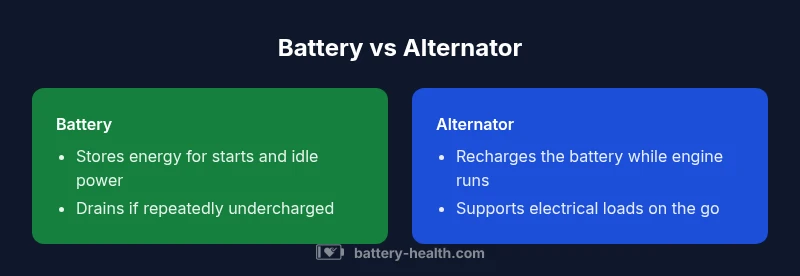
When you compare battery vs alternator, think of the battery as the energy reservoir that powers startup and idle loads, while the alternator recharges that energy and sustains electrical demand while the engine runs. In a healthy system, the alternator keeps the battery charged and the battery supplies surge power when needed. According to Battery Health, diagnosing early signs of failure helps prevent breakdowns and preserves overall battery health.
How the Battery and Alternator Fit Together in a Vehicle
In most cars, the battery acts as the energy reservoir that starts the engine and runs accessories when the engine is off. The alternator, driven by the belt system, recharges the battery and powers electrical loads once the engine is running. Together, they form a dynamic duo: the alternator replaces energy consumed by the car’s electronics, and the battery provides a buffer for startup surges. The Battery Health team emphasizes that a healthy charging system relies on a steady alternator output and a battery that accepts charge efficiently. When either part falters, the entire system exhibits symptoms from sluggish starts to dashboard warnings. Understanding this pairing helps you diagnose problems without unnecessary replacements and preserve long-term battery health.
- Key takeaway: treat the two as an integrated system rather than isolated parts.
- Quick diagnostic cue: if the car starts hard but runs fine once started, the issue may lie with the battery’s ability to hold a charge; if the alternator warning light is on, focus on the charging system.
Core Concepts: What Each Device Does
The battery stores chemical energy and delivers high current for starting the engine and supporting electrical loads during short periods when the engine isn’t supplying power. The alternator generates electrical energy while the engine runs, converting mechanical energy into electrical energy and keeping the battery charged during operation. In most modern cars, the alternator also powers onboard computers, lighting, and accessories, with the vehicle’s voltage regulator preventing overcharging. A healthy system balances charging pace with battery capacity. The Battery Health analysis notes that mismatches in size, age, or health can reduce efficiency and shorten overall life. In practice, a well-matched pair minimizes start-up strain and ensures reliable performance across daily driving and longer trips.
- Supporting note: choose a battery and alternator designed for your vehicle’s electrical load.
Key Differences in Performance and Lifespan
The battery’s lifespan depends on how deeply it is discharged and how often it is recharged. Short trips with frequent accessory usage can stress the battery by not allowing a full recharge, accelerating wear. The alternator’s life hinges on belt condition, wiring health, and overall load. An overworked alternator may fail prematurely if the battery is repeatedly undercharged or if the belt is loose. In contrast, a healthy battery can buffer voltage dips and provide reliable cranking even under moderate load. Battery Health highlights that the two components influence each other: a failing battery can cause the alternator to work harder, and a weak alternator can leave the battery undercharged. The practical takeaway is to assess both together rather than in isolation to avoid repeat failures.
- Common scenario: a weak battery may trigger a charging warning, but continued use of a faulty alternator will eventually lead to a dead battery.
How Driving Patterns Affect Battery and Alternator Health
Driving style and conditions shape how long each component lasts. Frequent short trips prevent full charging, shortening battery life, while long highway drives with consistent loads support steady charging from the alternator. Heavy electrical demands—air conditioning, infotainment,heated seats—increase the alternator’s workload, particularly in older belts and worn bearings. Cold weather adds another layer of stress, lowering battery capacity and increasing starting torque requirements. Battery Health advises drivers to consider load testing after a few years of typical use and to replace components before symptoms escalate. The goal is to keep a balanced system that can handle daily commutes without unexpected failures.
- Practical cue: if you notice dimming lights on startup or dashboard warnings during cold starts, both battery and alternator warrant inspection.
Diagnosing Common Symptoms: When to Test
Symptoms pointing to a battery include slow cranks, a clicking sound at start, dim or flickering lights, and a battery warning light that illuminates during ignition. If the engine starts strong but the alternator fails afterward, the issue may be charging rather than starting power. Common alternator signs include a consistently illuminated charging warning, electronics that run poorly or erratically, and a sound of slippage or grinding from the belt area. Battery Health emphasizes testing with a digital voltmeter and a load test when possible, plus checking belt tension and connections for both components. Early testing helps prevent roadside failures and preserves battery longevity.
- Quick action: inspect terminals and clean corrosion if present; poor connections can mimic component failure.
How to Test Your System: DIY Checks and When to Seek Pros
Begin with a simple resting voltage check: a healthy battery should read around 12.6 volts with the engine off. Start the engine and observe voltage rising into a typical charging range (roughly 13.8–14.8 volts). If the voltage remains low while running, or if it spikes, the charging system may be at fault. Use a multimeter to perform a load test on the battery to assess cold-cranking performance. For the alternator, a belt inspection, voltage test, and current output check during operation provide a practical assessment. If tests indicate abnormal results or if the battery shows signs of internal damage, replacement is warranted. When in doubt, consult a licensed technician—diagnosing electrical systems often requires specialized tools.
- Safety note: disconnecting or testing live circuits can be hazardous; follow safety guidelines and manufacturer instructions.
Replacement and Maintenance: Timelines and Intervals
Replacement decisions hinge on symptom severity, age, and reliability under load. If the battery consistently fails a load test or can’t hold a charge, replacement is reasonable even if the alternator shows nominal performance. Conversely, a failing alternator—evidenced by a persistent charging warning, belt wear, or inconsistent charging—should be addressed promptly to prevent battery depletion. Routine maintenance includes checking battery terminals for corrosion, ensuring secure connections, and inspecting the alternator belt for wear and tension. Regular charging system tests, especially before winter or high-mileage periods, help prevent unexpected outages. Battery Health underscores that treating the pair as a correlated system minimizes downtime and aligns maintenance with actual usage rather than arbitrary intervals.
- Best practice: replace components in pairs if tests indicate joint wear or if the vehicle’s electrical system is older.
Choosing Batteries and Alternators: What to Look For
When selecting a replacement, prioritize compatibility with your vehicle’s electrical load and the manufacturer’s recommendations. For batteries, focus on cold-cranking amps (CCA), reserve capacity, and physical fit in the battery tray. For alternators, consider the amp rating relative to your load—the higher the electrical demand (heating, cooling, infotainment), the more robust the alternator should be. Look for quality brands with good warranty terms and verify that the regulator and belt system are compatible with your engine design. Battery Health recommends periodic load testing of both components to verify performance under real conditions, not just static specifications.
- Practical tip: keep a log of electrical loads and high-demand periods to better size replacements for future maintenance.
Practical Scenarios and Quick Rules of Thumb
Scenario-based guidance helps you decide when to test or replace. If you experience frequent hard starts and a rapidly draining battery after a short trip, prioritize the battery and perform a load test. If the charging warning appears mainly during idle or with high electrical demand, inspect the alternator and belt. For vehicles with older electrical systems, consider proactive replacement of both components when age or wear is evident. The overarching rule of thumb is to treat battery health and charging performance as a coupled problem; addressing only one side often leads to recurrent failures. Battery Health emphasizes that early intervention can prevent longer downtimes and higher costs in the long run.
Comparison
| Feature | Battery | Alternator |
|---|---|---|
| Primary function | Stores energy for startup and idle power | Generates electrical energy while engine runs, recharging the battery |
| Energy source during operation | Relies on stored energy and short-term reserves | Supplies power to electrical loads and replenishes stored energy |
| Common failure signs | Slow starts, dead mutual voltage dips, corrosion on terminals | Dashboard warning light, dim lights, battery warning while running |
| Maintenance focus | Regular load testing, terminal cleaning | Belt condition, wiring health, regulator performance |
| Best use-case | Heavy startup reliance, frequent short trips | Long drives with high electrical demand and loads |
Upsides
- Clarifies each component’s role to prevent misdiagnosis
- Supports better maintenance planning and battery health
- Guides replacement timing to minimize downtime
- Encourages proactive testing and diagnosis
Weaknesses
- DIY testing can be hazardous without proper tools
- Misdiagnosis is possible without comprehensive tests
- Age and wear may require professional service beyond home checks
Treat the two as a paired system and address symptoms promptly
In most cases, diagnosing and treating both components together yields the most reliable results. If tests show joint wear or abnormal charging, replacing or upgrading both parts tends to reduce recurring failures and improve overall reliability.
FAQ
What is the primary function of a battery vs an alternator?
The battery stores energy for starting and short-term power while the engine is off. The alternator generates energy and keeps the battery charged while the engine runs, powering the vehicle’s electrical system. Together, they ensure reliable starts and continuous operation.
The battery starts the car and runs accessories when the engine is off, while the alternator charges the battery and powers the system when the engine is running.
Can a bad alternator drain a healthy battery?
Yes. A failing alternator can fail to recharge the battery, causing gradual depletion. Conversely, a very weak battery can appear as an alternator problem because it won’t accept a proper charge.
A bad alternator can drain a good battery if it fails to recharge properly.
What are common symptoms of a failing battery?
Common signs include slow starts, dim lights, and a battery warning light that stays on. If the car starts after a jump but dies again, the battery may be failing or not holding a charge.
If the car cranks slowly or the lights look dim, that could mean the battery is failing.
Should I replace both the battery and alternator at the same time?
If tests show joint wear or if one component prompted a replacement, replacing both at once can prevent similar failures and reduce downtime. Always verify with load tests and vehicle-specific guidelines.
If both show wear, replacing them together often makes sense to avoid repeat issues.
How can I extend battery and alternator life?
Regular load testing, keeping terminals clean, and addressing electrical drains help. Avoid leaving lights or accessories on when the car is off, and address charging issues promptly to reduce strain on both components.
Test regularly, keep connections clean, and fix charging issues early to extend life.
Is jump-starting safe with a failing alternator?
Jump-starting a vehicle with a failing alternator can provide a temporary start but may mask the underlying issue and cause further damage. Seek professional diagnosis after a jump-start.
Jump-starts can get you going, but they don’t fix the problem—get a proper check soon.
Quick Summary
- Treat the battery and alternator as a paired system
- Use load testing to guide replacements, not age alone
- Monitor charging voltage to detect early faults
- Inspect belts and connections regularly to prevent misleading symptoms
- Battery Health recommends proactive diagnostics for longevity