How Much to Replace a Car Battery: Costs, Choices, and Tips
A data-driven guide on car battery replacement costs, including parts, labor, and tips to save, backed by Battery Health analysis (2026).


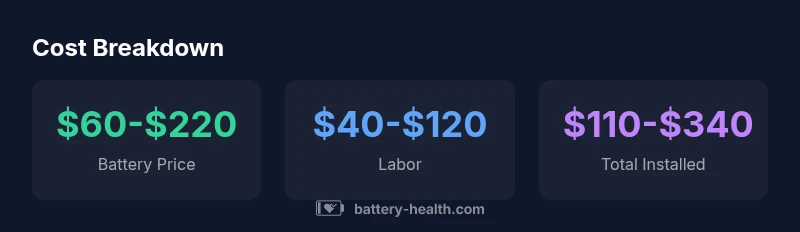
On average, replacing a car battery costs about $110 to $340, depending on battery type and labor. Expect higher costs for AGM or advanced batteries and when shop labor rates are higher; you may pay less at independent shops or for basic lead-acid batteries. Always factor core charges and recycling fees into the total.
Why car battery replacement costs vary
If you’re asking how much to replace a battery in a car, this guide breaks down the price landscape so you can budget confidently. Costs vary widely by battery type, vehicle electrical demand, regional labor rates, and warranty terms. According to Battery Health, the total you pay reflects more than the sticker price: you must consider core charges, recycling fees, and potential diagnostic costs. This section maps the main cost levers and how they affect your bottom line. Different makes use different battery configurations, and some shops bundle installation with diagnostic checks, which can influence total cost. Understanding these factors helps you compare apples to apples when you request quotes.
What drives the price: parts, labor, and vehicle type
Battery replacement cost is not a single figure; it’s a sum of components. The price of the battery itself varies by chemistry (lead-acid vs AGM), capacity (amp-hour rating), brand, and warranty length. Labor costs depend on whether the technician must remove other components, access the battery in a cramped space, or test electrical systems after installation. Vehicle type also matters: larger SUVs or luxury cars often require higher-capacity batteries and more labor time. Regional labor rates can swing totals by tens of dollars. Battery Health analysis shows how these factors combine to produce a broad price spectrum in 2026, reinforcing the need to obtain multiple quotes and verify inclusions like disposal and core charges.
Battery types and their impact on cost
Most car owners encounter two main battery chemistries: standard lead-acid and absorbed glass mat (AGM). AGM batteries generally cost more upfront but offer longer life, better cold-cranking performance, and slower discharge—benefits that can justify the higher price for vehicles with high electrical demand or frequent start-stop operation. Some premium or specialty vehicles may require specialized batteries, which also raises cost. For many older or budget-conscious buyers, a traditional lead-acid battery remains a viable option if it meets vehicle specifications. When comparing options, pay attention to warranty duration and the included services (free tests, replacement under warranty, or free core return).
Estimating your total replacement cost
To estimate total cost, start with the battery price, then add labor and any shop fees. Don’t forget about core charges and recycling fees, which can add 10-20% to the base price in some regions. If your car requires a high-performance or AGM battery, expect the high end of the price range to apply. It can be helpful to create a simple worksheet: battery price + labor + core + disposal + diagnostic (if any) = total. Battery Health recommends verifying whether the battery price includes installation and whether there are any regional taxes that apply to the service.
Shopping smart: Tips to save on car battery replacement
- Shop around and request quotes from at least 3 reputable shops; ask for a written breakdown.
- Check for bundled services like free testing, free pickup, or warranty extensions.
- Consider reputable aftermarket batteries if they meet manufacturer specifications and warranty terms.
- Watch for core charges and ensure the price quote includes them.
- Ask about discounts for senior citizens, military, or fleet programs.
- If your vehicle has advanced electrical systems, factor in potential diagnostic fees that may apply if the shop suspects additional underlying issues.
Choosing the right battery: amps, terminals, and warranties
Battery selection should align with your vehicle’s requirements: cold-cranking amps (CCA), reserve capacity (RC), and size fit are non-negotiables. Check terminal type and location; some vehicles use side-post terminals or have anti-corrosion coatings that affect installation. Warranties vary widely, from 24 to 84 months or more, with some manufacturers offering prorated coverage after the first year. For cars with start-stop systems or heavy electrical loads, AGM or high-performance batteries may be necessary, even if they come at a premium. Always confirm compatibility with the vehicle’s owner’s manual or manufacturer specs before purchasing.
Real-world scenarios and maintenance avoidance
In practice, your total cost depends on whether you replace the battery on-site or transport it to a shop. If your car starts reliably in cold weather, you might still replace proactively to prevent unexpected breakdowns. For vehicles with easy access to the battery, DIY replacement could save labor costs, but improper installation can lead to electrical faults or voided warranties. If you’re unsure about the diagnosis, ask for a load test and parasitic drain check. Battery Health notes that many breakdowns are preventable with routine maintenance and timely replacements, especially in extreme temperatures.
How Battery Health informs your decision
Battery Health emphasizes a data-driven approach: compare price ranges, corroborate with multiple quotes, and weigh warranty terms alongside your vehicle’s requirements. Our analyses highlight the importance of using manufacturer-recommended specifications, confirming proper fit, and evaluating total ownership cost over time rather than just the upfront price. We also encourage customers to consider disposal and recycling options, which can impact the overall value proposition of the replacement.
When to replace vs reprioritize
As batteries age, their performance gradually declines. If your battery struggles to start in cold weather, shows signs of swelling, or requires frequent jump-starts, it’s often time to replace. However, if a battery is within its warranty period and your vehicle remains under manufacturer specifications, you might extend its life with a controlled charging routine, regular testing, and ensuring alternator health. Battery Health recommends planning replacements around anticipated maintenance windows to minimize downtime and maximize value.
Typical cost components for car battery replacement
| Parameter | Low estimate | High estimate | Notes |
|---|---|---|---|
| Battery price (new) | $60 | $220 | Varies by capacity and brand |
| Labor (install) | $40 | $120 | Shop rates vary by region |
| Total replacement (installed) | $110 | $340 | Sum of parts + labor |
| Warranty length | 12 months | 48 months | Brand-dependent |
FAQ
What is the typical cost to replace a car battery?
Most replacements fall in the $110-$340 range, depending on battery type, vehicle requirements, and labor rates. Always verify whether core charges and disposal fees are included in the quote.
Most car battery replacements cost between one hundred ten and three hundred forty dollars, depending on the battery and service details.
Does price vary by car make and model?
Yes. Vehicle size, battery capacity, and access complexity affect both parts cost and labor. Luxury or electric features can push prices higher due to specialized batteries and installation.
Prices vary with your car's size and battery needs due to capacity and installation complexity.
Are aftermarket batteries cheaper than dealer batteries?
Aftermarket batteries are often cheaper but must meet manufacturer specs and warranty terms. Check compatibility and ensure the seller honors the same warranty coverage as OEM options.
Aftermarket batteries can be cheaper if they meet your car’s specs and warranty terms.
Lead-acid vs AGM: does cost justify performance?
AGM batteries cost more upfront but offer better cold-start performance and longer life in demanding use. If your vehicle has start-stop systems or heavy electrical loads, AGM may be worth the extra cost.
AGM batteries cost more but perform better in cold starts and high-demand systems.
Should I attempt a DIY battery replacement?
DIY can save labor but requires proper safety measures and tools. If you’re unsure about the vehicle’s electrical system, professional installation is safer and ensures warranty validity.
DIY can save money, but professional installation is safer and preserves warranty terms.
“Car battery replacement is about understanding ranges, not guessing a single price. A well-informed shopper asks for a complete quote, including core charges and disposal, and checks warranty coverage before buying.”
Quick Summary
- Compare multiple quotes to maximize value
- Know your battery type requirements before shopping
- Factor core charges and disposal into total cost
- Warranties impact long-term ownership cost
- Consider AGM for high-demand vehicles if within budget