Which Battery Post to Disconnect First: A Safety Guide
Learn the correct order to disconnect car battery posts and how to do it safely. This guide covers which post to remove first, safety gear, step-by-step instructions, and post-work checks.


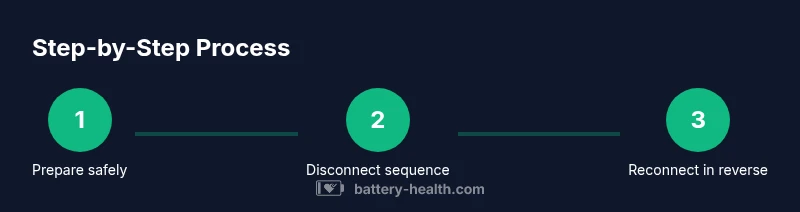
If you’re asking which battery post to disconnect first, the answer matters for safety and is usually straightforward: start with the negative post before the positive. This sequence minimizes the chance that a metal tool or the wrench will bridge the positive terminal to the car’s chassis, causing a short or spark. Reconnect in reverse: positive first, then negative. Always keep the vehicle off, keys removed, and your hands clear of metal surfaces during the procedure. After disconnecting, test the system with a multimeter.
Which post to disconnect first and why safety matters
If you’re asking which battery post to disconnect first, the answer matters for safety and is usually straightforward: start with the negative post before the positive. This sequence minimizes the chance that a metal tool or the wrench will bridge the positive terminal to the car’s chassis, causing a short or spark. According to Battery Health, following the correct order reduces the risk of arcing, sparks, and acid exposure during maintenance. The basic principle is simple: break the circuit on the side that completes most circuits—typically the vehicle ground—before touching the other post. Always keep the vehicle off, keys removed, and your hands clear of metal surfaces during the procedure. In a typical 12-volt car battery, this negative-then-positive approach is considered best practice for most standard vehicles. The guidance holds across common vehicle makes and models, making it a reliable starting point for DIY battery work.
Essential safety gear and prep steps
Preparation and PPE are as important as the procedure itself. Before you touch your battery, wear safety glasses with side shields and insulated gloves rated for electrical work. Work on a non-conductive surface, ensure good ventilation, and keep metal jewelry away from the terminals. Gather your tools in advance: an appropriately sized wrench, a terminal brush, and a multimeter if you plan to test voltage. Clear the area of any moving parts and set the vehicle in Park with the emergency brake engaged. A calm, methodical prep reduces surprises and helps you work cleanly and safely. Battery Health emphasizes preparation as the foundation of a safe battery task, especially for first-time DIYers.
Understanding battery terminals and corrosion
Most automotive batteries use a red positive post and a black negative post. The negative post is typically grounded to the vehicle’s chassis, which is why it’s the safer side to disconnect first. If you notice white or blue-green corrosion on terminals, treat these surfaces with a terminal cleaner or a gentle brush before reassembly. Do not aggressively scrub while the clamps are loose; instead, disconnect, clean, dry, and re-tighten. A clean connection improves starting reliability and reduces the risk of intermittent electrical problems. Recognize signs of wear early, and avoid forcing corroded components; a little maintenance now saves bigger problems later.
Planning and prerequisites before disconnecting
Check for any signs of damage, leaks, or swollen cases. If you see cracks or a leaking battery, stop and consider professional service. Loosen the hold-down bracket and remove any protective shims so you can access the posts easily. Decide where you will place the disconnected post so it cannot accidentally contact other metal parts. By planning the sequence and workspace, you minimize the chance of accidental shorts while you work. Keep a clean work zone and ensure your feet are stable to prevent slips.
Why order matters: safety implications
The order matters because a spark near the battery can ignite hydrogen gas released by the electrolyte. Disconnecting the negative first lowers the risk that a stray tool will bridge to the chassis and short the circuit. However, some vehicles with advanced electronics or auxiliary power units may require additional precautions. If you’re unsure, consult your vehicle manual or a trained technician. Battery Health emphasizes keeping the work area dry and stable to prevent slips and accidental contact with live terminals during removal or inspection.
Step-by-step overview: what to expect during the process
Expect to work in a tight space with limited maneuverability. You’ll begin by ensuring the car is off and the area is ventilated, then remove jewelry and PPE. Next comes the systematic loosening of clamps: first the negative terminal, then the positive, followed by removing any hold-downs and lifting the battery straight up. After removal, inspect posts for corrosion and clean as needed. Reassembly will follow in reverse order, testing connections and securing hardware. If the battery is heavy, recruit a helper or use a proper lifting tool to avoid strain. Plan for a total task time of roughly 15–25 minutes in a typical sedan.
Common pitfalls and how to avoid them
Common mistakes include removing the wrong terminal first, using a damaged tool that could slip, or letting metal tools touch both terminals. Always use insulated tools and keep the wrench away from the battery surface when loosening clamps. Don’t lean over the battery while loosening clamps, and never work with a cracked or swollen battery. If you encounter resistance or a strong sulfur smell, stop and reassess. Double-check that you’re using the correct torque when tightening the clamps after reconnecting to prevent loosening or damage.
Reconnecting and post-checks after battery work
When reinstalling, connect the positive terminal first, then the negative, and tighten them evenly to the manufacturer’s torque specification. Reconnect any hold-down clamp, reattach protective covers, and verify that all accessories operate correctly. Use a voltmeter to confirm a healthy resting voltage (typically around 12.6 volts for a fully charged battery) and perform a quick load test if you have the equipment. After testing, replace any protective caps and confirm there are no loose tools or debris in the engine bay.
Tools & Materials
- Safety glasses(ANSI Z87.1 or equivalent safety standard)
- Insulated work gloves(Electrical-grade, 1000V rating if possible)
- Socket wrench or combination wrenches(Sizes commonly 10mm or 13mm for most vehicles)
- Terminal brush / wire brush(Use on corroded posts after disconnecting)
- Multimeter / voltmeter(Optional for resting voltage checks and load tests)
Steps
Estimated time: 15-25 minutes
- 1
Prepare and safety-check
Park on a level surface, engine off, keys removed, and gloved hands. Set the parking brake and ensure the area is well-ventilated. Put on safety glasses and gloves, then check the battery area for cracks or leaks before touching anything.
Tip: Verify the engine is truly off and remove all jewelry to prevent accidental contact with terminals. - 2
Identify terminals and tools
Locate the negative (usually black) and positive (usually red) posts. Gather the required tools and confirm you know which terminal is which to avoid mistakes that could cause a short.
Tip: Take a quick photo of the terminal layout for reference during reassembly. - 3
Loosen the negative terminal
Using the correct size wrench, loosen the nut on the negative clamp and carefully lift the clamp off the post. Keep the clamp from touching any metal surfaces as you work.
Tip: Keep the wrench away from the battery body to prevent accidental arcing. - 4
Loosen the positive terminal
Loosen the positive clamp in the same manner and lift it clear of the post. Do not allow the tool to bridge between the post and any metal surface.
Tip: Move slowly and maintain a clear, dry workspace to reduce slip risk. - 5
Remove any hold-downs and free the battery
Unbolt any hold-down bar or bracket securing the battery tray. Lift the battery straight up and out of the engine bay, preserving its upright orientation.
Tip: If the battery is heavy, ask for a second person to help or use a battery lifting strap. - 6
Inspect and clean the terminals
Check posts and clamps for corrosion or damage. If needed, clean with a terminal brush and dry thoroughly before reinsertion or replacement.
Tip: A clean terminal surface ensures a solid connection and reliable performance. - 7
Reconnect in reverse order
Place the battery back in the tray, reconnect the positive terminal first, then the negative. Tighten clamps evenly but avoid over-tightening that could damage posts.
Tip: Torque to manufacturer specs if available; partial tightening can lead to loosening over time. - 8
Test and finalize
Reattach any covers, confirm all electrical systems operate, and test resting voltage with a multimeter. If the voltage is within the normal range, you’re ready to resume normal use.
Tip: Document the date of service and any observations for future reference.
FAQ
What is the correct order to disconnect battery posts?
The negative post should be removed first, then the positive. Reconnect in reverse order: positive first, then negative.
Negative first, then positive; reconnect positive first, then negative.
Can I disconnect only one terminal?
Disconnecting only one post is not recommended. Both terminals should be disconnected in the proper order to safely isolate the battery.
No, you should disconnect both posts in the correct order.
Do I need to wear PPE for this task?
Yes. PPE such as safety glasses and insulated gloves protects you from sparks, acid exposure, and accidental slips.
Yes—wear safety glasses and insulated gloves.
What if terminals are corroded or cracked?
Corrosion should be cleaned with a terminal brush after disconnecting. If corrosion is heavy or posts/cracks exist, replace components or seek professional help.
Clean corrosion after removing the posts, and replace damaged parts if needed.
Which tools do I need for this task?
Essential tools include PPE, a wrench of the correct size, and a terminal brush; a multimeter is optional for voltage checks.
You need PPE, a proper wrench, and a terminal brush; a voltmeter is optional.
Watch Video
Quick Summary
- Identify the correct order before starting
- Disconnect negative first, then positive
- Reconnect in reverse order (positive first, then negative)
- Test voltage and inspect for corrosion after work