Audi Key Battery Replacement: A Practical DIY Guide
Learn how to perform Audi key battery replacement safely. Identify the right battery, gather tools, follow a clear step-by-step process, and know when to seek dealer help. Battery Health provides expert guidance for reliable fob performance.


Bottom line: You can replace an Audi key battery yourself in most models, saving time and money. You’ll need the correct battery type for your fob, a small precision screwdriver, and a clean workspace. This guide covers model variations, safety tips, and a step-by-step DIY method you can follow now, or opt for dealer service if preferred.
Why Audi key battery replacement matters for security and convenience
Maintaining a healthy Audi key battery isn't just convenience; it's essential for security and dependable access. When the fob battery is weak, you may experience delayed or failed lock and start functions, leaving you stranded in critical moments. According to Battery Health, a growing share of drivers run into these issues because they ignore symptoms until the battery is completely dead. The Battery Health team notes that modern key fobs perform encryption and rolling codes that rely on stable power; a dying battery can compromise these features, potentially triggering false alarms or lost signal at the worst times. Replacing the battery promptly preserves the remote's range, ensures the push-to-start system remains responsive, and reduces the chance of lockouts when you need your car most. In practice, a quick battery swap is a small investment that pays off in reliability and peace of mind.
How to identify the correct battery type for your Audi key fob
Audi's key fobs vary by model and year, and some newer designs use different battery formats from older ones. The first step is to locate the battery or the back cover label on your fob; many models stamp the battery type on the old battery itself or on the inside of the case. If the label is worn, refer to the owner’s manual or call your dealer for the exact specification. In practice, most common fob batteries are exchangeable coin cells (like CR2032 or CR2025) that sit on a spring contact, but the exact size, voltage, and orientation can differ. Always confirm before purchasing to avoid buying the wrong type, which can damage the contacts or prevent the new battery from seating correctly.
Preparation and safety considerations
Before you touch the fob, gather the right tools and work in a clean, well-lit area. Static-free surfaces help prevent micro-damage to tiny components. Remove jewelry that could scratch plastic housings, and set the fob face-down on a soft cloth. If the fob features a battery that is recessed behind a safety cover, avoid forcing the cover open; instead, follow the model-specific instructions from the manual. When working with lithium coin cells, avoid bending or puncturing the cell, as these actions can present a fire risk. If you wear gloves, ensure you can still feel the battery edges for precise handling. Finally, never mix old and new batteries; replace the entire coin cell at once to ensure consistent power.
DIY vs dealer service: pros and cons
DIY replacement is typically faster and cheaper, and it gives you hands-on understanding of your car’s key system. However, some Audi models have sealed fob designs or require specialized tools and programming after battery replacement, which may necessitate dealer or locksmith services. If you’re uncertain about model-specific steps or you notice the fob’s electronics feel loose or misaligned after opening, consider professional help. Remember that improper reassembly can damage the PCB or keypad, potentially voiding warranty coverage in some cases. For many owners, a quick home swap is perfectly adequate, while others opt for a dealer to ensure correct re-pairing with the vehicle and locks.
Common signs of a dying key fob battery and quick troubleshooting
The most obvious sign is a noticeable drop in the remote’s range, requiring you to stand closer than usual to lock or unlock the car. You may also see intermittent response, or the car fails to start when using the fob in proximity. In some cases, the key button may feel mushy or unresponsive. If you suspect a weak battery, start by replacing it with a fresh coin cell of the correct size, then test all functions (lock, unlock, trunk, panic). If the car still responds slowly, check for corrosion on the battery contacts or residue on the fuse-like contact pads. Cleaning with a soft cloth and a tiny bit of isopropyl alcohol can improve contact, but avoid excessive moisture near the circuit board.
Post-replacement testing and maintenance tips
After installing the new battery, reassemble the fob carefully and give it a full battery sanity test: lock/unlock doors, pop the trunk, press the panic alarm, and try starting the car if your fob supports push-to-start. If any function remains weak, re-check the battery orientation and seating depth. Store spare fobs in a dry place away from direct heat and sunlight to extend their life. Consider keeping a spare battery in your glovebox for emergencies, and note the replacement date in your car’s maintenance log. Regularly inspecting fob housings for cracks will help prevent moisture ingress and corrosion.
When to replace the battery in a spare key or multiple keys
If you own a second fob, coordinate replacements so both have fresh power at the same time. Synchronized replacement can avoid mixed signals or inconsistent performance when you’re relying on backups. For Audi owners who value convenience, labeling each fob with a date helps you track wear and timing. If a spare key seems to work inconsistently, perform test cycles in parallel with the primary to ensure both keys are functional after replacement. Battery health tends to decline gradually, so plan proactive replacements every few years depending on usage and climate.
Troubleshooting advanced issues (immobilizer, pairing, etc.)
In rare cases, replacing the battery is not enough; the fob may lose pairing with the car’s immobilizer module after long storage or a failed reset. If the vehicle does not recognize the fob after battery replacement, you may need to re-pair it using the manufacturer’s procedure or visit a dealership for re-initialization. Always consult your owner’s manual for the correct procedure; incorrect steps can disable the fob temporarily and require professional intervention. Battery Health notes that proper re-pairing can restore full function without costly diagnostics, but don’t force a pairing sequence that the system warns against.
Tools & Materials
- Replacement battery (coin cell) suitable for your fob(Check model/year for exact size (common options include CR2032 or CR2025))
- Small flathead screwdriver(256 mm or smaller prying tool; protect the key face)
- Soft microfiber cloth(Use to wipe contacts and protect housing)
- Isopropyl alcohol (70% or higher)(Optional for cleaning corrosion)
- Tweezers or plastic prying tool(Assists handling without bending contacts)
- Gloves (disposable)(Helps avoid oil on contacts)
- Static-free workspace(Keep away from moisture and electronics)
- Small tray to hold screws(Prevents losses when opening fob)
Steps
Estimated time: 15-40 minutes
- 1
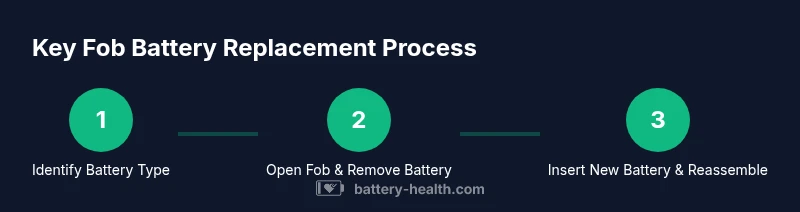
Check and confirm battery type
Inspect the back of the old battery or the fob interior to confirm size (e.g., CR2032 or CR2025). If uncertain, refer to the owner’s manual or contact the dealer for the exact specification.
Tip: Having the exact model/year handy reduces the risk of ordering the wrong battery. - 2
Open the fob case safely
Use a small flathead screwdriver to gently pry along the seam. Work slowly to avoid cracking the housing or bending the PCB.
Tip: Take a photo of the orientation before opening so you can reassemble correctly. - 3
Remove the old battery
Carefully lift the old coin cell from its contacts. Note the polarity (which side is up) so you place the new battery correctly.
Tip: Handle the battery by the edges to avoid oils from fingers on contacts. - 4
Inspect and clean contacts
Check for corrosion or residue on the contact pads. Wipe gently with a microfiber cloth; use a tiny amount of isopropyl alcohol if needed and allow to dry.
Tip: Do not saturate the PCB with liquid; moisture can damage components. - 5
Insert the new battery with correct polarity
Place the new coin cell in the same orientation as the old one, ensuring the contacts sit flat and align with the PCB contacts.
Tip: Double-check orientation against your orientation photo before seating the battery. - 6
Reassemble the fob casing
Snap the halves together firmly and ensure no edges or gaps remain. Reinsert any screws or covers as originally arranged.
Tip: A firm, even press helps avoid misalignment and rattling later. - 7
Test the fob functions
Test lock, unlock, trunk, panic, and, if supported, push-to-start from close range and at a short distance.
Tip: Test at multiple distances to confirm consistent range. - 8
Dispose of the old battery properly
Place the old battery in a plastic bag or container and recycle it at an approved facility.
Tip: Never throw coin cells in regular trash; batteries contain materials requiring proper handling. - 9
Document and store
Record replacement date and keep the spare battery in a known location for future use.
Tip: A quick log helps you plan proactive replacements and avoids last-minute scrambles.
FAQ
Can I replace the Audi key battery myself?
Yes, many Audi key fobs allow DIY replacement. It’s important to identify the correct battery type and follow model-specific steps to avoid damage. If you encounter a non-removable cover or suspect a complex internal design, seek professional help.
Yes, you can often replace the battery yourself, but confirm the model's design and battery type first. If unsure, consult a professional.
What battery type is needed for Audi key fobs?
Battery type varies by model and year. Check the old battery, the fob’s back cover, the owner’s manual, or contact the dealer for the exact specification before purchasing.
Battery type varies by model; verify using the manual or dealer.
How long does a key fob battery last?
Battery life depends on usage and environment. Cold climates, frequent button presses, and proximity usage can shorten life. Plan proactive replacements when you notice reduced range or slower responses.
Battery life varies; expect changes with usage and climate.
Is it safe to replace the battery myself?
DIY replacement is generally safe if you follow proper steps and handle components gently. Avoid using excessive force, keep track of orientation, and work on a clean, static-free surface.
DIY can be safe if you follow the steps carefully and stay mindful of static.
Will replacing the battery re-pair the fob with the car?
Some models require re-pairing or coding after battery replacement to restore full functionality. Refer to the owner’s manual or a dealership for the exact re-pairing procedure.
Some cars require re-pairing after battery replacement; check the manual.
What should I do with the old battery?
Dispose of the old coin cell at an approved recycling or hazardous-warts facility. Do not throw it in regular trash, and follow local rules for battery recycling.
Recycle old batteries at approved facilities; don’t trash them.
Watch Video
Quick Summary
- Identify the correct battery type before purchase.
- Handle the fob and battery with care to avoid damage.
- Test all functions after replacement across short and longer ranges.
- Dispose of old batteries responsibly.
- Keep a spare battery and maintenance log for convenience.