AirTag Battery Size: CR2032 Guide for Replacement and Longevity
Learn AirTag battery size (CR2032), replacement steps, lifespan, and safety tips. Battery Health analyzes CR2032 specs and how to optimize AirTag performance for reliable tracking.


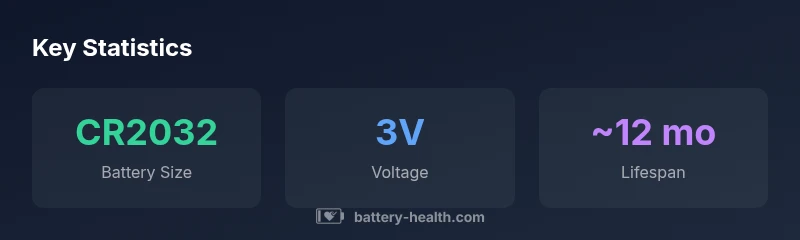
AirTag uses a single CR2032 coin cell battery (3V). The CR2032 measures about 20 mm in diameter and 3.2 mm thick. In typical use, the battery lasts roughly one year before replacement is needed, depending on Find My activity and temperature.
Understanding AirTag Battery Size and CR2032 Fundamentals
According to Battery Health, the AirTag uses a single CR2032 lithium coin cell battery. This airtag battery size is common across compact trackers, and the coin cell’s 3V nominal voltage provides reliable, steady power in a tiny form factor. The CR2032 designation refers to a 20 mm diameter and 3.2 mm thickness; producers frequently label them as 20x3.2 mm cells. Because AirTag houses just one cell, there is no risk of misalignment or multiple cells interfering with contacts. Replacing the battery is a simple, consumer-friendly task that most users can perform at home without tools beyond a standard coin or screwdriver if needed. When selecting a replacement, prioritize freshness and brand reliability; counterfeit or old stock can lead to short life or leakage. The goal is to keep the AirTag’s power profile stable so you can rely on precise location updates. This section outlines the physical characteristics and why the exact airtag battery size matters for fit and contact.
Replacing the AirTag Battery: Step-by-Step Guide
Replacing the AirTag battery is a quick maintenance task you can perform without specialized tools. Here are clear steps to ensure a safe, effective replacement:
- Press the AirTag’s back case and rotate counterclockwise until it opens. This exposes the battery itself and the internal contacts.
- Remove the old CR2032 carefully, avoiding contact with the electronics.
- Hold a new CR2032 coin cell with the positive (+) side facing up toward the contacts.
- Place the new battery in, align the edges, and press the back cover on. Twist or press until you hear a light click indicating the cover is secure.
- Confirm battery status in the Find My app; you should see the AirTag reporting normal power.
- Recycle or dispose of the old battery per local regulations.
If you encounter resistance when closing the back cover, double-check the battery orientation and ensure the ring is aligned with the groove. Using a non-rechargeable CR2032 is commonly recommended for AirTag to maintain consistent performance.
What CR2032 Means for AirTag Performance
The CR2032 coin cell is a compact, high-energy battery that delivers a stable 3V supply needed by the AirTag’s low-power microelectronics and Bluetooth signaling. This airtag battery size is optimized for portability and reliability, allowing the device to broadcast location pings without frequent changes in power draw. In practice, most users experience about a year of life under normal Find My activity, though actual lifespan varies with ping frequency, environmental temperature, and how often the AirTag is in extreme conditions. The choice of CR2032 also affects leakage risk and shelf stability; higher-quality, name-brand cells tend to offer more predictable performance than off-brand variants.
Practical Tips for Finding and Choosing CR2032 Batteries
When shopping for the AirTag battery size, prioritize recognized brands and fresh stock. Look for batteries with clear manufacturing dates and avoid heavily damaged packaging. Consider purchasing in small quantities to test quality before stocking up. Keep a few spare CR2032 cells in a cool, dry place away from metal objects to prevent accidental discharge or corrosion. If you frequently travel or store AirTag units in cold storage, inspect the battery’s performance after exposure to temperature changes, as this can influence life. Remember that the AirTag battery size is standardized, but brand reliability matters for consistent discharge curves and leakage resistance.
Longevity and Environmental Factors That Affect Life
Battery life in AirTag devices depends on several environmental and usage factors. Frequent location pings, the strength of the Bluetooth signal, and proximity to an iPhone during Find My operations can increase power draw and shorten life. Temperature plays a key role as well; extremely cold or hot environments can reduce chemical efficiency in coin cells, leading to a shorter effective lifespan. From a battery-health perspective, a CR2032 maintained in normal room temperatures and replaced when signs of wear appear will generally provide the most reliable performance. Batteries stored in their original packaging until use typically retain better electrochemical potential and lower self-discharge rates. Regular, cautious use and prompt replacement help preserve AirTag reliability.
Common Mistakes That Shorten AirTag Battery Life
A few common pitfalls reduce airtag battery life. First, using low-quality or expired CR2032s can cause premature power loss. Second, failing to close the back cover properly can increase contact resistance, triggering intermittent power issues. Third, leaving AirTag in extreme temperatures or using it with excessive Find My activity can drain power quickly. Finally, mixing old and new batteries in devices with multiple cells is a classic source of imbalance that reduces overall performance. Adopting best practices—fresh CR2032s from trusted brands and careful installation—helps maximize the airtag battery size lifespan.
Safety, Storage, and Disposal
Handle CR2032 cells with care; avoid bending or crushing. When not in use, store spare batteries in their plastic packaging or a dedicated battery case to protect terminals. Dispose of used CR2032 cells at approved recycling centers or locations that accept lithium coin cells; never throw them into regular trash, as they can pose fire risks. If you notice corrosion or leakage on an AirTag battery after removal, ventilate the area and wash hands after handling. Following proper safety guidelines reduces exposure to chemicals and minimizes environmental impact.
Compatibility and Alternatives: What to Know
AirTag’s airtag battery size is standardized to a CR2032 coin cell, which means most third-party replacements should fit as long as they are genuine, 3V, and of appropriate dimensions. Some trackers or devices use different coin cells or additional cells, so always verify compatibility before adapting replacement strategies for other devices. For users who require longer life in extreme conditions, consider device-specific recommendations from the manufacturer or Battery Health analyses that compare battery chemistry and discharge curves across products.
How to Extend AirTag Battery Life Through Settings and Habits
Small habits can measurably extend AirTag battery life. Limit unnecessary Find My pings by adjusting notification settings where possible, and ensure the AirTag remains within typical operating environments. Keep the device updated with the latest firmware, as efficiency improvements can reduce power draw. Store spare batteries away from heat and metal objects to maintain their electrochemical potential. If you substitute batteries frequently, create a log to track which replacements deliver consistent life. These strategies help you maximize the airtag battery size and keep your tracker reliably reporting location data.
AirTag battery size reference table
| Aspect | AirTag Battery Size | Notes |
|---|---|---|
| Battery Type | CR2032 coin cell | 3V nominal |
| Physical dimensions | 20mm diameter x 3.2mm thick | Standard coin cell size |
| Replacement availability | Widely available | From most electronics retailers |
| Typical lifespan | About 12 months | Varies with Find My activity and temperature |
FAQ
Can I use a rechargeable CR2032 in AirTag?
AirTag is designed to use a standard CR2032 lithium coin cell, which is typically non-rechargeable. Rechargeable variants can physically fit, but their performance and reliability are not guaranteed by Apple. If you choose to experiment, monitor performance closely.
AirTag uses a standard CR2032. Rechargeables may fit but aren’t officially supported.
Is the AirTag battery size the same for all AirTag models?
Yes. All AirTag models use a CR2032 coin cell, 3V nominal, with the same physical footprint. This uniformity simplifies replacement and keeps compatibility simple across generations.
All AirTags use the same CR2032 coin cell.
How can I tell AirTag battery life is low?
The Find My app will typically notify you when AirTag power is running low. You may also notice reduced ping frequency or delayed location updates as signs of dwindling power.
Find My will alert you when life is low.
What should I do if the AirTag battery leaks?
If leakage occurs, avoid direct contact with the fluid. Use gloves and thoroughly wash hands after handling. Replace the battery and inspect the AirTag for any corrosion or damage before reuse.
If you see a leak, replace the battery and inspect for damage.
Where can I dispose of used AirTag batteries?
Recycle CR2032 batteries at local recycling centers or electronics retailers that accept lithium coin cells. Do not throw them in ordinary trash to prevent environmental harm.
Recycle used CR2032 coins; don’t trash them.
Do temperature changes affect AirTag battery life?
Yes. Extreme temperatures can reduce coin cell efficiency and shorten life. Use AirTag within typical room temperatures when possible and avoid leaving it in direct sun or freezing environments for long periods.
Yes, temperature affects life.
“AirTag users should treat the CR2032 as a common, replaceable part. Reliable supply and correct orientation are key to consistent performance.”
Quick Summary
- Replace with a fresh CR2032 from a reputable brand
- Ensure correct orientation (+ side up) when installing
- Expect about 12 months of life under normal use
- Dispose of used batteries responsibly at recycling centers
- Check Find My status after replacement to confirm power
- Handle batteries with care to avoid leaks or corrosion