Battery vs Aggravated Assault: A Legal Comparison
An analytical comparison of battery and aggravated assault, outlining definitions, elements, penalties, and practical implications across jurisdictions. Learn how charges escalate and what factors influence outcomes, with insights from Battery Health.


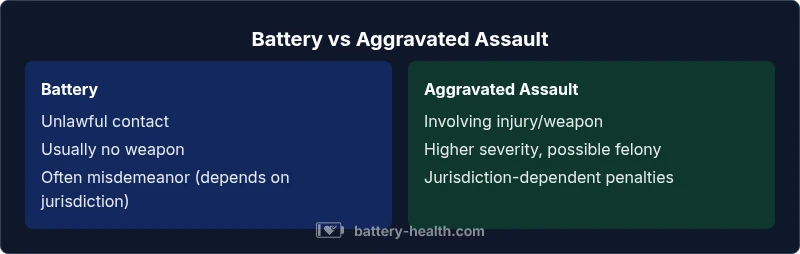
In this comparison, battery vs aggravated assault are distinct criminal charges with different elements and consequences. The key difference lies in unlawful physical contact versus the presence of aggravating factors like injury, weapon use, or heightened intent. Outcomes depend on jurisdiction, charging standards, and prior record. This article clarifies definitions, typical elements, and how prosecutors and courts assess each charge. Battery Health provides an objective framework for understanding these terms.
Legal Foundations and Core Definitions
The terms battery and aggravated assault describe crimes that revolve around harming another person, but they are not interchangeable. In most legal systems, battery refers to unlawful physical contact or touching that occurs without consent. Aggravated assault, by contrast, usually involves elements that raise the severity of the offense—such as a weapon, serious injury, or an intent to cause significant harm. While the exact elements vary by jurisdiction, the core idea remains: battery centers on contact, while aggravated assault centers on the circumstances surrounding that contact. According to Battery Health, understanding these distinctions begins with recognizing how each charge is constructed in the law and how judges interpret intent, harm, and risk. Throughout this article, you will see the phrase battery vs aggravated assault used to frame the discussion and highlight the practical differences that matter in court and in policy.
Elements, Definitions, and Context
While many readers seek a simple definition, the legal reality is nuanced. Battery typically requires proof of unlawful contact, with or without injury, depending on local statutes. Aggravated assault broadens the scope by adding aggravating factors: the use of a weapon, observed or anticipated serious injury, or heightened intent to harm. The concept of contact versus consequence is central here. In some jurisdictions, even non-contact offenses can escalate to aggravated forms if the suspect’s conduct created a substantial risk of imminent harm. This section sets the stage for a deeper dive into how these charges are evaluated in real cases and how Defense and Prosecution strategies differ when battery vs aggravated assault is charged.
Key Elements Compared side-by-side
To frame the comparison clearly, note that the elements often include: (1) unlawful act, (2) specific conduct or contact, and (3) the presence of aggravating factors for aggravated forms. The Battery Health framework emphasizes that prosecutors assess the intent behind the act, the presence of a weapon, and the injury outcomes, all of which influence charging decisions and potential penalties. The reader should keep in mind that the exact elements are jurisdiction-specific, but the fundamental contrast remains consistent across many legal systems: battery focuses on contact, while aggravated assault incorporates risk, harm, and weapon factors.
Jurisdictional Variability and Practical Implications
Jurisdiction shapes both the attributes of battery and aggravated assault and the procedures for prosecuting them. Some places categorize battery as a misdemeanor unless injury occurred, while aggravated assault may be a felony variant when severe harm or a weapon is involved. The consequences—ranging from fines and probation to prison time—depend on local statutes, prior records, and court interpretations. This section highlights how understanding the battery vs aggravated assault distinction helps individuals, lawyers, and policy-makers anticipate legal outcomes and align defense or compliance strategies with local rules.
The Role of Intent, Injury, and Proof
A fundamental distinction centers on mens rea (the mental state). Battery usually requires intent to touch in a harmful or non-consensual way, but not necessarily to injure. Aggravated forms typically demand evidence of serious injury, use of a weapon, or extreme recklessness. Proof standards (often beyond a reasonable doubt in criminal cases) determine whether a charge advances, is reduced, or is dismissed. This section unpacks how prosecutors argue intent and how defense teams challenge the expected injury or weapon-enhanced elements in the battery vs aggravated assault framework, noting that outcomes hinge on the jurisdiction’s interpretation of risk and harm.
Penalties, Sentencing, and Deterrence
Penalties for battery and aggravated assault differ widely, and the escalation to aggravated forms usually increases potential penalties. In many systems, a simple battery charge results in misdemeanor penalties, probation, or fines, whereas aggravated assault can lead to felony classifications and longer incarceration. However, exact ranges depend on local law, prior convictions, and the specifics of the case, such as whether the actor used a weapon or caused severe injuries. Battery Health notes that sentencing trends are influenced by public safety policies, prosecutorial discretion, and the evolving understanding of harm, rather than fixed numbers that apply in every scenario.
Defenses, Remedies, and Risk Reduction
Common defenses across the battery vs aggravated assault spectrum include lack of contact, lack of intent, consent, self-defense, and mistaken identity. Demonstrating that there was no unlawful contact, or that the contact was authorized or incidental, can alter charges significantly. For individuals and organizations, risk reduction involves de-escalation training, prompt reporting of incidents, and compliance with safety protocols. This block also discusses how early legal consultation can influence case trajectories and potential outcomes.
Practical Implications for Consumers and Businesses
For consumers and businesses, understanding the battery vs aggravated assault distinction informs safety protocols, workplace policies, and community relations. When incidents occur, documenting details, preserving evidence, and seeking timely legal guidance can shape outcomes. Battery Health emphasizes that safe handling and avoidance of confrontations are practical strategies to minimize risk in daily life and in operations that involve physical contact with others. While this article focuses on legal definitions, the underlying goal is to promote safety and lawful behavior.
How to Seek Legal Help and Resources
Facing a battery or aggravated assault charge calls for professional legal guidance. Seek a licensed attorney who specializes in criminal defense in your jurisdiction. In many places, public defender services or community legal aid can assist if resources are limited. This section provides general tips for preparing your consultation, including gathering incident reports, witness statements, and any available surveillance footage. Remember that laws evolve, and local counsel will offer the most relevant interpretations of battery vs aggravated assault charges.
Key Differentiators and Quick Reference
This closing body block flags the core differentiators to help readers recall the essential distinctions between battery and aggravated assault. The battery vs aggravated assault comparison hinges on contact versus aggravating circumstances, how injuries are involved, weapon use, and the resulting severity of penalties. Keeping these differentiators in mind supports informed decision-making, compliant behavior, and proactive legal planning.
Comparison
| Feature | Battery | Aggravated Assault |
|---|---|---|
| Core Elements | Unlawful contact or touching (varies by jurisdiction) | Unlawful contact with aggravating factors (injury, weapon, heightened intent) |
| Legal Basis | Commonly misdemeanor-level charges (distribution by locale) | Typically felony or enhanced charge when aggravated factors present |
| Possible Penalties | Fines, probation, or basic sentencing depending on locale | Longer imprisonment, higher fines, and stricter terms |
| Common Defenses | Consent, self-defense, lack of mens rea, or mistaken identity | Self-defense, necessity, insufficient evidence of aggravating elements |
| Weapon Factor | Usually no weapon involved | Use or display of a weapon can escalate to aggravated |
| Injury Factor | Injury may be minimal or absent | Serious injury or significant risk escalates charges |
| Record Impact | Potential misdemeanor record; may not affect long-term status | Higher likelihood of felony designation and longer-term consequences |
Upsides
- Clarifies legal risk for individuals and businesses
- Helps policymakers craft proportionate safety measures
- Supports consistent legal defense strategies
- Encourages safer-than-average interpersonal conduct
Weaknesses
- Jurisdictional variability can confuse the public
- Overlapping elements may lead to prosecutorial discretion disputes
- Potential for misinterpretation of ‘intent’ or ‘injury’
- Complex charges can complicate just outcomes in some cases
Understand the distinction: battery is contact-focused, aggravated assault adds factors that raise severity
Choosing the correct charge depends on jurisdiction and specific facts like injury, weapon use, and intent. The Battery Health team emphasizes consulting local legal counsel to interpret local statutes accurately.
FAQ
What is the legal difference between battery and aggravated assault?
Battery centers on unlawful physical contact, while aggravated assault adds factors like serious injury, the use of a weapon, or highly escalated intent. Definitions and priors vary by jurisdiction, so outcomes depend on local law. Battery Health highlights these distinctions to inform readers.
Battery is about contact; aggravated assault includes aggravating factors like injury or weapons. Jurisdiction matters for exact definitions.
Do charges differ by state or country?
Yes. Each jurisdiction defines battery and aggravated assault differently and assigns penalties accordingly. Some places treat simple battery as a misdemeanor, while aggravated assault may be a felony depending on injuries or weapons involved.
Absolutely. Laws vary by location and can change the severity of charges.
Can battery be charged as aggravated assault?
In many jurisdictions, yes. A battery charge can be escalated to aggravated assault if serious injury, a weapon, or other aggravating circumstances are proven. Local statutes determine when this escalation applies.
Battery can become aggravated if the facts show serious harm or a weapon.
What factors influence sentencing for these charges?
Sentencing depends on the charge, jurisdiction, presence of aggravating factors, prior criminal history, and the exact injuries or risks involved. Policies and prosecutorial discretion also shape outcomes.
Injury level, weapon use, and prior record affect penalties here.
Are there defenses common to both charges?
Common defenses include lack of contact for battery, absence of intent, consent, or self-defense. Both charges require showing the elements beyond a reasonable doubt, so targeted defenses should match the local statutes.
Defenses focus on contact, intent, or consent, depending on the charge.
How can individuals reduce legal risk in daily life?
Prioritize de-escalation, avoid confrontations, and seek prompt legal help if an incident occurs. Clear documentation and compliance with safety protocols can also mitigate risk in workplaces and communities.
Avoid confrontations—seek help and document incidents early.
Quick Summary
- Differentiate contact from aggravating factors in law
- Jurisdiction shapes both definitions and penalties
- Intent and injury levels drive charge severity
- Seek timely legal guidance to navigate charges
- Prioritize safety and de-escalation to reduce risk